
Marlborough Grower Melissa Tripe on Surviving the Downturn
Melissa Tripe knows what a downturn feels like.




 increase font size
 Fromm
Fromm
Glyphosate resistance threatens to significantly increase operational costs and reduce profitability in New Zealand vineyards, according to a new report.
The A Lighter Touch (ALT) programme has launched an education campaign for the horticulture, arable and viticulture sectors, as it nears the end of its seven-year term. The campaign includes a case study, produced with programme partner Bragato Research Institute, on the prevalence and risks of glyphosate resistance in New Zealand vineyards, as growers move away from what was once the most cost-effective weed management tool.
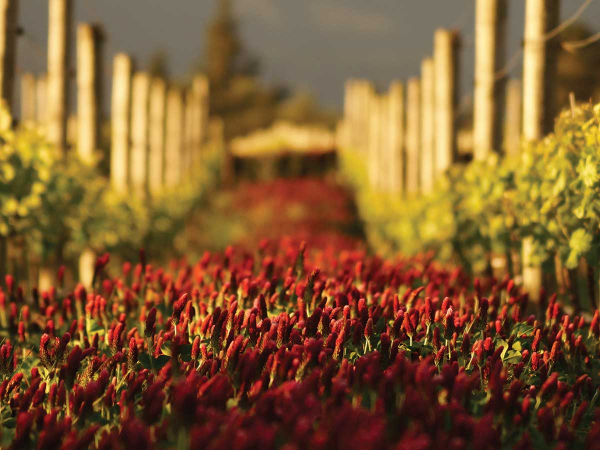
The case study draws on research published by the Plant Protection Society in 2022, which revealed that 39% of New Zealand vineyards contained glyphosate-resistant ryegrass, including 58% in Marlborough. It included guidance for mitigating resistance, including rotating herbicide modes of action (MoA), reducing reliance on glyphosate, using mowing, cultivation and cover crops, and integrating non-chemical weed management.
BRI has since analysed more than a decade of Spray Diary data to understand the trend of glyphosate use in New Zealand vineyards. “This analysis showed that growers often applied glyphosate at higher frequencies, concentrations and rates,” says the case study. “These findings highlight the need to increase grower awareness of the risks associated with heavy reliance on glyphosate and the importance of adopting alternative weed management strategies in vineyards.”
It seems that resistance is “creeping up”, says Dr Paul Epee at BRI, noting that growers are struggling to control weeds with low- to moderate-concentrate products efficiently. “For us that’s a real red flag that something is happening.” The management options that reduce the risk of weed resistance often come at a cost, and “glyphosate is one of the easiest options”, he says. “Like most of us, growers are tempted to opt for the path of least resistance.”
The ALT resistance management campaign is another good opportunity to get the message out and encourage grape growers to have the risks “front of mind”, Paul says. “Because if nothing is done now, it will be too expensive to manage or mitigate later.”
Paul also led the UV-C light project, co-funded by BRI, ALT and Whitehaven Wines. The project investigated the efficacy of UV-C light in controlling powdery mildew and reducing over-reliance on fungicides in New Zealand vineyards, and particularly for Marlborough Sauvignon Blanc.
Fruitfed Supplies technical specialist Jon Peet says the wine industry is on the front foot when it comes to resistance management, with Sustainable Winegrowing New Zealand promoting ‘good agricultural practice’ (GAP) and rotating MoA wherever possible.
reiterated time and again, to ensure growers use sprays strategically to mitigate resistance. The day we speak he is preparing to talk to grape growers in Marlborough about a new herbicide product that has recently become available to them. The product requires written permission for use from SWNZ and is only to be used on glyphosate resistant ryegrass, thereby ensuring strict adherence to best practice, including alternating with other MoA to ensure long-term efficacy.
Jon notes that other weed species are also in danger of developing resistance, particularly to glyphosate. And while glyphosate may be the “worst culprit”, there is growing evidence that ryegrass, in particular, is developing resistance to other MoA. His message to growers is that their weed control has to be carefully managed throughout the year. “It is an integrated approach and will differ from season to season depending on climatic conditions and the mix of products used in previous seasons. Simply applying glyphosate or any other single product year in, year out, will eventually lead to expanding resistance and a loss of control of not just ryegrass but other weed species also.”
Jon notes that growers are in an “increasingly difficult financial position” and vineyard management requires “thinking outside the box” and changing well established norms. “Having good technical advice on how to manage pests and diseases to achieve the best outcome is critical to success in this rapidly changing environment.”
Melissa Tripe knows what a downturn feels like.
From genetic researchers and bioinformaticians to plant pathologists and data scientists, Emma Jenkins talks to some of the women helping shape the future of New Zealand wine.
New Zealand growers have always adapted to changing conditions, but one challenge is steadily gaining ground across the horticulture sector: resistance.
Bragato Research Institute has announced funding for four new research projects, all aligned with BRI's Research Strategy, designed to be completed within one to two years, and expected to deliver near term benefits for growers and winemakers.
OPINION: The months ahead are important for New Zealand Winegrowers.


One of Australia's most decorated winemakers will speak at the Aotearoa New Zealand Chardonnay Symposium in Hawke's Bay this September.
The third Aotearoa New Zealand Chardonnay Symposium will be underway in Hastings, Hawke's Bay, on 17-18 September.
In early May, New Zealand Winegrowers delivered a webinar for members, providing a commercial view of New Zealand wine in…



