The New Zealand wine industry has always had trailblazing women. Winemakers, viticulturists, business leaders - their names are well known, their conrtributions long recognised. Less visible, perhaps, are the scientists working in research and academia, whose work shapes the industry long before anything reaches a bottle.
Women hold scientific roles across the research pipeline at Bragato Research Institute, led by chief executive Dr Juliet Ansell. Meanwhile, researchers like Dr Sarah Knight and Dr Rebecca Deed at the University of Auckland, Dr Amber Parker at Lincoln University, and Dr Hayley Ridgway at the Bioeconomy Science Institute, among many others, provide expertise and innovation to help drive the industry forward.
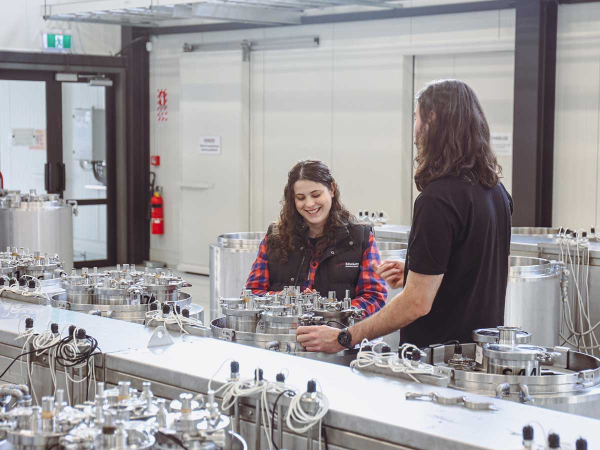
Many of these women arrived via less expected routes. Francesca Cavasin, BRI's new research winemaker, started in the vineyard, started in the vineyard, became a vineyard manager, went back to study, moved into commercial winemaking, and eventually made the shift to research. She suggests that a common wine science misconception is "that there's a single 'correct' pathway in", with study first, then industry work. "In reality there are many different entry points. While viticulture or winemaking are common pathways, people also come into the field through areas like chemistry, microbiology, engineering or food science, all of which play an important role."
Dr Amy Hill began he working life as an accountant before returning to university to study biology, completing a PhD at the University of Cambridge studying gene regulation in bacteria, and postdoctoral work at the University of Canterbury, before joining BRI as Laboratory Manager. Dr Sarah Knight hadn't planned on a PhD at all: "I saw the project advertised and had to find out more." But the subsequent research into regional typicity of Saccharomyces cerevisae seeded a passion for harnessing biological science to answer commercially relevant questions "and vice versa".
Dr Ellie Bradley's path wound through DNA markers in mice and lice, fungal genetics, and plant pathogens before she took up a postdoctoral role at BRI in 2022, progressing to Research Associate. "I never had a specific end-goal when I started studying," she says. "I started with courses I was interested in and took opportunities as they arose." Her work now includes investigating RNA as a tool to control grapevine leafroll-associated virus, developing grapevines with targeted genetic changes, and identifying disease-resistance markers within BRI's variety collection. She loves the range in her work, and that it's experimental nature means success isn't guaranteed. "That makes solving a problem, troubleshooting an experiment, or achieving any sort of win hugely satisfying."
Wine science draws from a remarkably wide range of disciplines, many of them not always obviously connected to wine. Dr Annabel Whibley works in bioinformatics, exploring genomic datasets to understand grapevine biology, with an honorary research fellowship at the University of Auckland alongside her BRI role. Dr Fang Gou, whose background spans agro-meteorology and crop system modelling, is building BRI’s research data infrastructure to support cross-project analysis across the institute. When she tells people that she works at a wine research centre, “their first assumption is that I know wine inside out and can give recommendations”, Fang says. But wine science is a multidisciplinary field that encompasses viticulture, plant science, microbiology, chemistry, data science, sustainability and innovation. “There’s far more science behind every bottle of wine than most people realise.”
 |
|
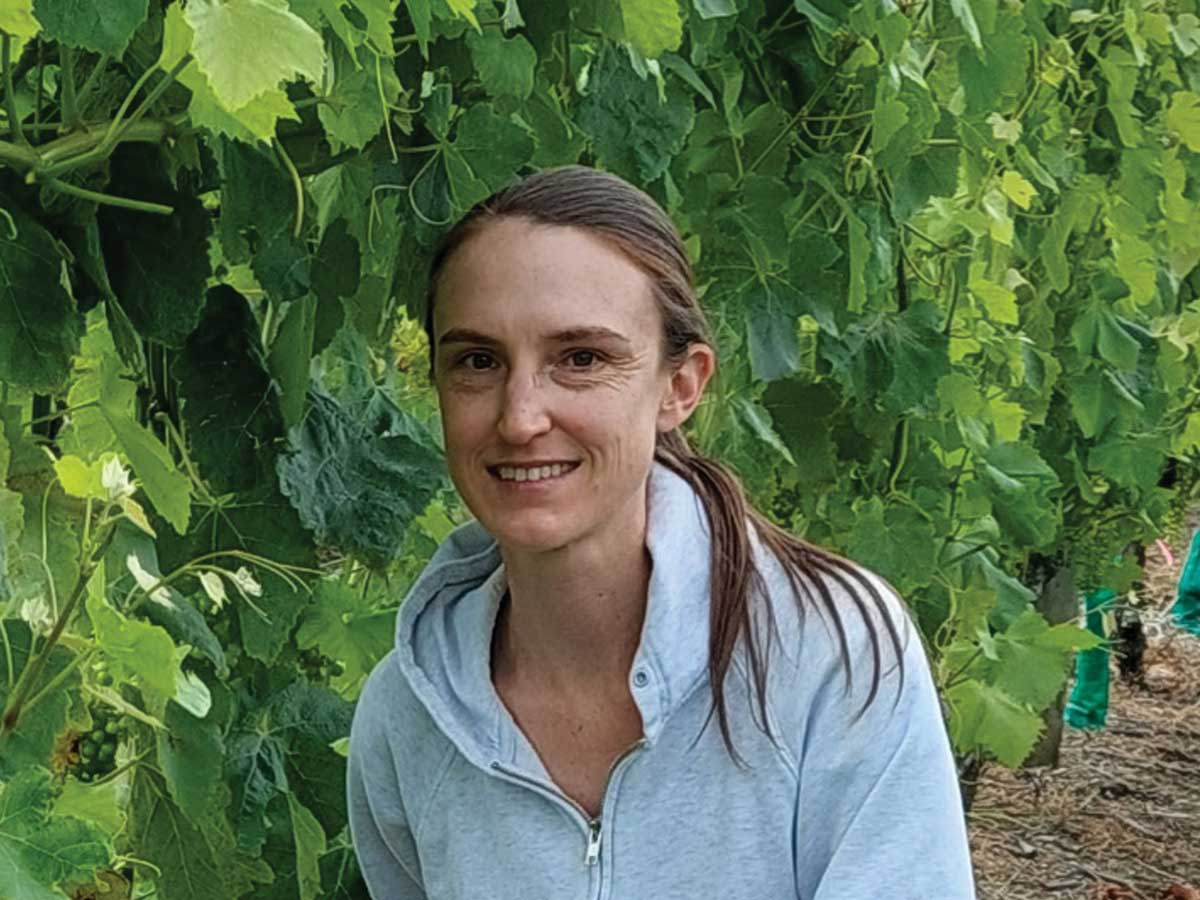
Dr Sarah Knight.
|
Dr Cen Liau studied human genetics at the University of Otago and now works in the grapevine improvement team, working across grapevine genetics, epigenetics, and pathogen genetics, including powdery mildew. “Wine science covers much more than winemaking. A lot of important work happens much earlier,” she says.
Cen values “knowing that our research can provide useful information with a direct impact for our stakeholders”. That’s echoed by all the researchers interviewed, undertaking science that practically connects to the industry rather than stopping at academic publication. “In commercial roles you’re focused on one brand or company,” Francesca says. “But in this role the work can benefit the wider New Zealand wine industry, which is really rewarding.”
Leading Wine Science
Juliet arrived at BRI via Kings College London, a PhD from Oxford, and career stints in Tanzania, The Gambia, Australia, and Plant & Food Research. Having worked across academia, large corporates and agritech, the institute’s chief executive has found the wine industry to be a receptive environment for women scientists. “The attitude of men in leadership roles or with long-held experience has been welcoming without being tokenistic or patronising,” she says. “They treated me as if I deserved to be there for my capabilities and skills.”
She is specific about what sets the industry apart from others she has known. “Men in the industry stand alongside the women in their businesses and show genuine respect, give airtime, listen. Women are actively involved and there are some great women leaders to inspire younger, up-and-coming ones.” Women don’t have to be like men to lead, Juliet says. “I think the wine industry is the first job I have had where I have been able to express my natural leadership style.”
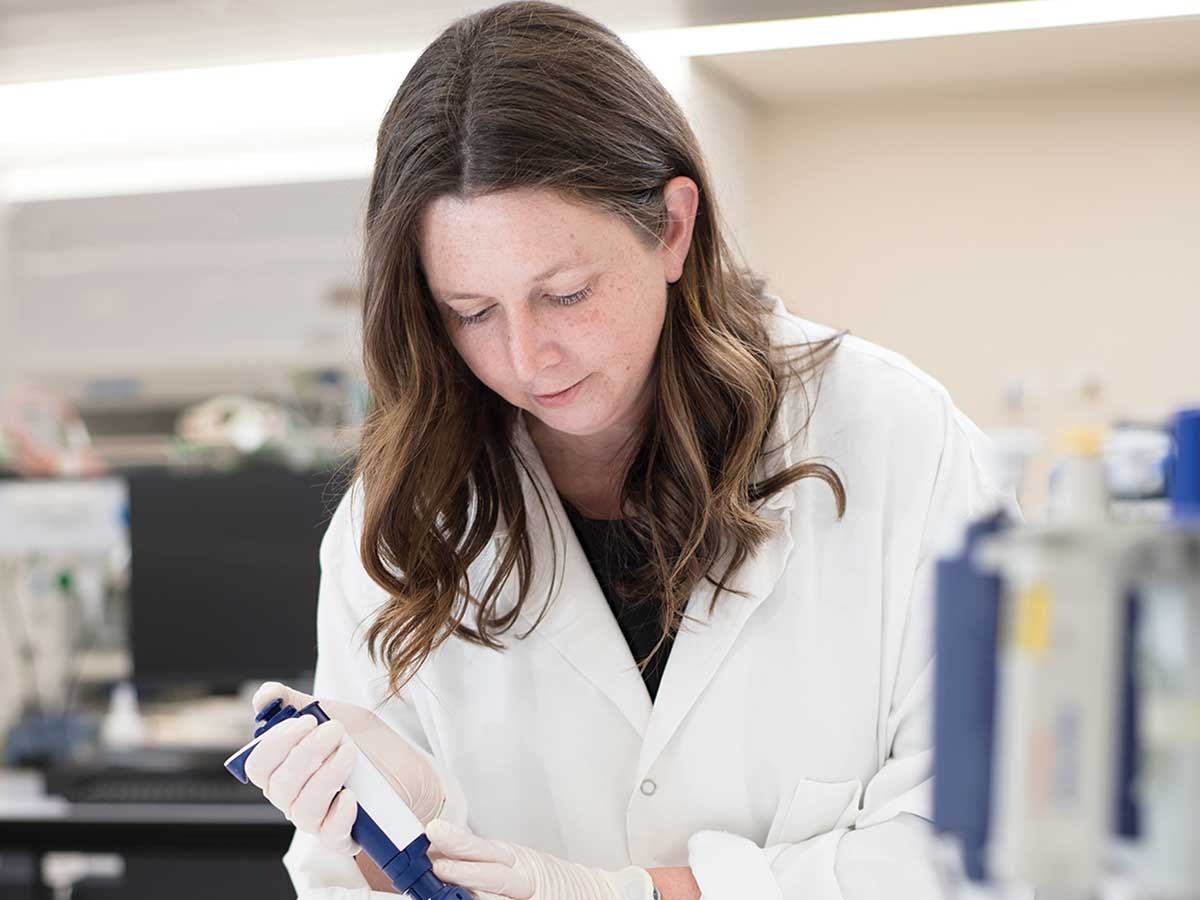
After 16 years in the field, Sarah finds reward at the intersection of research and people. “Seeing those ‘click’ moments in students when they grasp a tough concept or manage to solve a tricky problem in the lab is probably the most satisfying,” she says. “The most interesting part is working alongside industry, local communities, and other researchers to share ideas and develop new projects.”
 |
|
Dr Annabel Whibley
|
Hayley Ridgway, Science Group Leader at BSI, who is working to harness beneficial microorganisms to combat trunk disease, has mentored more than 60 students across her career at Lincoln University and BSI, formerly Plant & Food Research. That’s an especially fulfilling part of her job, she says. “Seeing students and young staff achieve their dreams and to know that I helped them. Many still keep in touch – invitations to weddings, pictures of babies – and it’s satisfying to know that they remember my help and value it.”
The advice many of these women give to those earlier in their careers is encouragingly consistent. “Don’t feel like you have to follow a single, straight path,” Francesca says. “Wine science isn’t just theoretical. Being comfortable in the winery, asking questions, understanding how things work, and getting involved is just as important as academic knowledge. The New Zealand wine industry is collaborative, and having the confidence to share your ideas is just as important as your technical skills.” Hayley distils her advice to two maxims: “Stay kind – the support you extend to others will have a deep and lasting effect. And follow your passion – science is hard, and sometimes that’s the only thing to hold you there.”
“Back yourself and your ideas,” Sarah adds. “No one else thinks the way you do, and your ideas are valid and awesome.” The industry does some “gutsy science,” she adds. “It’s not all about drinking or tasting delicious wine… although that is one of my favourite perks.”