
NZW Fellows: Sir Sam Neill Remembered for His Deep Love of New Zealand Wine
Sir Sam Neill made an extraordinary mark on the world, and on the world of New Zealand wine.




 increase font size
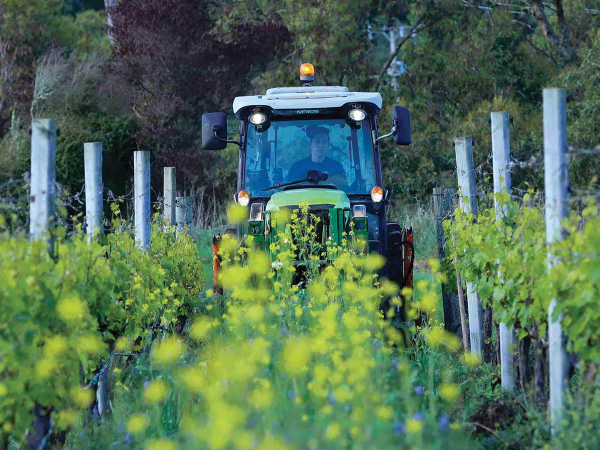 Bridget Stange at Te Mata
Regenerative viticulture has an open and evolving toolbox for growing soil, vine and ecosystem health. Speaking to industry leaders about cover crops, crimpers, swards, sheep and worm counts, Emma Jenkins MW asks whether this is the next era of New Zealand winegrowing.
In a quiet but notable shift, winegrowers globally are talking less about sustainability and more about regeneration - not merely reducing harm but actively improving the health of vineyard ecosystems. The term 'regenerative viticulture' or 'regen vit' has quickly entered the industry lexicon, and while its definition remains somewhat fluid, the intent is clear: to move from minimising damage to fostering renewal.
It borrows from regenerative agriculture - farming that focuses on improving soil function, enhancing biodiversity, rebuilding organic matter, and restoring natural plant and ecosystem cycles. Its goal isn't just to sustain the vineyard environment but to actively improve it over time. In practice, this might mean multi-species cover crops, reduced or no tillage, integrated livestock, or encouraging native plants and insect life, creating self-sustaining, biologically active soils that support healthier vines and greater resilience in the face of growing climate extremes.
British author Dr Jamie Goode, who spoke on the topic at Pinot Noir New Zealand 2025, says this "new-ish" branch of farming vines seems to have wide appeal. "I've seen many who wouldn't consider organics taking a keen interest in regenerative. I love this inclusivity." Regenerative practices often build upon organic principles but go further, requiring the benchmarking and active improvement of ecological factors like soil carbon levels of wildlife habitats. Unlike organics or biodynamics, regen vit (as yet) has no certification scheme, and this flexibility has made it attractive to a broad range of growers. "All solutions are local," Jamie says. "It's about intelligent application of a toolkit of interventions, not a recipe or checklist."
The absence of formal standards has opened regenerative viticulture to criticisms or greenwashing, but "I'm not overly worried", Jamie says. "Because so far this is something people adopt because it is a scientifically rational way to farm that results in lower inputs, lower costs, and potentially better wine quality. And morally it is the best way to go because it leads to true sustainability."
Dr Ed Massey, New Zealand Winegrowers General Manager Sustainability, says certification is becoming increasingly important for market access, and there are currently no bodies in New Zealand that certify vineyards as regenerative. "However, there's heaps of space for Sustainable Winegrowing New Zealand certification and regenerative practices to exist alongside each other."
SWNZ Programme Manager Meagan Littlejohn says there are no plans at this stage to explicitly add regenerative to the framework, "however there is alignment between SWNZ and some of the tenets of regenerative agriculture, in particular protecting and enhancing soil health," she says. "We do have plans to review and further refine/strengthen the soil pillar of SWNZ in the near future." In 2022, Viticulturist Jess Wilson wrote a research paper on whether regenerative viticulture is the answer to a future-proofed wine industry. She found that SWNZ and regenerative viticulture could play a role in protecting the industry's prospects, "but neither is the sole answer". The two are complimentary, she wrote in the Kellogg Rural Leadership Programme report, suggesting that regenerative could be integrated intro SWNZ, for operators who want to go further than the framework. "If members of the wine industry believe they have ‘achieved’ sustainability they should be challenged to go further, there is always room for learning and improvement in a changing, dynamic environment.”
Te Mata
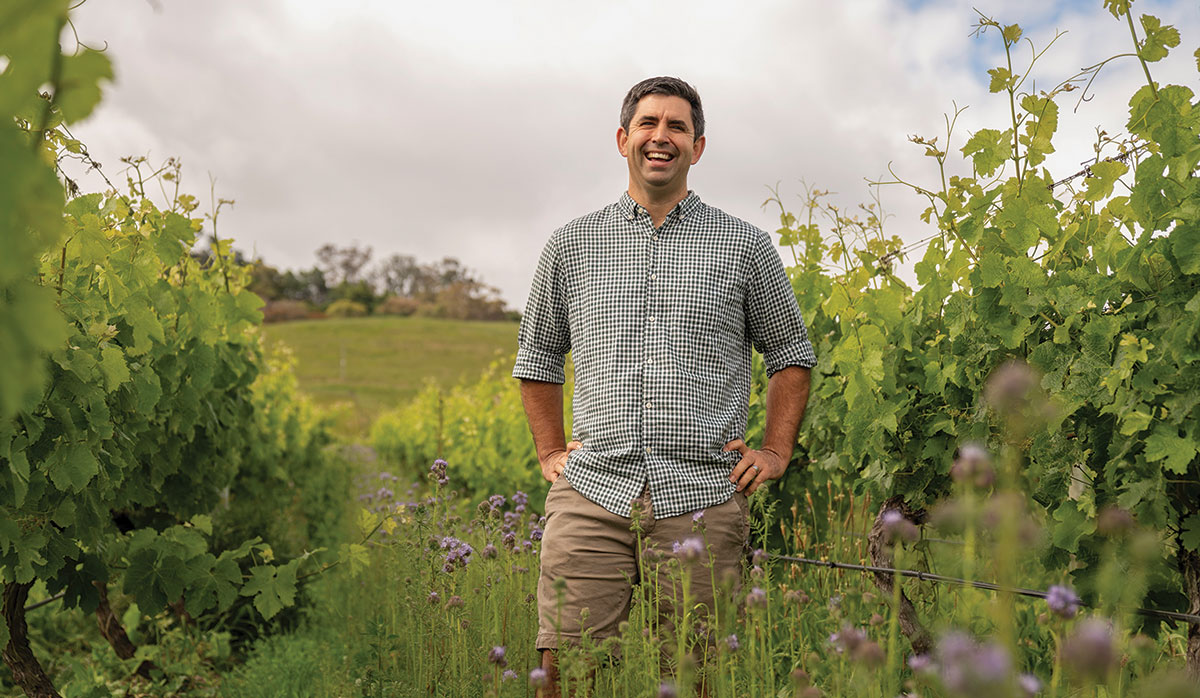
When viticulturist Brenton O’Reilly arrived at Te Mata in October 2019, he inherited a legacy vineyard, with muti-generation stewardship primed for evolution. “It was a chance to relook at things, where we had come from and where we were going, and to set out a 10-year plan,” he says. “We were already well set up above ground with trellising, rootstock and vineyard mapping, so the logical place to start was looking beneath our feet at soil health beyond what we were already doing with SWNZ”.
With a significant company research and development fund, and a partnership with the Callaghan Institute, Brenton spent 12 months reviewing organic, biodynamic and regenerative practices from across New Zealand and overseas, both within and outside of industry, before rolling out trial blocks across site, variety and subregion.
 |
|---|
|
Brenton O'Reilly at Te Mata |
Senior Winemaker Phil Brodie says they didn’t want to set a mandate, “so a system with flexibility was appealing”. They asked throughout not just ‘what’ they were doing, but ‘why’. “We were looking for long-term solutions rather than band aid ones. It is a real mindset change.” For example, instead of having a spray response and schedule, they would consider the root cause of the problem, such as bunch trash driving botrytis counts, which could be solved with a foliage shaking programme.
Now, more than four years in, regenerative practices blanket all vineyards. Key shifts have included moving away from herbicides undervine, deploying custom undervine mowers and crimp rollers, and targeting soil health and moisture retention via cover crops, with strategic mixes tailored to site, block and even clusters of vines. They incorporated highland cattle and biodynamic preps, as well as composting. “We have definitely needed new equipment,” Brenton says. “Though some of this investment is offset by fewer inputs and an improvement in fruit quality.” In tricky vintages like 2022-23 the vineyard responded much more resiliently. “Fruit came through better than expected and we had more tools to work with too.”
On the winemaking side, Phil has observed measurable gains: better YAN levels, berry integrity and thicker skins, with blocks previously suited for estate wine now earning placement in top-tier ranges. There’s also a team shift to root-cause thinking. “Buy in is crucial, especially as you need to get things set up, both in terms of vineyards and people. It’s a slow and steady process and culture is so important. We’re proud of what we have done, and what we are doing.” At Te Mata – New Zealand’s oldest continuously operating estate – this is a long-term, integrity-driven project, says Phil. “The best part of the story is we believe in it.”
Lowlands Wines
When Robert Holdaway returned to Marlborough after years in ecological research, he brought with him both a scientist’s curiosity and a farmer’s instinct. A Cambridge PhD in ecology, and time at Landcare Research studying biodiversity and ecosystem function, had sharpened his conviction that vineyards could function as thriving ecosystems, not just production systems. “My brother Richard [a mechanical engineer] had already started moving down this path, and we see biological and regenerative farming practices as a natural progression of our family’s multigenerational farming philosophy,” he says.
That philosophy now underpins Lowlands Wines’ vineyards across Dillons Point and the Lower Wairau. Guided by the principles of regenerative agriculture – minimising soil disturbance, maintaining living roots year round, boosting biodiversity, keeping the ground covered with mulch, compost or living plants, maximising photosynthesis, and integrating livestock – the Holdaways have adapted each idea to Marlborough’s realities. “First and foremost is the regenerative mindset,” Robert says. “We are always looking to innovate, apply the latest science, and adapt our practices to variation in seasons and across vineyards.” For example, they have recently shifted away from annual cover crops towards a diverse perennial sward, as they found that minimises negative effects caused by the herbicide or cultivation required to successfully establish a new cover crop.
Sheep play a starring role: 1,500 merinos rotate through the blocks each winter, adding fertility, reducing mowing, stimulating root exudates as plants regrow, and aiding with frost protection by keeping interrows neat. Meanwhile, compost, foliar nutrition and microbial stimulants sustain soil function. Synthetic nitrogen is avoided altogether. These practices are applied across their 182 hectares of vineyards, specific to particular blocks, and trials of zero-herbicide blocks are currently under evaluation.
 |
|---|
|
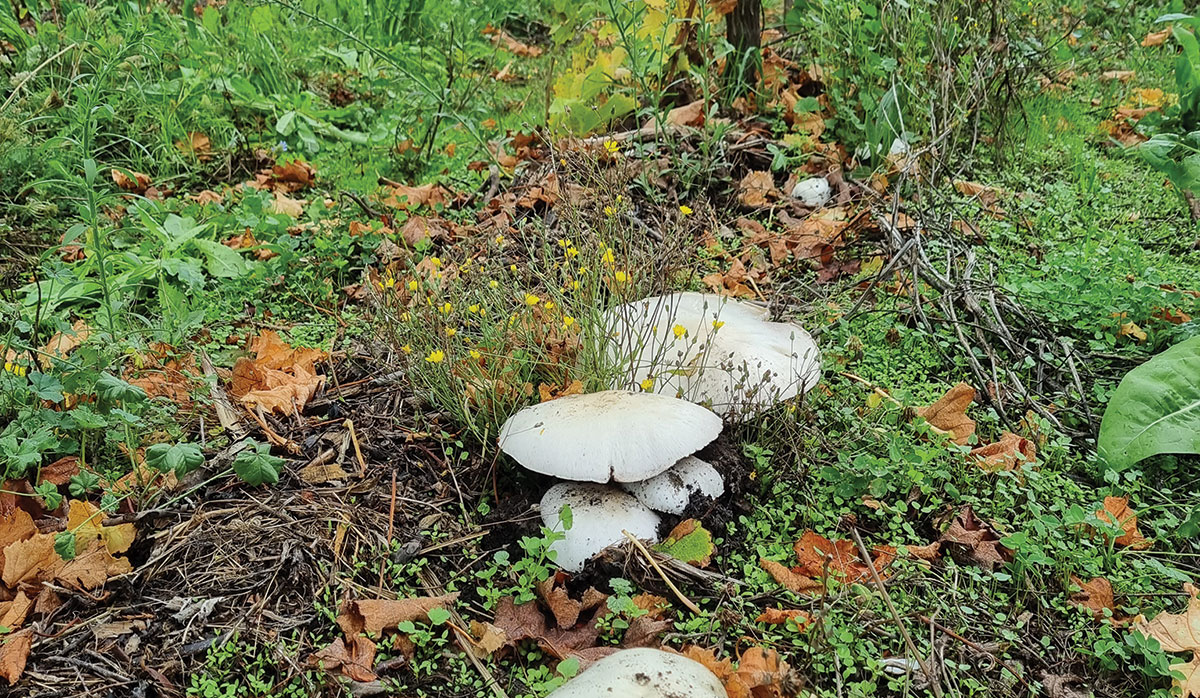
Lowlands Wines |
The results are encouraging – after heavy rain events their ditches deliver clearer water compared to neighbours, soils teem with earthworms, biodiversity inside the blocks has visibly increased, and they no longer need to spray for mealybug. Robert says costs have overall been pretty similar to those of previous systems. “We’re not doing these practices with the aim of saving money. We’re doing them to improve vine health, yields, and ultimately wine quality.”
Meanwhile, extensive plantings of both plantation and native forest offset their vineyard emissions, with their annual carbon sinks now more than ten times greater than their wine production emissions. The Holdaways’ approach demonstrates how effectively science, soil, and long-term stewardship can align to create resilient vineyards and quality wines.
Te Whare Ra
Regenerative viticulture is deeply embedded in the way Anna and Jason Flowerday farm at Te Whare Ra. “For us, regen is the future of farming,” Anna says. They learned a lot about it living in South Australia, before buying their Marlborough vineyard, and found those techniques helpful in bringing soils “back to life”, she says. “Which in turn brought our old plantings back to life.”
“When we first took over here we had a lot of people tell us ‘those old vines are stuffed and you will have to pull them out and start again’. But to us they were something very unique and precious. We felt very fortunate to have access to them so we pulled out all the stops to save them.”
Two decades on, their “3 Cs” (cover crops, compost and cowshit) remain the foundation of Te Whare Ra’s system. Early adopters of cover crops in Marlborough, they drew curious stares and comments from passing growers when Jason first began experimenting. “We see the mid rows as a huge opportunity to improve our soil health,” says Anna. “We initially ran an alternate row system with summer and winter cover crops in one and a multi-species sward in the next, grazed by our cows in winter.” With numbers now very stable, that mixed sward forms a permanent, diverse mid-row cover, including clovers, chicory, plantain, and winter-active, summer-dormant fescues. “Jason and I both believe that to be truly regenerative you need to be organic as well – you can’t be using herbicide,” Anna says. “That might be a controversial opinion, but I don’t think you can say you are improving your soil health on the one hand whilst you are damaging it on the other.” Livestock and bees are in the mix as well. “We have our cows here 12 months of the year, and also add in sheep over winter. And we compost all our marc with hay grown on the property.”
The results speak for themselves: soil organic matter has risen from 2% to around 7%, effectively creating “a 13.6 million litre dam under our vineyard”. There’s little run off, improved resilience and fruit quality in tougher years, something especially notable in drought years.
 |
|---|
|
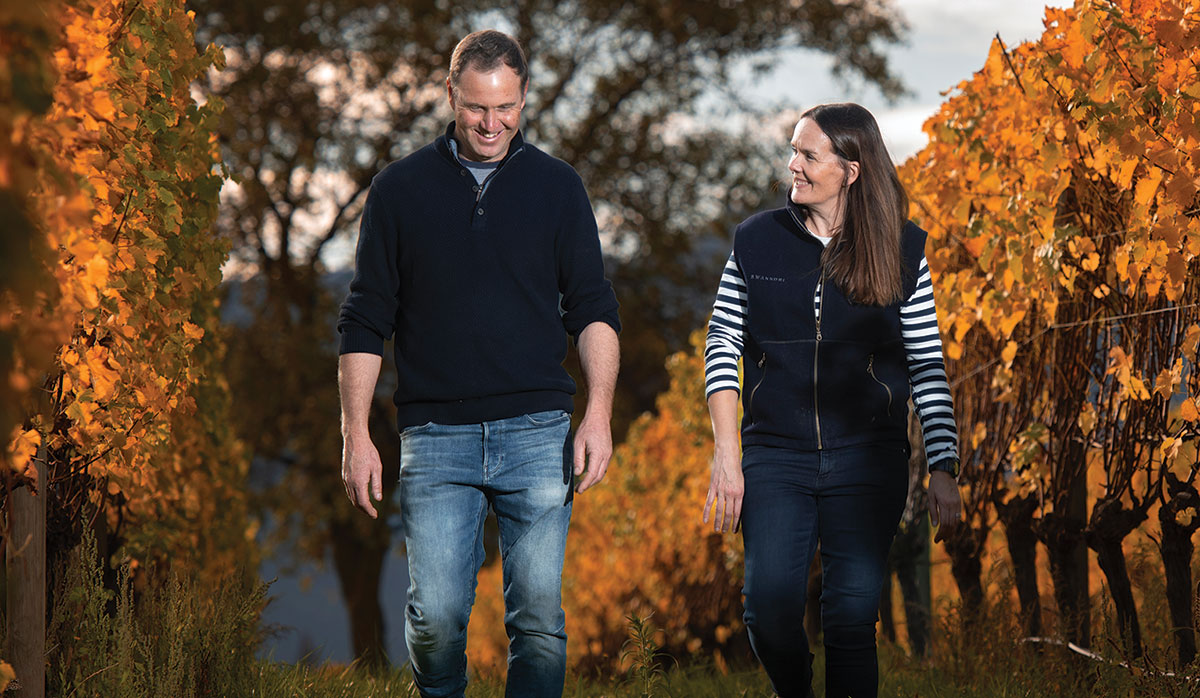
Jason and Anna Flowerday. Photo Credit: Richard Briggs |
The Flowerdays are vocal advocates for broader change. “Much of what we do could be adopted by conventional growers,” Anna says. “You don’t have to be organic to use cover crops and compost and to integrate livestock, but you do have to walk the walk, not just talk the talk.”
Regenerative Viticulture Foundation
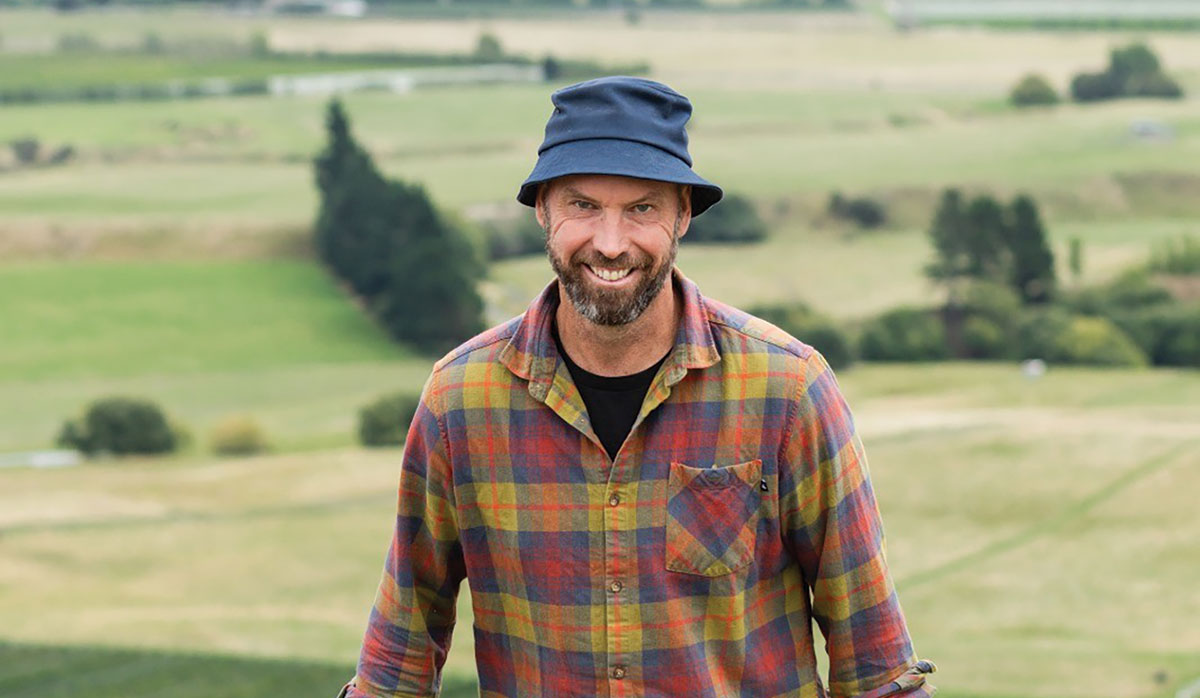
Nick Gill brought a rare blend of pragmatic farming roots and visionary viticultural and permaculture thinking to his former role at Greystone Wines. And he’s built on that over the past year, as technical lead for the Regenerative Viticulture Foundation in Aotearoa New Zealand. “I feel like there are so many ways we can improve how we grow and make wine,” says Nick, who grew up on a farm in South Australia, witnessing firsthand “how fragile the landscape was”.
For the past 20 years he and his wife Angela have run a permaculture ‘food farm’ in North Canterbury, while he helped drive regenerative viticulture at Greystone.
Nick’s view on regeneration centres around two core tenets: resilience and diversity – not just of the vineyard but also of people and thinking. “Regenerative viticulture is very context-specific,” he says. “It relies on living systems and biology, so producers need to have good understanding of what works for their business/plants/ people.” In practice, this means minimal soil disturbance, maximising diversity, maintaining soil cover, no synthetic chemical inputs, and integrating animals into the system. On transitioning to undervine cultivation, he emphasises caution, because doing so too quickly can impact yields and vigour. A key element is the integration of living interrow plants and cover crops, rather than herbicide-based, mechanised weed management, and where possible, using animals.
At Greystone’s certified organic Waipara vineyard this approach is now embedded, with no herbicides, insecticides or systemic fungicides. They use cover crops, companion planting and canopy management, aimed at using light and air movement for disease control, including one block with a distinctive high-wire trellising system that allows sheep to graze year round. They also use native plantings to further bolster biodiversity.
Regenerative viticulture is a toolbox for all growers, including the “regen curious” looking to move in a positive direction, Nick says. “Even if at the start it’s just going from six roundup sprays to two, or allowing grasses to get longer before mowing.” Through the “One Block Challenge”, Nick invites growers to test regenerative methods on a single vineyard block for one year, document the outcomes, and share learnings. His goal is to build a network of resilience and practical diversity across the industry. “People need to be curious rather than dismissive of what neighbours are doing,” he says.
 |
|---|
|
Nick Gill |
Felton Road
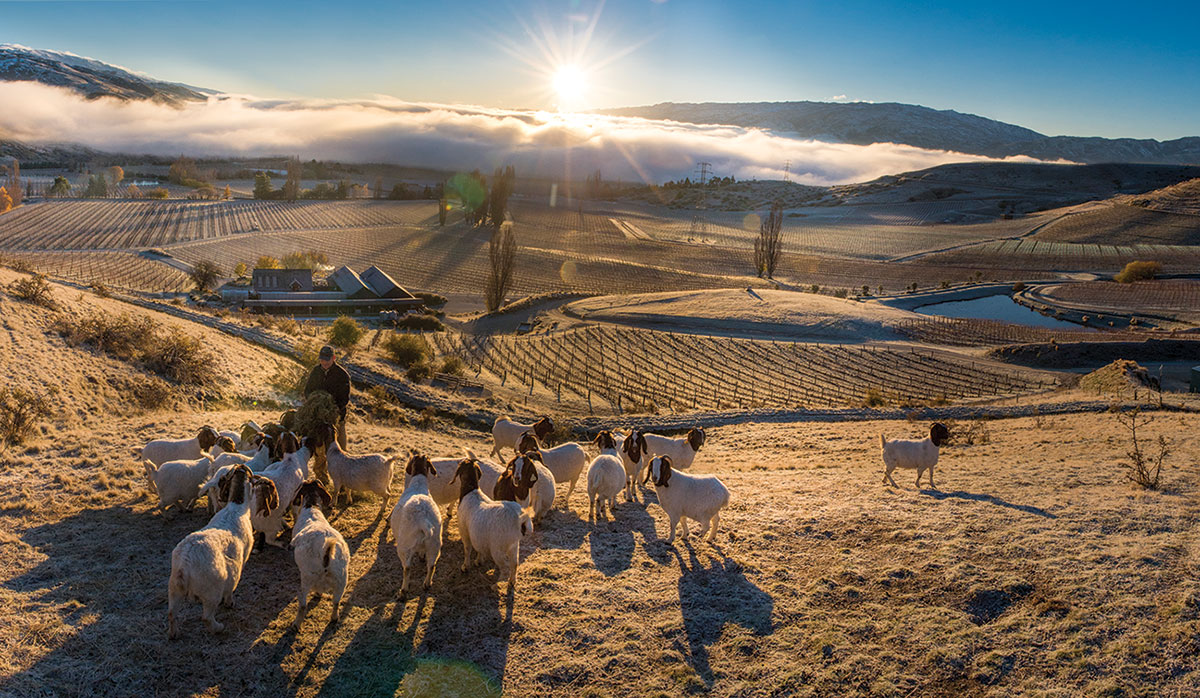
Regenerative viticulture is a natural evolution within Felton Road’s long-held values of sustainable farming. “Like all good farmers of the land you must keep an open mind,” says Estate Manager, Gareth King. “We can always learn and try to improve what we have. The idea is not just sustaining our environment but improving what we have, nurturing the place we have, and leaving it in a better way than when we found it.”
With more than two decades of certified organic and biodynamic farming behind them, Felton Road’s approach feels less like a new system and more like an ongoing dialogue with their land. “It’s not really that much different than what we have continued to practice. Though more crimping means more seeds, so staff all now need to wear gaiters on their footwear,” Gareth jokes. Vineyard manager Annabel Bulk concurs. “It’s about recognising what is required and rolling with the seasons rather than having the same prescription every year”, she says. “Regen has to fit into that, and the best practice this season may not be suitable in another year.”
Recent wet springs in Central Otago have tested that adaptability. “This spring has been so wet that we have had to delay some of our tractor work to allow soils to dry out and recover from the rain. The wet has led to significant interrow sward growth and now we have opportunity to crimp cover crops and re-seed to increase biodiversity and soil aeration.” A newly acquired crimper and direct drill make this process more efficient, eliminating mowing passes while seeding down the narrow rows. Livestock remains integral, not just to manage growth, but to add diversity. “We may graze sheep which could save a mowing pass, but more crucially sheep bring a different diversity, with their droppings enriching the soil,” says Annabel. “Livestock are very much a part of the biodynamic system so this goes hand-in-hand with regen.”
 |
|---|
|
Felton Road |
Gareth is clear eyed about the industry’s current enthusiasm. “The market likes the ‘buzz’ of regen but there is a general belief that it is a catchall for best practice farming. It seems counterintuitive that growers can be considered regen when they still use harsh and harmful chemicals.” He’d like to see a dedicated standard available. “Perhaps not fully certified organic but a step in the right direction, with reduced harmful inputs and more accountability.”
Aotearoa New Zealand Fine Wine Estate
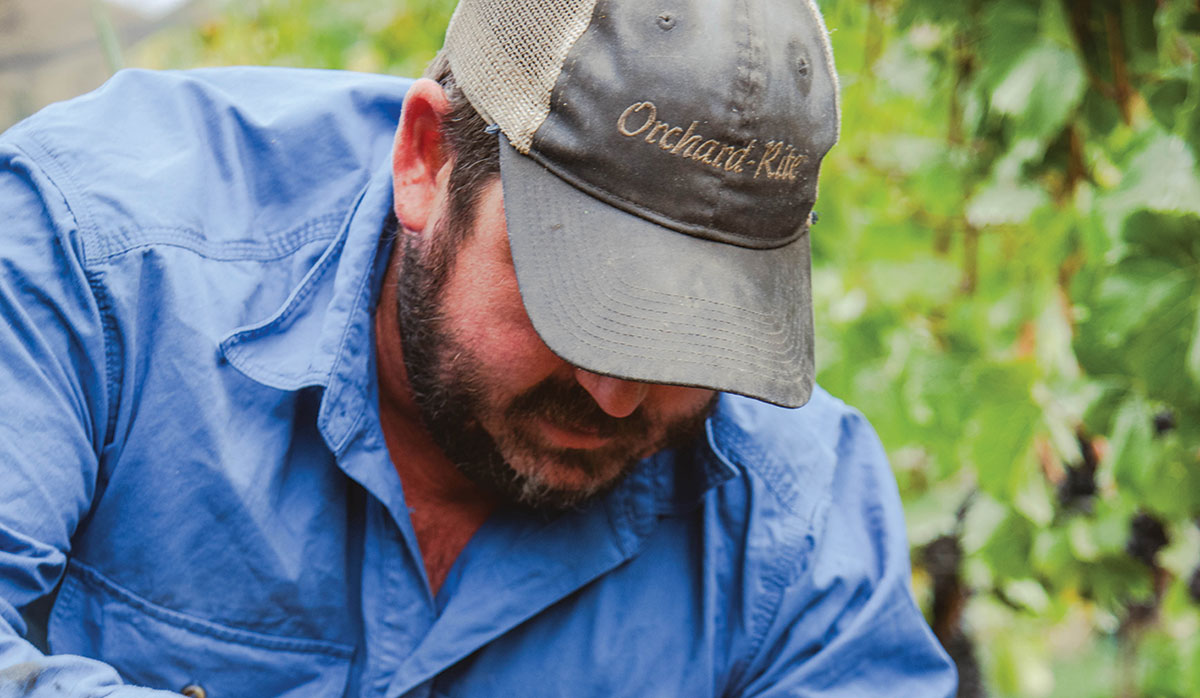
Nick Paulin doesn’t seem like someone who spends a lot of time talking about his underwear. But you might be surprised. His “undies test” – showing the markedly greater decomposition of cotton undies buried in diverse cover crop blocks versus simple grass – is a disarmingly simple teaching tool about the benefits and power of regenerative viticulture. “Everyone gets it, and it blows people’s minds,” he grins. “It’s a great way to start a real conversation about what’s happening underground.”
Nick’s background in organics dates back to university, and he describes the transition to regeneration as appealing because it prioritises measuring outputs (soil health, biodiversity, resilience) rather than just inputs (certification checklists), aligning well with the views of Aotearoa New Zealand Fine Wine Estates (AONZ) co-owner Steve Smith. Nick acknowledges the grey areas that come with regenerative viticulture’s lack of formal certification. “You can be regen and going great guns, or you can appear regen but just be greenwashing with sheep in photos”.
 |
|---|
|
Nick Paulin |
His mantra is to encourage people to shift, because every small change matters. At AONZ they operate with a “regenerative mindset as a base” approach, layered with certified organic viticulture, incorporating biodynamic principles, at Pyramid Valley. Certification assists market access, and they have formulated their own regenerative reporting, such as soil organic matter tests and worm counts.
Across sites the work is tailored, and Nick emphasises the trial and error process of refining what works. The old vines of the Low Burn Estate in Central Otago, with its dry-farmed set-up, differs from Pyramid Valley’s high density plantings in Waikari, and Hawke’s Bay’s quicker growth cycle, driving different cover crop strategies. At Waikari, they learnt that cereals created too much humidity in high density blocks, and switched to low growing clover and alyssum. Animals are integrated too – a small sheep mob grazed a high density block pre-budburst – practices Nick sees as “closing the loop”.
Long term United States-based regenerative viticulture advocate Mimi Castell says New Zealand is well positioned to further advance wine sustainability “at this existential moment”. Moving to a regenerative mindset is about “addressing forces of degeneration”, Mimi says. “As an individual this is quite daunting, but as a community we can make roadmaps that allow us to support each other.”
Sir Sam Neill made an extraordinary mark on the world, and on the world of New Zealand wine.
In the acknowledgements section of her Kellogg Rural Leadership Programme report, Jess Wilson thanks those who’ve supported her many endeavours. “Even when I say, ‘this is the last one’ when invariably it never is.”
OPINION: When I moved to Marlborough two decades ago, I found countless lines of tidy vines, neatly mowed and carefully sprayed, with diligent conventional practices interspersed with the odd organic or cover-cropping outlier, like Te Whare Ra.
Felton Road Wines is using an electric drone sprayer to apply organic fungicides and monitor crops, cutting emissions and transforming management.
Felton Road has been named The Real Review Winery of the Year New Zealand for the second year running.


One of Australia's most decorated winemakers will speak at the Aotearoa New Zealand Chardonnay Symposium in Hawke's Bay this September.
The third Aotearoa New Zealand Chardonnay Symposium will be underway in Hastings, Hawke's Bay, on 17-18 September.
Vintage 2026 yielded excellent fruit for most New Zealand wine regions.



