The Women Behind NZ Wine's Scientific Future
From genetic researchers and bioinformaticians to plant pathologists and data scientists, Emma Jenkins talks to some of the women helping shape the future of New Zealand wine.




 increase font size
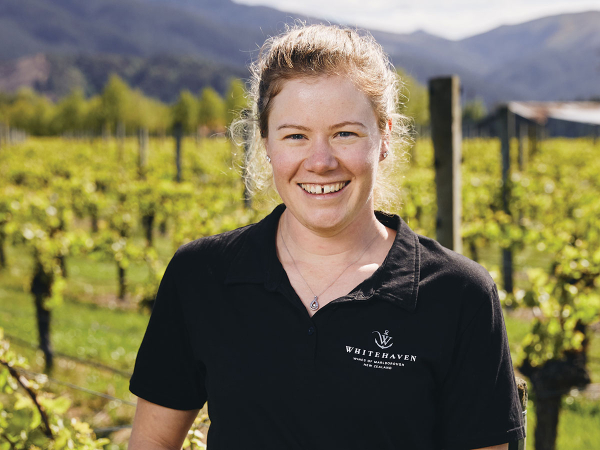 Jess Wilson
In the acknowledgements section of her Kellogg Rural Leadership Programme report, Jess Wilson thanks those who’ve supported her many endeavours. “Even when I say, ‘this is the last one’ when invariably it never is.”
It’s a short line that speaks volumes about Whitehaven’s viticulturist, who by the age of 30 had written an honours thesis on trunk disease, had run special projects for Delegat, had become the first woman to win the Marlborough Young Viticulturist of the Year (runner up in the national final), and had written her Kellogg report on regenerative viticulture.
Fast forward a few years, and Jess has a toddler and is on maternity leave, days away from having her second child, having recently joined the Bragato Research Institute Research and Innovation Committee and become Chair of the Marlborough Young Viticulturist of the Year committee. The Kellogg report clearly was not the “last one”.
Jess grew up south of Auckland at Waiau Pā, on a lifestyle block where her mother established a hydroponic lettuce and herb farm, offering plentiful jobs for pocket money. At school she loved science and knew she didn’t want to work in an office. When her mother read about opportunities in viticulture and oenology, they visited Lincoln University during the holidays, and Jess was hooked, assuming her love of chemistry would put her the path to winemaking.
But when Jess finished her degree in 2013 and fired out job applications, viticulturist Sioban Harnett gave her a summer job in Whitehaven’s Marlborough vineyards, getting her feet well and truly in the vines. “I spent the whole summer with her and it was great fun,” Jess says. She went on to work in the winery over harvest, getting experience in the lab, “but I was starting to tend towards the vineyard a bit”.
The next endeavour was an honours degree in viticulture at Adelaide University, tackling a thesis on Grapevine Susceptibility to Eutypa, looking at varietal susceptibility to trunk disease, and the influence of xylem vessel size. It was a “massive” topic in Australia at the time, but while scientists were sending up warning flags in Marlborough, for most growers in the region it was an unseen threat that was “easy to ignore”, Jess says. That’s no longer the case, with the “big pipes” of Sauvignon Blanc putting it very high on the susceptibility list, Jess says, having recently overseen the mulching of a block of diseased Sauvignon vines, to be replanted in Gewürztraminer.
She “absolutely loved” the research and was sorely tempted to stay when the university asked her to undertake a PhD, but decided to return to Marlborough instead. From 2015 to 2017, Jess did the Delegat graduate programme, immediately “earmarked as technical” and steered away from machinery work and into trunk disease identification, young vines and irrigation. She did another year as Viticulturist, Special Projects, delving into trunk disease and virus, and any “little inhouse research programme we had going on”, Jess says. “That was really, really good.”
In the end of 2018, she became Assistant Viticulturist at Whitehaven, tempted back by the opportunity to learn more from Sioban. When Sioban left in 2020, Jess became Whitehaven Viticulturist, before going on to win the Marlborough Young Viticulturist of the Year 2021, and come runner up in the national final. The final was planned then postponed three times, due to Covid restrictions, before being finally held in January 2022. “I was a bit burnt out after that,” she says of the repeated preparation periods. “And I got everything I think I wanted out of it as well.” These days her role is behind the scenes, as a member, and now chair, of the local organising committee. “I love being on the other side, writing the quiz and speech questions. It’s been a lot of fun.”
Hot on the heels of the national competition, Jess did the Kellogg Programme, with a report asking whether regenerative viticulture is the answer to a future-proofed wine industry. She found that Sustainable Winegrowing New Zealand and regenerative viticulture could play a role in protecting the industry’s prospects, “but neither is the sole answer”. The two are complimentary, she wrote in the report, suggesting that regenerative could be integrated into the SWNZ programme, for operators who want to go further than then framework. “If members of the wine industry believe they have ‘achieved’ sustainability they should be challenged to go further, there is always room for learning and improvement in a changing, dynamic environment.”
She doesn’t regard Whitehaven’s viticulture as regenerative, but they reach into the “open toolbox” of regenerative practices, by reducing herbicide use, using a Clemens undervine weeder, and sowing cover crops most years, alongside the company’s extraordinary native planting programme at The Springs. “We’re doing bits that fit into what works for us as a business, and getting the wine that we wanted at the end,” Jess says. “There’s flexibility.” She sees the value in arguments against certification, which represents having achieved something “and that’s not the point to regenerative”, she says. “It’s meant to be a continuous improvement process instead of just saying, okay, yep, I’ll tick all those boxes, we’re certified now.”
 |
|---|
|
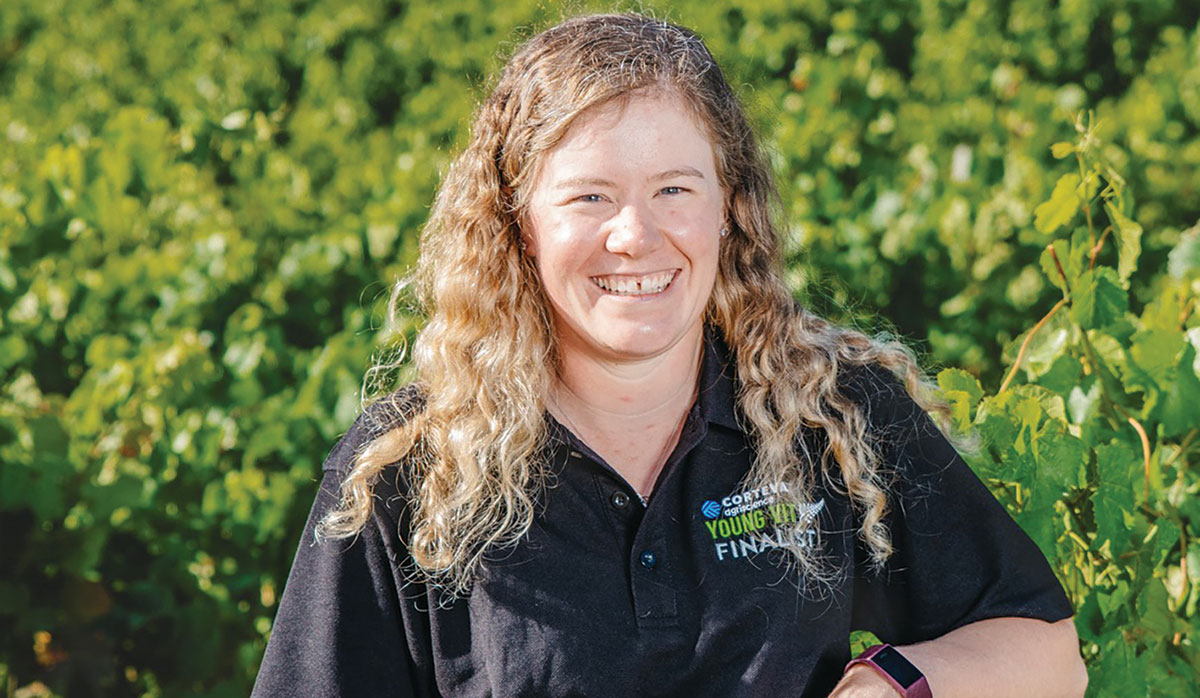
Jess Wilson |
Whitehaven is also involved in new research projects, including the BRI’s UV-C trials for managing powdery mildew and Next Generation Viticulture programme, trialling alternative vine training systems. They’re also utilising new tech, including the Integrape platform, and Vure technology for data collection, meaning she can see live results of inflorescence counts, for example. Jess has her eye on an array of new technologies. “We won’t necessarily jump into everything, but there’s some very cool tech in the wings and it’s going to make our lives so much easier.”
Her uptake of research and innovation has stood her in good stead at Whitehaven, where she works with 30 growers, some of whom have been with the company since it began. In many cases that means taking research into the field after the likes of Grape Days. Relationship management has been a much bigger part of viticulture than Jess ever expected, but is key to having growers committed to Whitehaven’s vision. The company takes a partnership approach, Jess says. “You go into a block and you might say, ‘hey, we’re going to have to deal with the yields. You’re carrying a mass of tonnage and we can only take so much. How are you going to do it?’”
In the winery, they try to keep parcels of ferments separate, so she and the Whitehaven winemakers can go back to the growers in winter with their bottle of wine and tell them how it tastes. “It’s in a very raw state, before it’s blended, but they get to see that.” The process means that every block or vineyard gets its chance to shine at the grading tasting, “because they’re all so different”. Some of them won’t perform perfectly every year, and she’ll make a plan with the grower, “whereas there’s others that it doesn’t matter if it gets botrytis, it shines anyway”.
She loves working with a company where she has input throughout the process, watching the fruit during the season, sampling the ferments, and tasting the wine at the end. “It’s like that full circle, and I do very much like that.”
From genetic researchers and bioinformaticians to plant pathologists and data scientists, Emma Jenkins talks to some of the women helping shape the future of New Zealand wine.
Virginie Le Brun says home base is the greatest strength of her family’s winery, particularly in tough times.
You can spot the frolicsome vibe of Lauren Swift’s wine well before it reaches your glass. It’s signalled in the perky-pink feature wall of her cellar door; in the brand’s pun-cheerful tagline, ‘Swift Wines: stop and smell the rosé’; and in the trio of her “silly sausage dogs”, who lend their names and features to some of her wine labels.
When Ashleigh Barrowman landed in Marlborough a decade ago, she was convinced the wine tanks that dotted the landscape were hiding dairy secrets.
Regenerative viticulture has an open and evolving toolbox for growing soil, vine and ecosystem health. Speaking to industry leaders about cover crops, crimpers, swards, sheep and worm counts, Emma Jenkins MW asks whether this is the next era of New Zealand winegrowing.



OPINION: As I approach three months in my role as New Zealand Winegrowers Chief Executive, one message has come through…

OPINION: The United States wine market has changed forever, and companies cannot use same old playbook, said Erin Kirschenmann at…
One of Australia's most decorated winemakers will speak at the Aotearoa New Zealand Chardonnay Symposium in Hawke's Bay this September.
The third Aotearoa New Zealand Chardonnay Symposium will be underway in Hastings, Hawke's Bay, on 17-18 September.
Vintage 2026 yielded excellent fruit for most New Zealand wine regions.



