Short courses for all visa holders
Primary ITO has a wide range of work-based training options to help you grow the skills and knowledge of your staff in 2025.




 increase font size
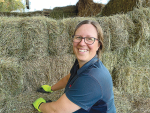
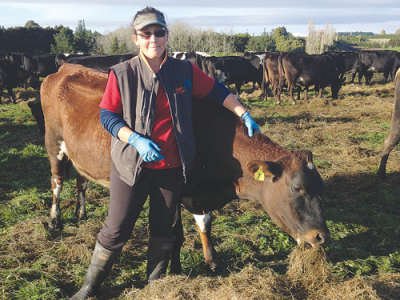 Frankie Stevens.
Dairy farming is a hands-on industry, but Frankie Stevens discovered that understanding the theory and business practices that underpin a farm is the key to success, comments Primary ITO.
Stevens worked all her life on New Zealand dairy farms as a herd manager and contract milker, but says she got new insight while studying in 2011 for Primary ITO’s Certificate in Production Management and in 2016 for its Diploma in Agribusiness Management.
“It was like all the lights had come on. Getting all these results from the cows, getting it down on paper and seeing it all make sense was so enlightening.
“I learned many useful things in the diploma course -- taxation, cashflows and budgets, and working out operating profit. I enjoyed the financial side of things.
“And then there was HR. I’d had an HR toolkit since 2011 and it sat on my bookshelf.
“Now I know it inside and out thanks to my diploma. Whenever we need to employ people now, I have a plan I actually use.”
Stevens did not enjoy school and struggled with dyslexia. She was forced to take over milking her parents’ herd on the West Coast at age 15 when her father was injured in a motorbike crash.
At age 18 she went to Telford Rural Polytech and completed a Certificate in Agriculture but her employers, fearing that more studies would interfere with her work, held her back.
Many years later she resumed her studies, discovering that her passion for dairy farming and keenness to learn sped her through her diploma course in just 18 months.
“I did two modules at a time. When I hear other people say the diploma is a lot of work I laugh because I was doing it twice as fast but still contract milking 350 cows with the support of my partner and raising my son.”
Stevens says the diploma course covered topics like resource management and included working out how to convert a sheep and beef farm to dairy. Risk assessment taught her how to deal with payout volatility, climate change, biosecurity, etc.
Understanding financial and accounting paperwork, tax requirements and different ownership structures has added to her expertise.
“Many people go into contract milking or share milking with no idea about issues like taxation, accounting, dealing with banks or how to handle staff.
“So we lose a lot of people from the industry because they burn out. They don’t have knowledge to support them in their journey and ensure they’re successful.
“In self-employment you need to do budgets and know if you’re actually going to make any money.
“You need to know what you’re doing so as to avoid silly mistakes like not putting enough aside to cover your tax bill. I understand those issues now.”
Stevens says being able to talk to farmers in a business sense is another advantage in job interviews.
“I know all about how to increase profit and production, and how to decrease their expenses. Without having studied for the diploma I wouldn’t be able to have those conversations.”
Primary ITO’s courses are designed for adult-directed learning and offer a mix of hand-written notes, whiteboard sessions, class interaction and internet research.
Primary ITO has a wide range of work-based training options to help you grow the skills and knowledge of your staff in 2025.
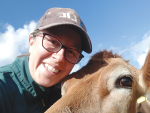
Now is the best time for training, says the new sector manager for dairy at Primary ITO, Marianne Awburn.
Nine lucky school leavers passionate about farming will join Pamu for a two-year journey into agriculture, living and working at Pamu farm, Aratiatia near Taupo.
Primary ITO will apply to the Ministry of Education for more Trades Academy places with demand from schools now outstripping supply.
New ‘micro-credentials’ in wool harvesting will help meet a critical need to train shearers and wool handlers, claims Primary ITO chief executive Linda Sissons.
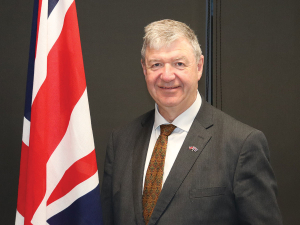
A leading British farming politician says he's impressed with the positive attitude of New Zealand farmers that he met during his recent trip here.
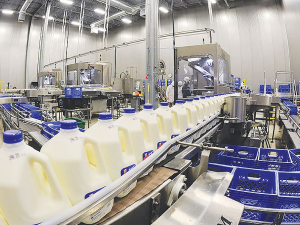
OPINION: With 10,500 dairy farms, New Zealand continues to punch above its weight around the world.
The Southern Dairy Hub (SDH), which runs a demonstration farm for South Island farmers, has a new general manager.
Esther Guy-Meakin has been announced as the new chief executive of the New Zealand Meat Board (NZMB).
According to a progress report on the Aotearoa Horticulture Action Plan (AHAP), New Zealand's horticulture sector is making real progress on the big issues facing growers.
A team effort that is paying dividends for the wider New Zealand economy.

OPINION: The Irish dairy sector is facing a new dilemma - maintaining year-round fresh milk supplies.
OPINION: Could beef cows play an increasingly important role in improving profitability and resilience on hill country farms?