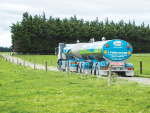
Fonterra FY26 Results: $9.69 Milk Price, $3.4bn Profit
Fonterra has unveiled its annual results for the 2026 financial year, posting $27 billion in revenue and close to $20 billion returned to New Zealand farmer owners and unit holders.




 increase font size
 Fonterra Latin America managing director Alex Turnbull.
Amid Brazil's political and economic turmoil, onerous bureaucracy and almost non-existent market for fresh milk it’s hard to see the appeal for Fonterra.
But the co-op’s managing director for Latin America, Alex Turnbull, believes all those hurdles can be put to its advantage.
After leading Fonterra’s foray into the Brazilian market 20 years ago, Turnbull was redeployed to Sao Paulo in January to oversee operations in Brazil, Argentina, Chile, Columbia, Ecuador, Venezuela, Mexico and the Caribbean.
His return signals Fonterra’s new strategic focus on emerging markets, which saw a ‘realignment’ of its Brazilian joint venture with Nestle last year, producing 200,000 tonnes of yoghurt and drinking yoghurt, fermented milks, and dairy desserts under the Dairy Partners Americas banner.
Since Turnbull first arrived, Brazil’s middle-class consumer market has grown enormously, increasing by 40 million since 2005.
Despite dodging the global financial crisis, the once-booming BRIC state now faces fresh challenges: falling commodity prices have weakened the currency and curtailed growth, the president’s approval ratings have fallen to single digits as a corruption scandal rattles the highest offices, and decades of red tape continue to hinder business.
“It’s going to be a difficult two or three years, that’s for sure,” Turnbull says.
But with a relatively low market share, there’s plenty of room for the co-op to explore new possibilities.
“It’s fair to say Fonterra’s focus on really being good at a few things means that in spite of the difficult economy, we can still do great stuff in growing share and improving competitiveness.”
White gold isn’t part of that strategy: the market is dominated by UHT and milk powder, due largely to the country’s sheer size and travelling distances. Fresh milk is difficult to find and sells for at least double the per-litre price of UHT.
“Is there an opportunity for Fonterra’s fresh milk? Yes, there are opportunities, but only a very small percentage of the market buys it,” Turnbull says.
“If you’re going to be in consumer business in Brazil, you need a big-scale business. UHT is the predominant format and it will continue to dominate.”
Another quirk of the market is a high level of lactose-intolerance, affecting about 43% of the population; but again, Turnbull sees further opportunity, given the successful recent launch of Zerolacto milk by Fonterra’s Chilean subsidiary, Soprole.
“When you do lactose-free products, you end up with a slightly sweeter product than normal milk, and because Brazilians have a sweet tooth, it’s a wonderful way to give kids nutritious milk without having extra sugar put in with chocolate.
“It serves a bigger need than just lactose-intolerance [and] people buy it, which is good, because it has a better return than normal milk.”
Unlike other companies in Brazil “still enjoying the fruits of the last 10 years,” Fonterra is driving efficiencies while keeping an ear out for growth opportunities in the region, “keeping the businesses running well [and] giving a return our farmers can be proud of.”
Fonterra has unveiled its annual results for the 2026 financial year, posting $27 billion in revenue and close to $20 billion returned to New Zealand farmer owners and unit holders.

Fonterra Co-operative Group has confirmed the independently assessed candidates standing for election to its board in 2026.
Fonterra has revised its Farmgate Milk Price forecast for the 2026/27 season, lifting the midpoint and narrowing the range on the back of improving global dairy commodity prices.
Outgoing Fonterra Co-operative Council chair John Stevenson says that it has been a privilege to represent the co-op's farmer shareholders.
OPINION: It seems Canterbury processor Synlait is still in the doldrums.



Federated Farmers says it welcomes Labour's commitment to reviewing the Sharemilking Agreements Act, calling on other major parties to do the same.
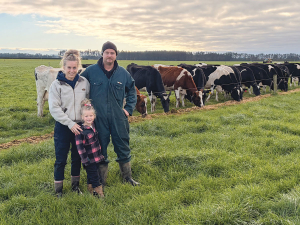
For Canterbury dairy farmers Sian Meijer and Rick Wobben, wearable technology has become one of their most valuable on-farm tools - helping manage 1850 cows across an expansive, high-performing dairy operation while improving efficiency, mating outcomes and day-to-day decision making.
Fonterra has unveiled its annual results for the 2026 financial year, posting $27 billion in revenue and close to $20 billion returned to New Zealand farmer owners and unit holders.
The first major update to the Dairy Cattle Code of Welfare in more than a decade has been released, marking what DairyNZ describes as an important step in ensuring animal welfare standards continue to evolve alongside scientific evidence and on-farm realities.
Ravensdown shareholders have elected Jane Montgomery and Kate Acland to the Ravensdown Board for three-year terms, following a closely contested director election.
Federated Farmers says new legislation replacing the Resource Management Act will cut red tape, unlock investment and help grow New Zealand's export-led economy, after the Planning Bill and Natural Environment Bill passed their third reading in Parliament yesterday.




OPINION: It seems Canterbury processor Synlait is still in the doldrums.
OPINION: Get offside with New Zealand First leader Winston Peters at your own peril.




