It's The Margins That Matter
OPINION: It appears to be difficult for people who haven’t tried to run a business to understand the difference between assets and cash.




 increase font size
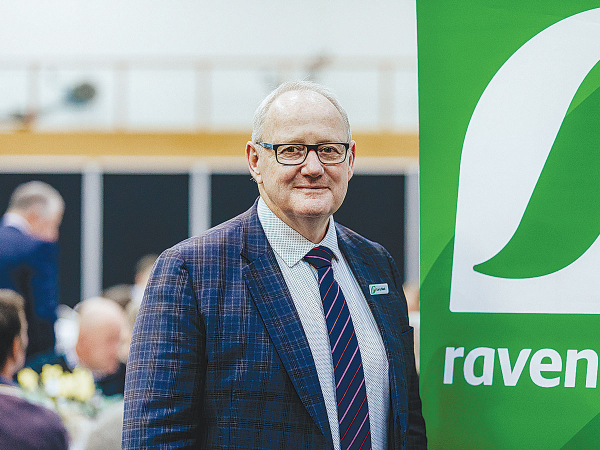 Ravensdown chief executive Garry Diack.
Ravensdown is getting government co-funding to install a biomass combustor at its Dipton lime quarry.
Locally supplied wood fuel will replace coal in the lime-drying process - an important part of preparing the naturally occurring soil conditioner for use by Southland farmers and growers.
The co-operative's commitment is being matched by funding through the Government Investment in Decarbonising Industry (GIDI) Fund. The funding agreement with EECA (Energy Efficiency and Conservation Authority) commits Ravensdown to savings of at least 1,107 tonnes of greenhouse gas emissions per annum, reducing Ravensdown's direct carbon footprint by almost 10%.
According to EECA, process heat accounts for over a quarter of New Zealand's energy-related emissions, presenting a huge opportunity for businesses to take a lead in climate change mitigation.
The GIDI Fund is part of the government's Covid Response and Recovery Fund, established to drive economic stimulus and job creation through decarbonisation projects.
The project contributes to Ravensdown's commitment to eliminate coal use by 2030 and is the outcome of comprehensive study to ensure that the most appropriate renewable fuel has been selected for this particular site and activity.
Ravensdown chief executive Garry Diack thanked the Government for its support.
"The intense interest in GIDI from all parts of the manufacturing economy shows how important the fund has been in driving the climate change response. Ravensdown is thrilled to receive this support in order to greatly advance progress on our plan to phase out coal across the business."
National quarries manager Richard Millar explained that the conversion will have secondary benefits for the local area.
"Heat from burning coal is currently used to dry lime on site before it is distributed to customers' farms. We're particularly excited to have Niagara Wood Fuels on board as a local supplier for the biomass. By sourcing the fuel from the surrounding area, the idea is to contribute to the local economy and reinvest in community development.
"The heat source is an essential part of our production, and it has to work reliably in all conditions. Knowing that we can continue to meet farmers needs while removing our biggest source of emissions at the quarry is a major step forward."
Ravensdown lime is used on farm to improve fertility by reducing acidity. Along with reducing transport emissions, drying the lime helps it to be spread more evenly as a powder over grazing areas.
OPINION: It appears to be difficult for people who haven’t tried to run a business to understand the difference between assets and cash.
OPINION: In the 1980s, concern was expressed in West Germany about the falling birth rate. Some simple analysis was performed by Professor Helmut Sies, physician and biochemist at Dusseldorf University. His letter ‘A new parameter for sex education’ was published in Nature in 1988:
When it comes to annual rebates, it's been a long time between drinks for Ravensdown shareholders.
Ravensdown has reported a net profit before tax and rebate of $50.1 million for the year ended 31 May 2026.
Farmer owned co-operative Ravensdown has signed a two-year naming rights sponsorship of the Canterbury A&P Show.


New Zealand's citrus growers were challenged to build their future on the value embedded in their fruit rather than the volume they produce, at Citrus New Zealand's annual gathering in Gisborne on 17 September.
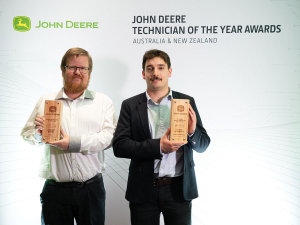
Leading John Deere technicians and apprentices from New Zealand and Australians were recognised at the recent sixth annual JD Technician of the Year Awards, held in Brisbane.
In Dacre, near Invercargill in New Zealand’s South Island, Bruce Dinnington is running a dairy operation unlike any other.
A free online platform aggregating governance vacancies across rural and regional New Zealand has been launched.
Environment Minister Nicola Grigg has announced details of a new rural plastics recycling scheme.
Agricultural drone operators say that a government decision to allow lower-risk drone work without certification won’t lower standards but drive innovation and efficiency.


OPINION: It seems Canterbury processor Synlait is still in the doldrums.
OPINION: Get offside with New Zealand First leader Winston Peters at your own peril.




