It's The Margins That Matter
OPINION: It appears to be difficult for people who haven’t tried to run a business to understand the difference between assets and cash.




 increase font size
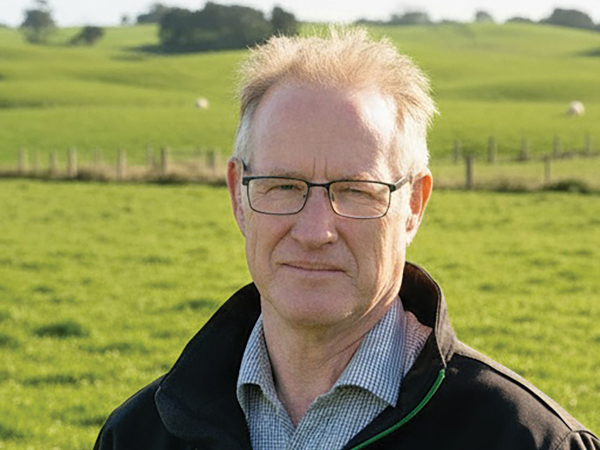 Mike White, Ravensdown’s head of product and service development.
Superphosphate is still the go-to product for New Zealand farmers looking for spring growth, says Mike White, Ravensdown’s head of product and service development.
White says he is often asked what is “the next thing” after superphosphate but he always responds that plants and pastures have not fundamentally changed in the way they take up nutrients.
It works, it is price competitive, and it is flexible in how farmers can use it, he says.
“Superphosphate has the two things that farmers need at this time of year - phosphorus and sulphur as sulphate, which is immediately available for plant uptake,” White told Rural News.
White said that what differentiated the New Zealand pastoral system from others is our predominately mixed swards of ryegrass and clover. Because it fixed atmospheric nitrogen, clover was the nitrogen engine of our pastures. Promoting pasture was therefore about promoting clover, and superphosphate was the “really appropriate” fertiliser for doing that.
He said some alternative products have only a little sulphur, or elemental sulphur that must first be converted in the soil to sulphate before the clover can utilise it. Sulphur is already in sulphate form in superphosphate, so spring application gives results in that season’s growth.
Research showed that applying phosphorus and sulphate together delivered “more than the sum of its parts”, with growth responses better than when applied separately, said White.
Decades of New Zealand research had given farmers confidence about timing, rates, and responses. Modern precision practices and technology such as soil testing and GPS-enabled spreading allow farmers to match application rates to stocking pressures, soil types, and seasons.
With increased understanding of how best to use it, our use of superphosphate was more sophisticated now, but the product was as relevant to modern New Zealand farming as it was to our farming grandparents.
“Its ingredients are the nutrient bedrock of all farming. Some products disappear with age. Superphosphate has appeared even better.”
White said global market conditions also worked in superphosphate’s favour.
It was cheaper to import the raw materials and manufacture here than to bring in finished products, and local manufacture also improves supply chain resilience.
The alternative product DAP (DiAmmonium Phosphate) was made overseas and was prone to more volatile pricing, swinging up to 74% above the 10-year average price, compared to price swings of only 37% for superphosphate.
Over the last 10 years phosphorus derived from Ravensdown’s superphosphate worked out at 11% cheaper than phosphorous derived from DAP, said White.
A major difference is that DAP includes nitrogen as well, albeit at a fixed ratio. White said that could be appropriate when planting a crop that wants nitrogen as a starter.
“So, certainly we sell it, because it has a place in the market, and it also has a place if someone’s looking for a fixed ratio nitrogen product.”
But where superphosphate differentiated itself was that it allowed the farmer to apply nitrogen separately at more appropriate rates. New technologies around Precision Ag let them apply “the right product, in the right place, and the right amount,” he said.
“You can look at the areas of your farm where it makes sense to do a nitrogen application. You can just specifically target those areas.”
White said it was not only about targeting spatially but also targeting on timing.
“The application of P may not necessarily be the best time for an N application as well, so that gives you that leeway.”
However, Ravensdown also had an own branded product, Flexi N, which is nitrogen coated with magnesium. That allowed it to be applied with superphosphate for those times and areas where it was appropriate to apply the two together.
Meanwhile, New Zealand soil fertility has been built up over decades, so superphosphate is mostly now used as a maintenance fertiliser to replace the nutrients used up in production.
However, applications may have been reduced during the last few years of lean income experienced by sheep and beef farmers, so soil fertility would have suffered. Now may be the time for catch-up applications, said White.
OPINION: It appears to be difficult for people who haven’t tried to run a business to understand the difference between assets and cash.
OPINION: In the 1980s, concern was expressed in West Germany about the falling birth rate. Some simple analysis was performed by Professor Helmut Sies, physician and biochemist at Dusseldorf University. His letter ‘A new parameter for sex education’ was published in Nature in 1988:
When it comes to annual rebates, it's been a long time between drinks for Ravensdown shareholders.
Ravensdown has reported a net profit before tax and rebate of $50.1 million for the year ended 31 May 2026.
Farmer owned co-operative Ravensdown has signed a two-year naming rights sponsorship of the Canterbury A&P Show.


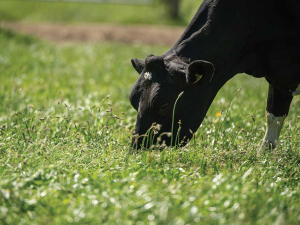
Farms across the upper North Island are trialling different pasture mixes as part of a research programme that aims to build greater resilience into farming systems.
Election years are always a concerning time for farmers, according to DairyNZ chair Tracy Brown.
The Ballance Farm Environment Awards are coming to the West Coast of the South Island.
Most dairy regions around the country have had a pretty good season so far says Tracy Brown.
Rural leader Mark Hooper has been appointed as an independent director to the NZPork board, bringing extensive farming, governance and advocacy experience to the role.


OPINION: The same mainstream media muppets that brought you Jacindamania in 2017 have been flat out pimping for the Opportunities…
OPINION: Your old mate reckons the atrocious way farmers in the UK are treated by their lords and masters in…