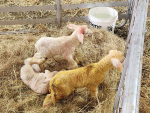
Beef + Lamb NZ's Lambing Kit Checklist for a Tough Season
With lambing underway in many regions, Beef + Lamb New Zealand is encouraging farmers to put together a wellequipped lambing kit to help minimise lamb losses, particularly in bad weather.




 increase font size
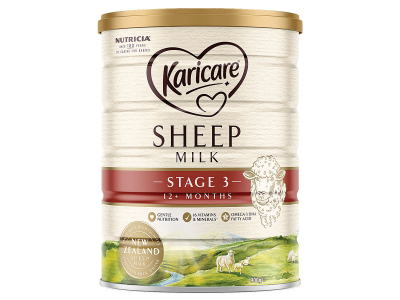 Danone’s new sheep milk baby formula.
Maui Milk is seeking new suppliers of sheep milk located within two hours of Hamilton for a new supply agreement with Danone.
Milk from free range, grass fed dairy sheep is now supplied by Maui Milk to Danone from its two farms running 6000 ewes on the western shores of Lake Taupo.
The company is offering multi-year contracts to new conversions in greater Waikato with the aim of doubling milk volume next season.
Danone-owned Nutricia, a global leader in specialised nutrition, last month launched Karicare Toddler Sheep Milk formulation, its first such product and a significant step for the New Zealand sheep dairy industry.
The Karicare brand is a leader in Australia and New Zealand, says Nutricia.
The Maui supplied milk is processed at Innovation Park in Hamilton.
Maui Milk chief executive Peter Gatley says there is interest from sheep and beef farms around Taupo, Rotorua and King Country, but mostly from Waikato dairy operations.
“Comparison with a typical Waikato dairy farm shows a better return per hectare, especially on smaller farms in the 50-80 ha range,” he said.
“The system is all grazing, no barns are required and the lactation is shorter than for cows. A lot of farmers are also attracted because the environmental footprint is similar to traditional sheep and beef farming.
“Conversion from dairy cattle is low cost and we are offering multi-year contracts at a payout equivalent to $3/L. We can supply pregnant ewes during winter so a farm can dry off the cows in autumn and be milking sheep in spring.”
Maui Milk was formed five years ago to satisfy demand for alternative milks, particularly in Asia where many people find cow milk hard to digest.
The company highlights the natural advantages of sheep milk which contains much higher levels of most nutrients than either cow or goat milk.
Maui chairman Peter McGilvary explains that whole milk powder sold under the Maui Milk brand was a stepping stone during the establishment phase and an expanded product range was always expected.
“The opportunity to supply the early childhood nutrition market is exciting,” said McGilvary. “The educated, affluent consumer wants grass fed dairy for their children and they focus strongly on environmental sustainability and animal welfare.”
Gatley says the company has made huge strides in farm productivity improvement.
“Progress has been spectacular. Until recently it was impossible to breed a modern dairy sheep in NZ because the genetics simply did not exist here. That all changed when we imported semen and embryos from Europe.
“Sheep can milk as yearlings and they have multiple offspring.
“We’re making 50 years progress in about five years.”
McGilvary says the company is working on complementary products to sell under its own brand and is buoyant about the prospects.
“Whatever form the product takes, we see grass fed sheep milk as the perfect fit for ‘brand NZ’. It’s what we’re famous for -- grass, sheep and milk.”
For Nutricia, its toddler sheep milk product innovation responds to growing demand among consumers in Australia and NZ for toddler formulas based on alternative sources of milk, such as goat and sheep milk.
“As consumer preferences continue to evolve it’s important that we, as market leader in Australia and New Zealand, are able to cater accordingly. Also, this launch is an opportunity to serve other consumers with similar tastes in the region, and who value NZ’s renowned agricultural and sheep farming heritage and the country’s natural environment.
“Plus, through this launch we’re supporting our local dairy sheep farms,” said John Hoare, sales director at Nutricia ANZ.
The milk for the launch of Karicare Toddler Sheep Milk is sourced from Maui’s two farms.
With lambing underway in many regions, Beef + Lamb New Zealand is encouraging farmers to put together a wellequipped lambing kit to help minimise lamb losses, particularly in bad weather.
Will a stronger, more coordinated voice help rebuild confidence and improve returns in the wool sector?
OPINION: Media reports say global recalls tied to cereulide toxin contamination in milk-based nutrition brands could inflict combined financial losses exceeding $1 billion.
Sheep milk processor Maui Milk has achieved grass-fed certification of milk supply against the AsureQuality Grass-Fed Scheme.
Sheep infant nutrition maker Blue River Dairy is hoping to use its success in China as a springboard into other markets in future.



National’s pledge to introduce 19 new national standards shows the party is serious about getting Wellington out of farming, Federated Farmers says.
The National Party’s policies to make it easier to grow fresh vegetables, secure reliable water and energy and simplify farm planning are practical changes that will give growers the confidence to invest, according to Horticulture New Zealand (HortNZ).
Fonterra Co-operative Group chief financial officer Andrew Murray has resigned to take up a role outside the dairy giant.
A major move is about to get underway to improve the quality and viability of dairy beef and cattle in NZ.
Veterinarians say changes to the code of welfare for dairy cattle provides a positive foundation for improved cattle welfare across the country.
Today, 15 October, is the International Day of Rural Women, which recognises rural women’s contribution to farming, communities and the environment.


OPINION: It seems Canterbury processor Synlait is still in the doldrums.
OPINION: Get offside with New Zealand First leader Winston Peters at your own peril.




