Empty rates down
Heat detection technology has helped two Taranaki farmers to cut their herd’s empty rate from 16% to 11% in its first season, says the supplier, Gallagher Group.




 increase font size
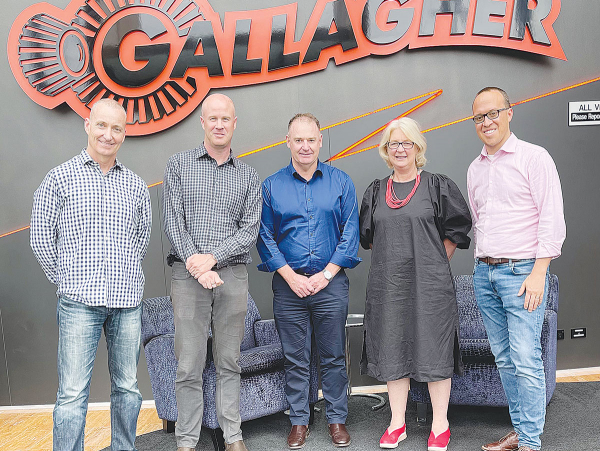 Water deal: from left Scott Goodwin (CFO Gasbot), Chris van der Loo (Gallagher GM global product & technology), Darrell Jones (Gallagher animal management GM NZ & Chile), Sarah Adams (Gallagher global strategy & new ventures manager), Phil Livingston (managing director Gasbot).
Gallagher Group has signed an exclusive distribution agreement with Australian company Gasbot to introduce a satellite- based liquid monitoring system to the New Zealand market.
The Gallagher Satellite Water Monitoring system uses Gasbot’s cuttingedge wireless sensor technology to provide timely information on the water levels in tanks, enabling farmers to make informed decisions about water usage and management.
The system uses satellite communications to transmit data from the tanks to the farmer’s mobile phone, providing easy access to tank information even in remote or hard-to-reach locations.
The system is not limited to water tanks but can also be used for diesel and fuel tanks, liquid fertiliser, dams, and troughs. It also minimises the need for manual tank readings, which can be timeconsuming and prone to errors, by automatically alerting farmers when water levels are low.
The system will be available for purchase through Gallagher’s rural retailer network in New Zealand. The first 12 months of the software service is included with the initial purchase, followed by an annual satellite connectivity subscription fee.
Chris van der Loo, Gallagher Global general manager product & technology notes that assurance of water availability is becoming increasingly important for farmers in New Zealand as climate conditions become more unpredictable.
“Being able to monitor the resources available on farm that are needed to care for animals and crops will become more important as we experience the impacts of moving between flood and drought situations very quickly.
“We are very pleased to be working with Gasbot to offer a satellite liquid monitoring solution to provide peace of mind for farmers across New Zealand regardless of how remote they are.”
Gasbot managing director Phil Livingston says his company is committed to helping farmers understand and optimise water use, as well as monitor fuel and liquid fertiliser levels right across their farms, efficiently and cost-effectively.
“These are values which align perfectly with Gallagher’s strategy,” he says.
“We are excited to partner with Gallagher to bring our innovative product to New Zealand. We believe that this product will make a real difference to farmers in the country, providing them with the information they need to manage their liquids and providing alerts when resources are low.”
Both companies are working together to expand the availability the system to other countries.
Heat detection technology has helped two Taranaki farmers to cut their herd’s empty rate from 16% to 11% in its first season, says the supplier, Gallagher Group.
Two years of product development are on show at the Gallagher Group site at the Central Districts Fieldays.
Darrell Jones has been appointed national sales manager of Gallagher Group's New Zealand animal management team. He has worked 14 years with the company.
Gallagher Group has always been at the forefront of innovations and effective solutions for livestock farmers.
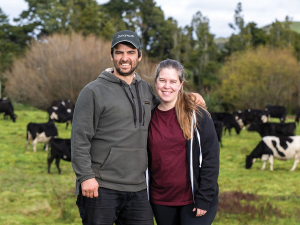
Signing up to a benchmarking tool is not about competition, but about improving collectively, says Ximena Puig and Alvaro Luzardo who are 50-50 sharemilkers at a 164-hectare (effective) dairy farm in Eketāhuna in the Lower North Island.

A leading British farming politician says he's impressed with the positive attitude of New Zealand farmers that he met during his recent trip here.
OPINION: With 10,500 dairy farms, New Zealand continues to punch above its weight around the world.
The Southern Dairy Hub (SDH), which runs a demonstration farm for South Island farmers, has a new general manager.
Esther Guy-Meakin has been announced as the new chief executive of the New Zealand Meat Board (NZMB).
According to a progress report on the Aotearoa Horticulture Action Plan (AHAP), New Zealand's horticulture sector is making real progress on the big issues facing growers.


OPINION: The Irish dairy sector is facing a new dilemma - maintaining year-round fresh milk supplies.
OPINION: Could beef cows play an increasingly important role in improving profitability and resilience on hill country farms?