BCS Targets: Why Body Condition Score Matters at Calving
Body Condition Score (BCS) is a critical element in managing the health and reproduction of the dairy herd.




 increase font size
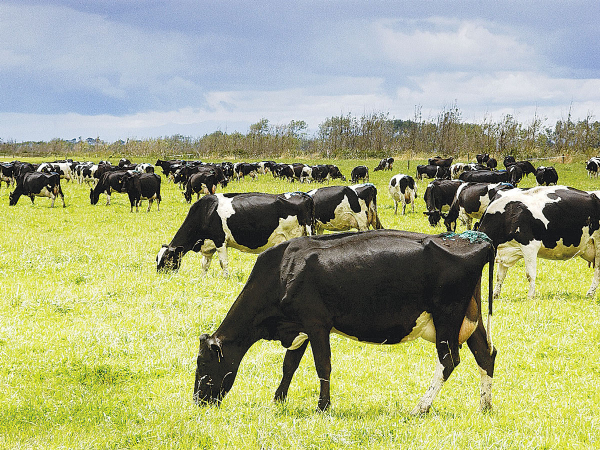 A cow’s BCS provides a reasonably accurate measure of her energy reserves.
Body condition scoring (BCS) is the assessment of the amount of fat covering the bones of a dairy cow, regardless of her body size.
It involves assessing the amount of fat covering specific locations on the cow, such as around the head of the tail and over the backbone, to determine how thin or fat the animal is.
A cow’s BCS provides a reasonably accurate measure of her energy reserves, and BCS targets at key stages of lactation have been identified to optimise dairy production systems.
These targets are based on research studies undertaken in New Zealand and internationally over the last 30 years.
Achieving target BCS at key critical times of the year is important to optimise milk production, reproduction, cow health and welfare. Although there are significant physical differences between the common New Zealand dairy breeds, the same guidelines for BCS assessment can be applied to all breeds.
What can we use BCS for?
Managing body condition score is all about managing the herd’s nutrition and lactation programme.
Condition scoring at critical times throughout the year lets farmers know if they need to consider changing herd nutrition or shortening lactation of some cows.
Condition scoring information contributes to key decisions, such as:
Determining future feed requirement (and feedback on historical strategy)
Explaining reproductive performance (condition at mating or BCS lost post-calving)
Once there is a system in place to measure body condition, then feed budgets, milking frequency and drying-off plans can be developed to achieve body condition targets while milksolids production targets are also met.
Body condition score targets
BCS at calving
Mature cows should calve at a BCS of 5 Heifer & rising 3 year old should calve at a BCS of 5.5.
There should be no more than 15% of the herd above or below these targets.
BCS at mating
The average loss in BCS after calving should not be more than 1.0. And there should be a maximum of 15% of cows below BCS 4.0 and early calving cows should be gaining BCS before the planned start of mating.
When to BCS the herd
Regular condition scoring allows farmers to monitor nutritional trends and provide sufficient warning to take action. The most important time to body condition score cows is during summer and autumn.
This allows individual groups of cows to be managed differently to ensure BCS targets at calving are met.
Who Should Score The Herd?
The Body Condition Score Assessor Certification Programme has been designed to help standardise condition scoring across New Zealand. Farmers can use a Certified BCS Assessor to score their herd with the confidence that their chosen assessor is consistently scoring to the NZ BCS system.
It is a requirement that any BCS data being entered into the WelFarm programme has come from a Certified BCS Assessor.
How to improve?
There are three effective strategies for BCS gain prior to the next calving:
■ Changing from twice-a-day to once-a-day milking.
■ Providing supplementary feeds to milking cows and dry cows.
■ Drying off cows early.
■ An effective strategy to achieve calving BCS generally involves a mix of all three.
Your veterinarian and farm advisory network can help determine what steps you could take to help your cows reach their BCS targets.
Body Condition Score (BCS) is a critical element in managing the health and reproduction of the dairy herd.
The transition period is the make-or-break window for your entire season. If this period is poorly managed, you don't just see a few downer cows, you see a downward spiral that affects the cow's health, production and reproduction long into the season.
Body condition scoring ewes at least six weeks out from mating can make a significant difference to conception rates and scanning percentages.
The dry conditions being experienced along much of the east coast of both Islands build a strong case for body condition scoring ewes at this season’s weaning.
This is the third in a series of articles from Beef + Lamb New Zealand's Informing New Zealand Beef programme. The seven-year INZB partnership, supported by Beef+Lamb New Zealand and the Ministry for Primary Industries' Sustainable Food and Fibre Futures fund, aims to boost the sector's profits by $460m.


When Northland leather worker Vernon Suckling started making horse saddles 50 years ago, quad bikes and side-by-side vehicles were unheard of.

Alliance Group has confirmed that eligible farmer-shareholders who supply and continue to back the business will receive up to $20 million later this year, following the strategic investment partnership with Dawn Meats.
With a general election under five weeks away, Rural News is asking major political parties about their policies and positions on key issues facing the primary sector. We will run their responses to each question over the next four weeks. The ACT Party and the Greens didn't respond in time.
The red meat sector is in great heart.
Dr Scott Champion, Foundation for Arable Research chief executive, says that everyone in the supply chain had a role to play in driving the sector's long-term success.
Entries opened on Monday, 5 October 2026 for the 2027 New Zealand Dairy Industry Awards (NZDIA), which organisers describe as the nation's biggest celebration of excellence in the dairy sector.

OPINION: It seems Canterbury processor Synlait is still in the doldrums.
OPINION: Get offside with New Zealand First leader Winston Peters at your own peril.




