Recovery on the West Coast
Dairy farmers in the Buller region of the South Island are at last making progress getting their properties up and running following the devastating floods that hit them in February.




 increase font size
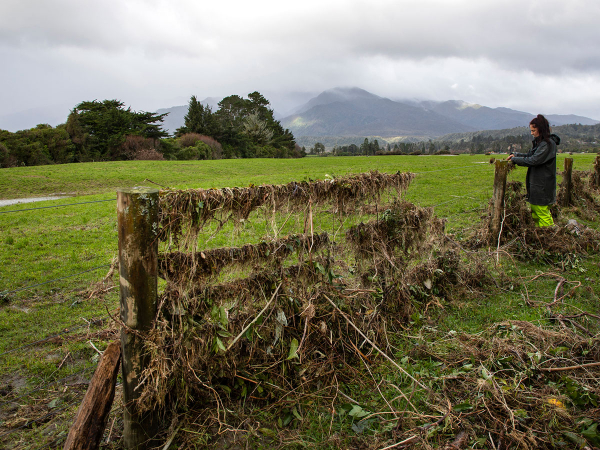 Farm hand Shanae Douglas clears fencing on John Reedy's farm in the Buller region. Photo Credit: Jules Anderson Photography.
Buller dairy farmers hit by the recent floods are facing a critical situation as they try to get their damaged farms ready to cope with calving which starts in a couple of weeks.
The head of DairyNZ for the South Island Tony Finch says, in preparation, much effort is being focused on looking after cows, ensuring their body condition scores are on target and assessing the feed situation on farms.
He says about fifteen farms located near the Buller River have been affected by flooding - some severely.
"We have moved into recovery mode as the water has receded, so we can see the challenges around what's left behind such as silt and debris," Finch told Dairy News.
"The floodwaters have significantly impacted a couple of farms so now we are deploying people to go out to and do some on-farm assessments for feed. We are reviewing pasture covers and supplements and checking out where the gaps may lie. Some farms which have a significant amount of sediment will have a challenging time with pasture covers and supplementary feed will be needed," he says.
Finch says emphasis is being place on feed budgeting to pinpoint the gaps. He says the overall situation with supplements is pretty tight given that some of this was utilised earlier in the year to deal with other adverse weather events.
The response from both the urban and rural communities has been awesome, says Finch. He says the Rural Advisory Group (RAG) is meeting daily as it responds to requests for assistance. A feed coordinator has been appointed to try and match the needs of affected farmers. The Rural Support Trust, which is part of the RAG, has also been busy taking care of families and individuals who are facing hardship and stress as a result of the floods.
"There is plenty of support for farmers - all they have to do is reach out and it will be provided," he says.
Finch says while the floods will hit some farms very badly, it is unlikely that the floods will have a major impact on overall milk production in the region.
Minister Visits Again
Agriculture Minister Damien O'Connor has been back in the Buller region monitoring the progress of the recovery operation and visiting farmer affected by the floods. Westport is his home town so he knows the area well.
He says the period leading into spring is always a challenging time for farmers, without having a major flooding event thrown at them on the eve of calving.
He says some farmers have been washed out of their farms and a few others have got significant damage to pasture.
“A lot of others have just had water over their properties and, while there is some fencing damage, they should be able to get their pastures up and producing in a few weeks for spring,” he says.
But for others, including his brother Bede, the road to recovery will be a lot longer.
“He’s resigned to having to unload some cows and reduce the milking platform significantly. He will have to restore over 30 hectares of land back into pasture and fence it and will probably be six months before he can put cows on that land,” he says.
O’Connor says other farmers are in a similar situation and one farmer in particular has lost a significant number of cows – drowned in the floods. He says he visited another farming couple whose house was badly damaged by the floods and he says their plight is being prioritised because they need to be settled on farm for calving.
O’Connor says he’s impressed with the way the recovery operation is being run in the Buller region, with all the agencies working collaboratively and quickly to get farms back in production.
However, he adds that for many farmers, floods are something they have learned to cope with.
“The reality is that many of the fertile areas that are farmed in NZ are subject to some kind of flooding or natural impact.
“We have done our best through catchment management schemes and river protection works to protect these areas, but ultimately because of aggregation of the rivers and natural processes over time, the river protection works become less effective, especially if we are facing bigger events through climate change,” he says.
OSPRI Offers More Time
Animal disease management agency OSPRI says it acknowledges the difficult situation farmers in the Buller and Marlborough districts are facing following the extreme flooding.
The head of traceability Kevin Forward says, to take some of the pressure off farmers, his organisation will be extending timeframes for reporting livestock movements in NAIT for people in charge of animals (PICAs) in affected areas.
He says these extensions continue until the local state of emergency is lifted for each district.
“We understand those impacted people will have a lot to deal with at present, whether it be land or property, and the recovery will be long-term. OSPRI wants to help lessen the load by giving people a bit of breathing room during this distressing and uncertain period.”
Dairy farmers in the Buller region of the South Island are at last making progress getting their properties up and running following the devastating floods that hit them in February.
The recent floods on the West Coast hit farmers much harder than last July's downpour, says West Coast Federated Farmers president Bede O'Connor.
With calving just a few weeks away, farmers in the Buller district are now busy repairing damage to their properties.
Drought has been officially declared in the Buller and Grey Districts by Primary Industries Minister Nathan Guy.
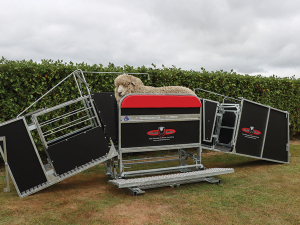
Oamaru-based livestock handling specialist Te Pari has bought Combi Clamp, the New Zealand manufacturer of Combi Clamp manual sheep handlers.
Agriculture Minister Todd McClay has admitted that a scheme bringing workers from Pacific nations to work on orchards has become too hard to navigate but says changes are coming.
A new app designed in New Zealand aims to help sheep, beef and deer farmers capture, analyse and use body condition score data more effectively.
Canterbury farmer Andy Macfarlane has been appointed to the board of AgriZeroNZ, the public-private partnership designed to accelerate the development and deployment of emissions reduction tools for New Zealand farmers.
For over 50 years Mel Ewers has been supporting the apple sector navigate through compliance and quality assurance issues.
The apple sector is enjoying a bumper harvest season.
OPINION: City and regional councils have been put on notice - stop using extreme climate forecasting scenarios that can drive…
OPINION: The Green Party’s rivers and oceans policy may have a new name but nothing else has changed.