PC1 Pause Looms as Coalition Targets Waikato Farm Rules
A pause on Waikato Regional Council's (WRC) plan change that sets new freshwater rules for farming could be announced in the coming weeks.




 increase font size
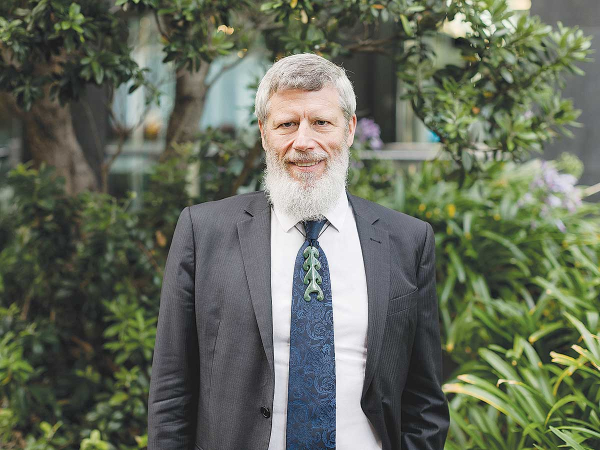 Climate Change Commission chair Dr Rod Carr recently spoke to the Waikato Regional Council Climate Action Committee.
Climate Commission chair Dr Rod Carr recently shared the commission's views - and some personal ones - with the Waikato Regional Council Climate Action Committee.
Climate Action Committee chair Jennifer Nickel says councillors welcomed the opportunity to pick Carr's brains to navigate the complex topic that is responding to climate change.
Councillors asked questions about agriculture, soil, riparian planting, forestry, shipping, aviation, energy, biosecurity, the role of local government and supporting capacity of iwi Māori, among other things.
"What really stood out for me was the reiteration of how there are so many positive opportunities for our communities to be had from a rapid transitioning to a low emissions economy, in particular around health and avoiding future costs," says Nickel.
"I'm really enthusiastic about future potential for ecosystems services payments for landowners who protect our natural habitats."
Carr attended the committee to share the commission's draft recommendations to the Government for the development of its second emissions reduction plan, and which the council will submit on.
The Government must deliver the second emissions reduction plan for New Zealand next year. The commission's advice focuses on identifying critical gaps in action, and where existing actions need to be urgently strengthened and accelerated to meet the second emissions budget (2026-2030) on New Zealand's path of net-zero greenhouse gas emissions and reductions in methane of 24-475 by 2050.
Nickel says councillors were particularly interested in the commission's views on agriculture, soils and forestry as they are identified in the council's Climate Action Roadmap as pathways to reduce emissions and adapt to climate change.
Agriculture is a key economic sector for the Waikato, yet it is also this region's greatest source of emissions. The next biggest sources are the transport and energy sectors.
Carr told the councillors it was important to get on board with new innovations to "reduce the emissions from agriculture".
"The world is already on that pathway through breeding, feeding and feed supplements," says Carr. "We're already seeing in Europe and parts of North American significant reducions and biogenic methane associated with protein production - and we need to get on board, or we will be left behind."
The councillors also heard from Carr about the commission's views on forestry, given the region's large exotic and native forestry contribution.
A pause on Waikato Regional Council's (WRC) plan change that sets new freshwater rules for farming could be announced in the coming weeks.

OPINION: Staying on Plan Change 1, NZ First deputy leader Shane Jones took to social media to gain some political points.
OPINION: All eyes are on the Government as Waikato farmers seek urgent help to fend off the controversial Plan Change 1 (PC1), designed to manage nutrient discharges into waterways in the region.
Waikato farmers have been told that the Government’s new planning system legislation and the region’s Plan Change 1 (PC1) “won’t mesh together very well”.
The Government is looking at intervening on behalf of Waikato farmers who face new regulations around agricultural land use while Resource Management Act (RMA) reforms are underway.

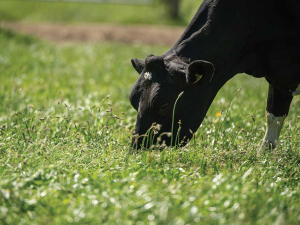
Farms across the upper North Island are trialling different pasture mixes as part of a research programme that aims to build greater resilience into farming systems.
Election years are always a concerning time for farmers, according to DairyNZ chair Tracy Brown.
The Ballance Farm Environment Awards are coming to the West Coast of the South Island.
Most dairy regions around the country have had a pretty good season so far says Tracy Brown.
Rural leader Mark Hooper has been appointed as an independent director to the NZPork board, bringing extensive farming, governance and advocacy experience to the role.

OPINION: It seems Canterbury processor Synlait is still in the doldrums.
OPINION: Get offside with New Zealand First leader Winston Peters at your own peril.