
Damien O’Connor Criticises Budget 2026 as ‘Miserable’ for Rural New Zealand
A miserable budget that didn’t deliver much for anyone.




 increase font size
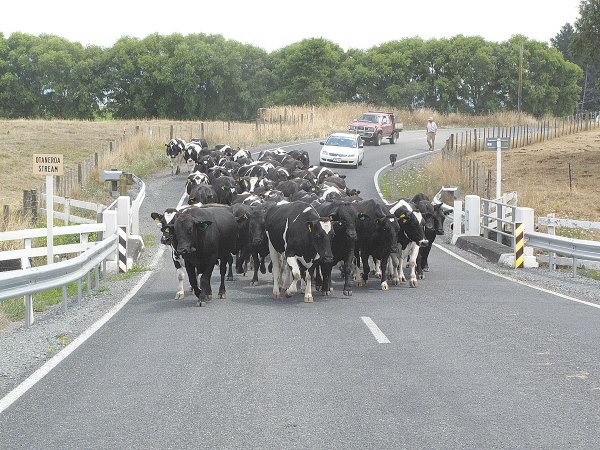 With COVID-19 restrictions, this year’s Gypsy Day will be different.
Ag minister Damien O’Connor is hailing “great cooperation” right across the agriculture sector that led to a successful outcome for Gypsy Day or Moving Day on June 1.
O’Connor told Dairy News that it’s good to provide clarity to farmers and sharemilkers, worried about the important event in the dairy farming calendar.
“We have been working on this for some time and were aware of its importance, but also mindful that the restrictions under level 4 are quite tough. Level 3 is different and if we are at level 2 by June 1 that will just be sensible requirement by all those sharemilkers that travel around the country,” he says
O’Connor says if we are still at level 3, then people will have to be a lot more careful with everything and lot stricter on how they interact with their transport options and the movement of everything required on that day.
After weeks of talks between stakeholders, Gypsy day or Moving Day will go ahead on June 1 but with strict protocols in place because of the COVID-19 pandemic.
This day marks the first day of the dairy season: a large number of dairy farming families, sharemilkers, contract milkers and employees move to new farms to start new employment and milking contracts.
This year it’s estimated that between 1500 and 2000 farm businesses will be involved: with staff and family members included, around 20,000 people will be on the move.
With COVID-19 restrictions, this year’s Gypsy Day will be different. Moving stock and households to new farms must be done in accordance with strict procedures to adhere to health and safety regulations relating to COVID-19.
It’s not known what alert level NZ may be in on that day, but O’Connor says regardless of that, Moving Day will go ahead.
O’Connor says if the country was in alert level 4, the dairy sector should limit activities to only those that cannot be deferred.
Other protocols include people remaining in their bubbles, limiting face-to-face contact and maintaining up-to-date NAIT and other animal movement records.
O’Connor says this annual movement is a critical part of the dairy industry – an industry that contributes over $18 billion a year in exports to the economy and provides jobs for around 46,000 people.
“It’s also an industry that will play a critical role in New Zealand’s economic recovery after COVID-19, so it was vital that Moving Day went ahead. Since the Alert Level 4 lockdown was announced, and dairy farming was deemed an essential service, the Government has been committed to finding a way to enable it to proceed,” he says.
O’Connor says the Government has been working with leaders from organisations including DairyNZ, Fonterra, Federated Farmers and FMG to find solutions that work for those in the sector and protect the economy, without jeopardising anyone’s health and safety.
Happy farmers
A good common-sense solution to what could have been a very big problem. That’s how the chairman of Federated Farmers Sharemilkers section, Richard McIntyre describes the outcome. McIntyre says he was part of the industry group dubbed ‘team ag approach’, which worked through all the scenarios and then put forward a proposal to Ministry of Primary Industries for approval.
“We discussed all the possibilities, including if it didn’t go ahead, what if it was delayed by one to three months, and how it might work on 1 June as planned,” he says.
McIntyre praised MPI and the other organisations for working positively to find a solution.
A miserable budget that didn’t deliver much for anyone.
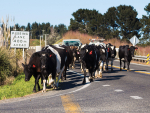
Moving Day (June 1) is just around the corner and farmers who are moving farms with the herd are being urged by Ospri to start preparations now.
National's decision to ‘dribble’ information about the NZ/India to Labour contributed to the delay in it deciding to supported the FTA.
When it comes to international trade, politicians from all sides of the aisle are united, says Labour's trade spokesman Damien O'Connor.
OPINION: The previous government spent too much during the Covid-19 pandemic, despite warnings from officials, according to a briefing released by the Treasury.



National’s much-touted free trade deal with India featured in the Rural Issues Debate at Mystery Creek, Hamilton on Wednesday night.

New Zealand's 2026-27 freshwater fishing season has opened, with anglers encouraged to head to rivers and lakes over the coming days as conditions look favourable across much of the country.
Central Otago District Council (CODC) has voted against a plan to spread treated sewage sludge from Cromwell and Alexandra on farmland near Lauder, a decision Federated Farmers says reflects strong opposition from rural residents.
Pāmu has released its FY26 Integrated Annual Report, reporting a Net Operating Profit of $113 million, more than double the $49 million recorded in FY25.
Meat Industry Association data, released alongside the Red Meat Sector conference in Wellington, shows export value climbing across the US, China, UK and Canada.
Applications are set to open for the 2027 Zanda McDonald Award, a trans-Tasman award recognised for identifying and fast-tracking talented young leaders in agriculture and agribusiness.

OPINION: It seems Canterbury processor Synlait is still in the doldrums.
OPINION: Get offside with New Zealand First leader Winston Peters at your own peril.




