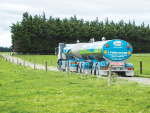
Fonterra FY26 Results: $9.69 Milk Price, $3.4bn Profit
Fonterra has unveiled its annual results for the 2026 financial year, posting $27 billion in revenue and close to $20 billion returned to New Zealand farmer owners and unit holders.




 increase font size
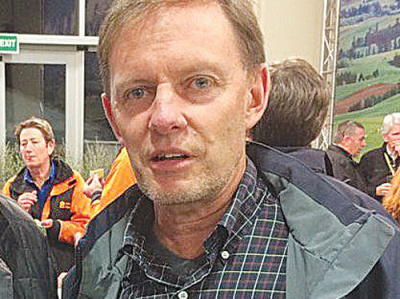 Philip Turner, Fonterra.
Cheesemakers of the world need to make a joint stand for the rights of generic cheeses, says Philip Turner, Fonterra director of global stakeholder affairs.
Otherwise we will be on a slippery slope of continuing ‘creep’ -- the European Union progressively protecting more and more cheeses under the geographic indication (GI) registration as it has just done with Danbo.
“We need to put a stop to that and come up with a really clear and agreed view of what generic cheeses are,” Turner told Dairy News.
He says this is an argument about the point at which local producers of a specialty cheese, or one unique to a particular geography, can protect that name, as opposed to when does a cheese become a genetic varietal which is sold all over the world and can and should be produced by anyone?
“Our concern is that the Europeans have been mounting a campaign for many years to claw back or allow creep around these geographical locations well beyond what is appropriate or economic or sensible for producers or consumers.
“This latest example of the [geographic] registration of Danbo is yet another example of the sort of creep we are concerned about.
“We want to see a more positive approach, to say there are many varietal cheeses which are now generic, which are accepted by consumers as being a particular type of cheese but are no longer connected to the geography where it may have been originally produced.”
Perhaps the best example of that is cheddar cheese which originated in a small village in southwest England called Cheddar but there is no longer cheddar cheese produced from local cheddar milk, he says.
It has become a cheese which consumers all around the world are familiar with, it is made in many countries and “that is the way it should be”.
“So we would like to stop the creep of this European campaign and see accepted rules in place which offer due protection for cheeses made in New Zealand and elsewhere and have been for a long time.”
He says this would allow producers to continue to produce them with security and provide consumers with what they have been consuming happily for some time.
The Europeans have been seeking the right of GI through bilateral trade agreements to apply to other countries, he says. For example, in the recent EU-Canada (CETA) trade agreement there is a list of GI and the same in the EU recent trade agreement with Japan.
“We know they are also approaching other countries such as China and Mexico, again to get them to recognise the European lists.
“We are concerned about this kind of creep – encouraging others to join as part of broader trade agreements and gradually increasing the creep of these things without providing the same protection for generic cheeses.”
They are particularly struck by the example of Danbo because the Danish government is on record saying it is a generic cheese. So even in Europe there are a variety of views on this “but it seems the local guys are getting support,” Turner says.
“There were big arguments about feta with several countries in Europe producing feta including Denmark but again the commission came down in favour of Greece and said only Greece can produce feta cheese.”
There is a process for outsiders to object to the European Commission rulings but it is “pretty damn difficult,” he says.
“So there is some scope for outsiders to object or put an opinion but there is strong momentum politically apparently in favour of particular local cheeses. We think that is a bit out of control.”
Fonterra has unveiled its annual results for the 2026 financial year, posting $27 billion in revenue and close to $20 billion returned to New Zealand farmer owners and unit holders.
Fonterra Co-operative Group has confirmed the independently assessed candidates standing for election to its board in 2026.
Fonterra has revised its Farmgate Milk Price forecast for the 2026/27 season, lifting the midpoint and narrowing the range on the back of improving global dairy commodity prices.
Outgoing Fonterra Co-operative Council chair John Stevenson says that it has been a privilege to represent the co-op's farmer shareholders.
OPINION: It seems Canterbury processor Synlait is still in the doldrums.



Federated Farmers says it welcomes Labour's commitment to reviewing the Sharemilking Agreements Act, calling on other major parties to do the same.
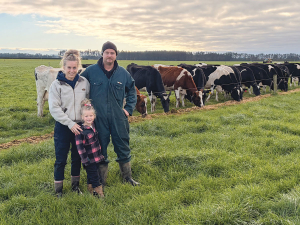
For Canterbury dairy farmers Sian Meijer and Rick Wobben, wearable technology has become one of their most valuable on-farm tools - helping manage 1850 cows across an expansive, high-performing dairy operation while improving efficiency, mating outcomes and day-to-day decision making.
Fonterra has unveiled its annual results for the 2026 financial year, posting $27 billion in revenue and close to $20 billion returned to New Zealand farmer owners and unit holders.
The first major update to the Dairy Cattle Code of Welfare in more than a decade has been released, marking what DairyNZ describes as an important step in ensuring animal welfare standards continue to evolve alongside scientific evidence and on-farm realities.
Ravensdown shareholders have elected Jane Montgomery and Kate Acland to the Ravensdown Board for three-year terms, following a closely contested director election.
Federated Farmers says new legislation replacing the Resource Management Act will cut red tape, unlock investment and help grow New Zealand's export-led economy, after the Planning Bill and Natural Environment Bill passed their third reading in Parliament yesterday.



OPINION: It seems Canterbury processor Synlait is still in the doldrums.
OPINION: Get offside with New Zealand First leader Winston Peters at your own peril.




