
Federated Farmers Welcomes ACT’s New Farming Policies
Federated Farmers has welcomed new rural policies released by ACT, saying they align closely with its own election priorities.




 increase font size
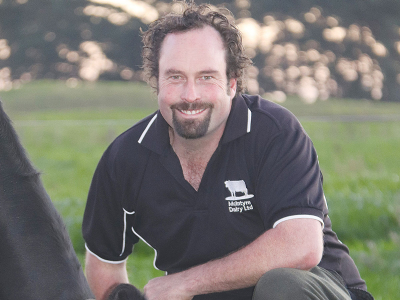 Richard McIntyre.
It's long overdue. That’s the reaction of the chair of Federated Farmers sharemilkers section to the government’s plan to introduce the Farm Debt Mediation Bill.
The objectives of the bill are: to support farmers in financial distress in their dealings with secured creditors, in particular banks; to enable options to be explored for turning around a failing farm business; or at last resort to enable a farmer with an non-viable business to ‘exit with dignity’.
The scheme applies to all farm businesses solely or principally engaged in agriculture including sharemilking, horticulture and aquaculture, but not to lifestyle farms or forestry.
Richard McIntyre told Dairy News that Federated Farmers recent banking survey showed more farmers coming under pressure from banks. So having a mediation step prior to possible receivership would reduce stress on farmers.
“Talking is underrated as a way to getting a solution. But getting both parties to the table with a mediator to talk through the process is hugely beneficial. Hopefully this will result in a more productive outcome.”
McIntyre says a big stress in these situations is fear of the unknown, so if a pathway can be plotted and expectations made clear it’s got to be good. Even if a farm has to be sold in the end, farmers will value the chance to discuss the options.
He says sharemilkers, especially lower order sharemilkers and contract milkers, feel particularly vulnerable when their incomes are affected by things beyond their control such as Mycoplasma bovis and bad weather.
“They usually have very low equity relative to their loan and so they are reasonably high risk to the bank.”
McIntyre says he knows of a case where a bank with little or no warning came down hard on a sharemilker. People in banks sometimes don’t know the implications of their decisions, especially if they are made very late in a season when people are about to change farms, he says.
The Bill meets a need for good two way communication, McIntyre says. And although Labour introduced it, credit is due to NZ First which has promoted this idea for several years.
Agriculture Minister Damien O’Connor also praises NZ First, in particular Mark Patterson who some time ago introduced a private members Bill on this issue.
“Mr Patterson has been a strong advocate for farmers and should be congratulated for his initial Bill. It has since been reworked and reintroduced as a coalition government piece of legislation.”
O’Connor says the failure of a farm business can lead to the farmer and their family losing both their business and their home.
Key points
• The Bill applies to all secured creditors, both banks and secondary lenders, and has broad support from all the major New Zealand banks
• The estimated cost to set up the scheme is $350,000, and the estimated annual cost for administering it is $250,000 to $300,000
• Each mediation will cost about $6000 and be split between the lender and the farmer
• Farmers and creditors have up to 60 working days to complete the mediation, once started
• The independent mediators will have strong understanding and experience of the rural sector
• At the end of the mediation process an agreement will be produced and must be agreed to by both sides and is binding.
Federated Farmers has welcomed new rural policies released by ACT, saying they align closely with its own election priorities.

A farmgate milk price of $10/kgMS this season is firming up as milk powder prices soar and the New Zealand dollar weakens.
Federated Farmers is backing Feilding High School’s call to keep Agriculture and Horticultural Science as a standalone subject in Year 11.
National’s pledge to introduce 19 new national standards shows the party is serious about getting Wellington out of farming, Federated Farmers says.
Mobile phone coverage and reliability are deteriorating in rural areas, and farming families are bearing the cost, according to a Federated Farmers survey.


For Canterbury dairy farmer Cameron Henderson, supporting Meet the Need comes down to a simple question: how can the success of New Zealand farming benefit more than just those within the industry?
Fonterra board members are in line for a pay rise of around 3%.
Dairy processors are ready to further boost New Zealand’s export earnings but want the incoming government to match their ambition with good policy.
Massey University is best placed to solve the “problems” facing the dairy industry, says vice chancellor, Pierre Venter.
Synlait's longest serving employee – a man who joined the Canterbury-based milk processor even before it began processing milk – is now its newest executive.
A dairy industry leader believes eradicating the common and costly disease, Bovine Viral Diarrhoea (BVD) is within reach.



OPINION: It seems Canterbury processor Synlait is still in the doldrums.
OPINION: Get offside with New Zealand First leader Winston Peters at your own peril.




