Federated Farmers Welcomes ACT’s New Farming Policies
Federated Farmers has welcomed new rural policies released by ACT, saying they align closely with its own election priorities.




 increase font size
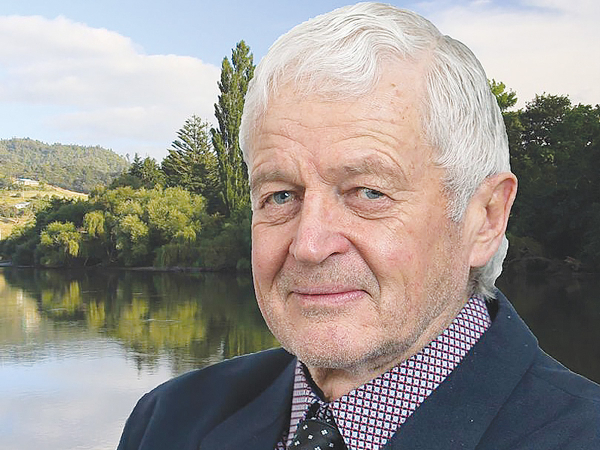 New Waikato Feds president Keith Holmes
New Waikato Federated Farmers president Keith Holmes believes farmers are being progressively starved out of existence.
Holmes, who was elected last month describes farmers as good that lays the golden egg, who must be saved from extinction.
He says the New Zealand economy has no alternative to the "agriculture engine house".
"The atrophy of both farming businesses and people is colossal," he told Dairy News.
"Farmers are not rewarded for their worth to the NZ economy and society.
"Farmers are cash poor and even their capital worth is being massively eroded: the signs of that are they can't afford to employ New Zealanders.
"They can't afford to employ enough competent staff to use what technology is available to them."
Holmes claims it is a macro economic management issue that successive governments have continued to ignore.
"So, my challenge is to change the direction of NZ economic management, to put the cash in farmers' hands to do the things that society asks of them.
"Save the goose that lays the golden eggs before it dies, and NZ will be a richer and better place."
He describes himself as "a rare commodity - a product of the Waikato Federated Farmers farm cadet scheme."
Holmes started his association with Feds 56 years ago as a Young Farmers Club delegate. He has served in various roles within Feds including provincial vice president and arable section chair.
He started in the dairy industry as a lower order sharemilker before purchasing "a run-down farm" in Tauhei in 1979. The farm was sold last year and he's now moving into a 53ha dairy farm in Waihou. Holmes plans to run British White cows, Wiltshire Horn sheep, their progeny with some cropping and forestry on the side.
"My uniqueness is that extraordinarily good people and the state gave me opportunity to succeed in dairying without family money," he says.
Holmes won the Young Farmer of the Year title in 1977 and says many doors opened after that.
Holmes replaced Jacqui Hahn, who retired after her three-year term.
In her final speech as president, Hahn told members at the annual general meeting that in the Waikato, the biggest time, money and resource issue in play is Plan Change 1 for the Waikato and Waipa River catchments.
She noted that Environment Court mediations have just been completed.
Hahn described the mediations as "a totally frustrating process with too little mediation taking place".
"It was great to have other parties and the Commissioner asked to hear from the farmers as time went on.
"It's clear we don't get justice when it's a legal system.
"It is hard to achieve practicality in rules, when it's based on catching the one sly backward person and making it a costly process for everyone else to prove they are not that person."
Federated Farmers has welcomed new rural policies released by ACT, saying they align closely with its own election priorities.
Federated Farmers is backing Feilding High School’s call to keep Agriculture and Horticultural Science as a standalone subject in Year 11.
National’s pledge to introduce 19 new national standards shows the party is serious about getting Wellington out of farming, Federated Farmers says.
Mobile phone coverage and reliability are deteriorating in rural areas, and farming families are bearing the cost, according to a Federated Farmers survey.
Central Otago District Council (CODC) has voted against a plan to spread treated sewage sludge from Cromwell and Alexandra on farmland near Lauder, a decision Federated Farmers says reflects strong opposition from rural residents.


Federated Farmers has welcomed new rural policies released by ACT, saying they align closely with its own election priorities.

Rural Contractors NZ says proposed changes to land transport rules for agricultural vehicles are a welcome response by the Government to out of date regulations which have seen members hit with huge fines.
Alliance is calling for final applications for its 2027 Graduate Programme, with applications closing on Sunday 25 October.
Decades piloting planes has ensured vet and farmer David Hayes is focused on safety. So, after a serious accident while welding on farm, he is sharing his experience so others can learn from it.
Canterbury milk processor, Synlait Milk has confirmed Leon Fung as its chief executive officer.
OPINION: Making it easier to collect rainwater and use it to grow crops and livestock is a no brainer.


OPINION: It seems Canterbury processor Synlait is still in the doldrums.
OPINION: Get offside with New Zealand First leader Winston Peters at your own peril.




