
Pāmu and Meet the Need Launch Mince Recipe Cards for Food Banks
A partnership between state-owned enterprise Pāmu (Landcorp Farming Limited) and charity Meet the Need is putting more than quality New Zealand beef into food bank parcels this year.




 increase font size
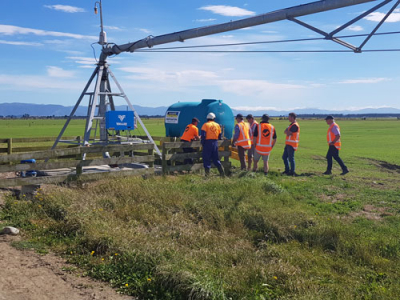 Pāmu’s newly installed fertigation system will help trial whether using fertigation can reduce nutrient losses.
A new guide has been released which will assist farmers and the irrigation industry to adopt the use of fertigation.
The method is a new way of applying fertiliser which is likely to reduce nitrogen leaching and save labour on farms.
Fertigation allows irrigators to be used to apply liquid fertiliser or liquid soluble fertiliser in small quantities at the same time as water.
In New Zealand, most fertiliser currently used is solid and applied through ground spreading or aerial top dressing.
Internationally, fertigation is increasingly being adopted as good environmental practice.
In September, IrrigationNZ organised a study tour to Nebraska. 25 members joined the tour including farmers, irrigation designers, environmental consultants and irrigation scheme representatives. Farmers in the state were encouraged by authorities to use fertigation as a tool to help reduce fertiliser use and reduce nitrogen leaching and also save costs by reducing the labour involved in applying fertiliser.
Our tour group were very excited about the opportunities to adopt fertigation here,” says Andrew Curtis, IrrigationNZ chief executive.
“The new guide is being launched to provide farmers and those working in the irrigation sector with advice on how to correctly use fertigation,” says Curtis.
The guide is available online at www.irrigationnz.co.nz for IrrigationNZ members.
In addition to the new guide being available to farmers, Pāmu (formerly Landcorp) is working with IrrigationNZ to trial the use of fertigation in New Zealand over two irrigation seasons to see whether the practice results in less nitrogen leaching, and has other benefits on farms through cost or labour savings.
The trial focuses on reducing Pāmu farm’s nitrogen consumption and loss to the environment on irrigated Canterbury dairy farms.
Pāmu’s GM of innovation, environment and technology, Rob Ford, says, “By injecting soluble fertiliser through the pivot irrigation systems - little and often - we are still maintaining farm profitability, productivity and growth of high feed value pasture.”
“This is one of many ways Pāmu is using innovation to reduce our environmental footprint. We also rely on strong partnerships with others in the sector to make these strides.”
Ballance Agri-Nutrients is also a partner in the planned trial. The trial is being supported through a grant from the Sustainable Farming Fund.
“A small number of irrigators are already using fertigation successfully in New Zealand. If the trial shows fertigation to be a better environmental practice as well as practical to implement on farms we would like to see it more widely adopted,” Curtis adds.
Fertigation can also be used to apply products like seaweed and selenium to crops and pasture as well as fertiliser.
Fertigation use on the farm
Andrew Paterson of Matakanui Station in Otago is one of a small number of Kiwi farmers who have already adopted the use of fertigation on his sheep and beef farm.
Paterson sees applying fertiliser via pivots as a much more convenient option which allows him to save time through not having to spread fertiliser through trucks and also allows him to use his fertiliser more efficiently.
“With fertigation you’re not putting on large amounts of fertiliser in one hit. You’re putting on smaller doses mixed with a little water, so you’re not losing fertiliser into the ground. We’ve had a tremendous response from the clover and grass. Over spring we had 4,000 hoggets on 130 hectares and they were booming away.”
Independent testing of waterways on Matakanui Station has also shown that water quality on most areas of the farm and in areas where fertigation is being used is generally good.
Around 7% of New Zealand’s agricultural land is irrigated – with most irrigated land located in Canterbury, Otago, Hawkes Bay and Marlborough.
A partnership between state-owned enterprise Pāmu (Landcorp Farming Limited) and charity Meet the Need is putting more than quality New Zealand beef into food bank parcels this year.

State farmer Pamu has delivered its strongest operating result on record.
Beef+Lamb New Zealand and the Ag Emissions Centre have launched a new research project aimed at helping beef farmers reduce methane emissions without impacting productivity or profitability.
State farmer Pāmu is opening its farm gates this summer in an effort to give the rural sector the opportunity to see how large-scale, multi-system farming is delivering productivity and profitability across New Zealand.
Bank of New Zealand (BNZ) and Pāmu (Landcorp Farming Limited) have developed a new way for landowners to earn revenue from existing native forests.


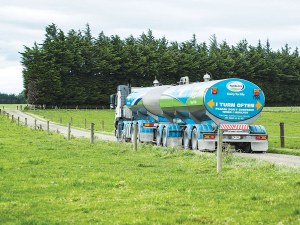
Fonterra has unveiled its annual results for the 2026 financial year, posting $27 billion in revenue and close to $20 billion returned to New Zealand farmer owners and unit holders.
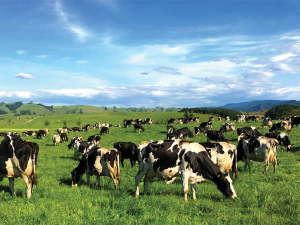
The first major update to the Dairy Cattle Code of Welfare in more than a decade has been released, marking what DairyNZ describes as an important step in ensuring animal welfare standards continue to evolve alongside scientific evidence and on-farm realities.
Ravensdown shareholders have elected Jane Montgomery and Kate Acland to the Ravensdown Board for three-year terms, following a closely contested director election.
Federated Farmers says new legislation replacing the Resource Management Act will cut red tape, unlock investment and help grow New Zealand's export-led economy, after the Planning Bill and Natural Environment Bill passed their third reading in Parliament yesterday.
Leading figures from the major political parties will be questioned on their primary sector policies at the Rural Issues Debate at Mystery Creek Events Centre, Hamilton, on 30 September.
OPINION: Have a plan in place now!




OPINION: It seems Canterbury processor Synlait is still in the doldrums.
OPINION: Get offside with New Zealand First leader Winston Peters at your own peril.




