Resilient Global Dairy Industry Overcoming Volatility
Fonterra chief executive, Richard Allen says being resilient has helped the dairy industry overcome extreme volatility in recent years.




 increase font size
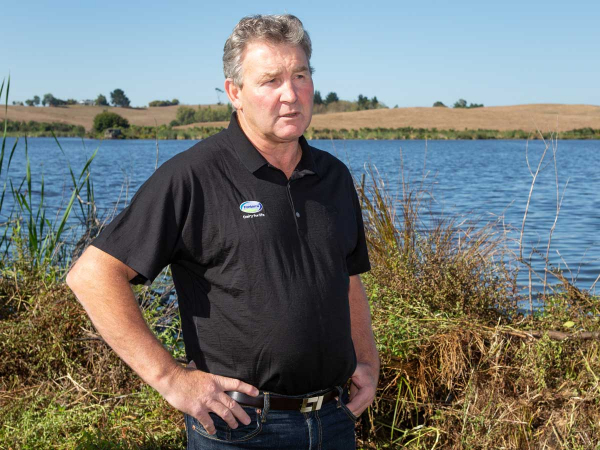 Fonterra chairman John Monaghan.
Fonterra farmers are being told to brace for a lower farm gate milk price next season.
In an email to farmer shareholders last night, Fonterra chairman John Monaghan pointed out that milk production in key markets around the world is up.
This could affect global supply/demand balance that supported “solid” milk price this season.
Fonterra is forecasting a milk price range of $7 to $7.60/kgMS this season. It will announce the opening forecast for the 2020-21 season late May.
In his email, Monaghan tells farmers to be “cautious” with their significant on-farm decisions.
The US, the world’s second largest milk producer, is forecast to lift production by 2%.
Milk supply in Latin America, the UK and EU is also expected to be up on last year, with good growing conditions for UK and EU farmers as they went into their spring peak, notes Monaghan.
“This is likely to disrupt the global supply/demand balance that has supported solid milk prices in the 2019-20 season,” he says.
“We will announce our opening forecast farmgate milk price range for the coming 2020/21 season in late May.
“We will be considering the high levels of uncertainty that we are seeing across the world, stronger supply signals from key dairy regions, and the NZ/US exchange rate as we forecast what prices could be more than a year from now.
“We encourage you to consider the level of global uncertainty we are all seeing now and out into the future and be cautious with your significant on-farm decisions.”
Fonterra chief executive, Richard Allen says being resilient has helped the dairy industry overcome extreme volatility in recent years.

Northland farmer Greg Collins has taken over as chair of the Fonterra Co-operative Council.
Fonterra’s 2026 financial year was a year of delivery, with record volumes of milk collected, processed and shipped by the co-op.
Dairy farmers, still holding onto their Fonterra shares despite switching milk supply elsewhere or exiting the industry, now face a stricter share sell-down requirement.
Milk powder prices are continuing their merry run, firming up a potential $10/kgMS farmgate price this season.

Halter has launched Mav, an AI farming assistant that lets dairy farmers ask questions about their herd and pasture and get answers drawn from the data the company’s collars already collect.

OPINION: At first glance it appears that Father Christmas has delivered the rural sector good tidings, with most pundits predicting the return of the centre-right coalition.
For 15 years, Glenda Rees has travelled from Gore to Awarua, often several times a week, to keep watch over one of the country’s rarest birds.
With some farmers opposing a government-industry partnership set up to develop methane reducing products, one NZ company claims that it already has a product on the market.
During the nesting season, from September to December, industrious starlings can quickly build nests in the darker areas behind tractor and vehicle, usually close to hot engines, typically resulting in localised damage or in some cases complete write-offs.
The meat processing industry is much more collegial than it was in the past and is now more focused on common goals.


OPINION: It seems Canterbury processor Synlait is still in the doldrums.
OPINION: Get offside with New Zealand First leader Winston Peters at your own peril.