
Four Candidates Confirmed for Fonterra Board Election
Four candidates have been confirmed for two director positions on Fonterra’s board.




 increase font size
 Fonterra chief executive Miles Hurrell says it isn’t easy to forecast the milk price.
Fonterra is defending the wide forecast milk price range for the new season announced last week.
Chief executive Miles Hurrell says while the global supply/demand balance is in very good shape, there are some potential downsides.
He listed the trade war brewing between the US and China as something to watch out for.
“Ultimately we will have no winners over the long-term,” Hurrell says.
Fonterra will also be watching milk production during the spring flush in Europe: how much milk comes of EU countries this peak season and how fast the milk comes onto the global market.
Hurrell says the co-op has to take into account these factors when coming out with a milk price forecast for its farmers. “It’s not easy but we are required to do this. The range we’ve presented is the best estimate at the time.”
The co-op’s forecast 2019-20 farmgate milk price range is $6.25 - $7.25/kgMS. It will be “narrowed down” as the season goes on.
ASB senior rural economist Nathan Penny says the opening forecast range is relatively healthy. He notes that using the midpoints, the forecast, if realised, would represent a 40 cent/kgMS gain on 2018-19.
However, Penny remains more bullish than Fonterra on the 2019-20 season.
“Fonterra expects very modest milk collections growth of 0.6% which would also underpin the new season’s milk price forecast,” he says.
“While we agree with the sentiment, we are more bullish on the outlook for global dairy prices than Fonterra.
“The current ‘spot milk price’ is a shade under $8.00/kgMS. Global production growth is soft and unlikely to match growth in global demand over the remainder of 2019.”
With the NZ dollar falling below US75c, the bank has pencilled in a $7/kgMS milk price forecast for 2019-20.
“And we see upside potential to that number. Indeed, if we were to use a similar $1/kgMS forecast range, ours would be roughly $6.70 to $7.70/kgMS.”
Fonterra chairman John Monaghan says the opening forecast is realistic.
“We are having to look out more than a year into the future which is difficult. But the information available is continuing to show us that demand remains strong across key trading partners and this is reflected in GDT prices.
“We are giving farmers a wide range for the opening forecast milk price. It will be narrowed as the season goes on.”
The 2019-20 advance rate schedule has been worked off $6.75 per kgMS.
Milk yield depends on weather
Fonterra chairman John Monaghan says weather plays a significant role in determining global milk volumes and therefore price.
The co-op is forecasting New Zealand collections to be 1520 million kgMS for the new season, up slightly on the current season.
“There’s still a lot of water to go under the bridge before we’ll have a clear view of what the season holds for both our co-op’s production and global dairy supply,” Monaghan says.
Fonterra has also dropped its 2018-19 forecast farmgate milk price range to $6.30 - $6.40/kgMS, reflecting favourable foreign exchange movements but slightly weaker than expected pricing for whole milk powder and skim milk powder.
Monaghan says the co-op has now contracted most of its farmers’ milk for the current season and has greater certainty on the likely closing farmgate milk price, reflected in the tighter forecast range.
Four candidates have been confirmed for two director positions on Fonterra’s board.
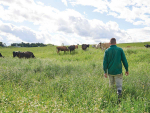
A record farmgate milk price and strong global demand is laying the foundation for continued growth of organic dairy farming in New Zealand.
Waikato milk processor Tatua has again declared a record milk payout to farmer shareholders, leaving other processors in the dust.
Fonterra has unveiled its annual results for the 2026 financial year, posting $27 billion in revenue and close to $20 billion returned to New Zealand farmer owners and unit holders.
Fonterra Co-operative Group has confirmed the independently assessed candidates standing for election to its board in 2026.


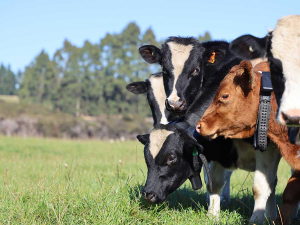
High country stations, mixed sheep and beef farms, Māori-owned farms, corporates and family operations are among the nine commercial farms taking part in the Livestock Innovation Farming Transformation programme, known as LIFT.
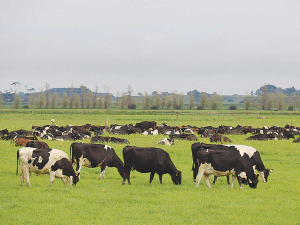
OPINION: New health and safety guidance unveiled by the Government recently provides farmers greater certainty about what is expected of them when managing risks on farm.
The National Animal Welfare Advisory Committee (NAWAC) is seeking public feedback on proposed changes to the Code of Welfare for Rodeos.
A New Zealand initiative supporting farmers to restore the health of grazing landscapes has received international backing through the Regenerative Fund for Nature, a global collaborative fund supporting regenerative agriculture and the communities that produce natural fibres for the fashion industry.
Combine premium New Zealand products, blend in a family ritual and what do you get? A world-class functional drink.
Entries are now open across eleven regions for the 2027 New Zealand Dairy Industry Awards (NZDIA).




OPINION: It seems Canterbury processor Synlait is still in the doldrums.
OPINION: Get offside with New Zealand First leader Winston Peters at your own peril.




