Fonterra Elections 2026: Voting Opens Tuesday 20 October
Fonterra shareholders can begin voting on Tuesday 20 October in the 2026 Board of Directors’ election, a Co-operative Council election in one Ward, and seven Annual Meeting resolutions.




 increase font size
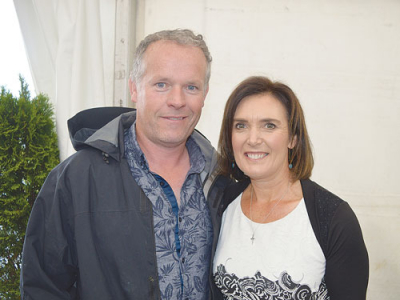 New Fonterra director Leonie Guiney and husband Kieran at the co-op’s AGM.
Fonterra is dropping a target to achieve 30 billion litres of milk volume by 2025.
The announcement by chief executive Miles Hurrell marks a major departure from the V3 strategy implemented by former chief executive Theo Spierings.
In 2012, Spierings unveiled its V3 strategy involving “volume, value, and velocity” aimed at increasing milk production volumes to ensure Fonterra maintains its share of the growing dairy market, driving more value from its milk through higher-value products, and doing so at speed.
Hurrell told Fonterra’s annual general meeting last week that when he took over a few months ago, he promised to take stock of the business, get the basics right and ensure more realistic forecasting.
“We have dropped our volume-based ambition,” he told about 400 farmers at the AGM held at its Lichfield plant in South Waikato.
“Our ambition to achieve $35 billion in revenue from 30 billion LMEs (liquid milk equivalent) by 2025 created confusion because it places too much emphasis on volume.
“Our co-op is not about being big for the sake of it.
“We’re about creating value for our farmers, our unitholders and for NZ. That doesn’t change.”
Hurrell also spoke of the need to maximise the NZ milk pool and not creating volume through farm developments around the world.
“When we shifted to talking about off-shore milk pools, we also created confusion.
“The concept of global milk pools can sound like we are creating volume through farm developments around the world.
“This is not what we are doing; I think it is important to clarify this.”
Hurrell says Fonterra’s approach has always been to generate global demand for its full suite of NZ-made products.
Hurrell says Fonterra has long-standing relationships with farmers in Australia and Chile.
“These allow us to make products locally, meet demand in overseas markets and take advantage of any lower tariffs that may exist. “This continues to be the right approach.”
Fonterra’s China farms recorded a direct loss of $9m last year.
Fonterra shareholders can begin voting on Tuesday 20 October in the 2026 Board of Directors’ election, a Co-operative Council election in one Ward, and seven Annual Meeting resolutions.

Fonterra Co-operative Group chief financial officer Andrew Murray has resigned to take up a role outside the dairy giant.
Four candidates have been confirmed for two director positions on Fonterra’s board.
A record farmgate milk price and strong global demand is laying the foundation for continued growth of organic dairy farming in New Zealand.
Waikato milk processor Tatua has again declared a record milk payout to farmer shareholders, leaving other processors in the dust.


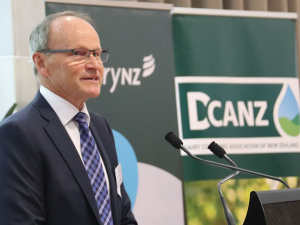
Dairy processors are ready to further boost New Zealand’s export earnings but want the incoming government to match their ambition with good policy.
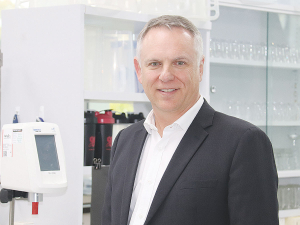
Massey University is best placed to solve the “problems” facing the dairy industry, says vice chancellor, Pierre Venter.
Synlait's longest serving employee – a man who joined the Canterbury-based milk processor even before it began processing milk – is now its newest executive.
A dairy industry leader believes eradicating the common and costly disease, Bovine Viral Diarrhoea (BVD) is within reach.
A farmgate milk price of $10/kgMS this season is firming up as milk powder prices soar and the New Zealand dollar weakens.
Federated Farmers has welcomed new rural policies released by ACT, saying they align closely with its own election priorities.

OPINION: It seems Canterbury processor Synlait is still in the doldrums.
OPINION: Get offside with New Zealand First leader Winston Peters at your own peril.