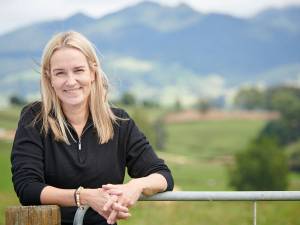
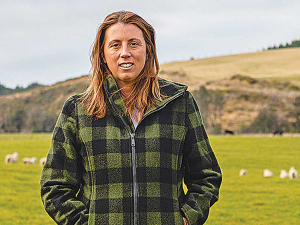
Environment Ministry (MfE) chief executive Vicky Robertson has praised farmers for their efforts to improve the environment.
Robertson, and the chief executive of the Department of Statistics, Liz MacPherson, are co-authors of a new 130 page report on the state of the environment – 'Environment Aotearoa 2015'.
Robertson told Dairy News they know great initiatives are being undertaken by individual farmers, dairy companies and DairyNZ to improve the state of the environment. She says water quality is as much an issue for urban areas as for farming areas.
The report notes that water quality in NZ lakes and waterways varies with the nature of land used in particular catchments. In areas with intensive farming, water quality is poorer than in areas where there is natural vegetation. It also notes that between 1989 and 2013 nitrogen levels in rivers has risen overall by 12% but in over half the sites monitored the increase is significant.
At the same time it notes the importance of water to land based industries and the contribution they make to the NZ economy. Water quality is poorest where there is pressure from both urban and agricultural land use.
The report picks up the obvious: intensive farming – notably dairying – has increased along with stock numbers, pressuring the environment. Related to this, the report notes that while overall soil health is good, compaction is a problem on dairy farms.