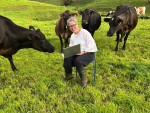
International Day of Rural Women: Two DairyNZ Farmers’ Stories
Today, 15 October, is the International Day of Rural Women, which recognises rural women’s contribution to farming, communities and the environment.




 increase font size
 Kara Lok.
Addressing greenhouse gases onfarm is a top priority for the dairy sector.
Over the last three months, reports DairyNZ, climate change workshops nationwide have attracted hundreds of rural professionals keen to help farmers understand New Zealand’s greenhouse gas reduction targets. NZ aims to cut greenhouse gas emissions by 30% by 2030; that would restrict them to the level of 2005.
A course was also held at Massey University and similar workshops will be held mid-year for dairy farmers.
The workshops and courses are part of DairyNZ’s part in the Dairy Action for Climate Change, as is research now underway on technologies to mitigate farm methane and nitrous oxide emissions.
DairyNZ senior climate change advisor Kara Lok says while there is no silver bullet to reduce on farm methane and nitrous oxide emissions, DairyNZ is educating dairy farmers on options available now to address emissions.
“The first round of workshops were targeted at rural professionals because they work alongside farmers, so they are in a unique position to influence change on farms. The next workshops will be targeted at dairy farmers.”
The courses cover how greenhouse gases are calculated on NZ farms, how farm emissions contribute to global emissions and climate change, and they tell farmers about the mitigation options now available to them.
Michael Edmondson, an environmental advisor for Synlait who attended the course, said he found it informative.
“I’d used Overseer in the past but never the Overseer greenhouse gas models to see how different solutions reduce emissions output.
“We worked through the theoretical models to calculate how many hectares of trees a farm would need to plant to offset its emissions, or whether a better option would be to retire some land. It got us thinking about what the best option is for each farm.”
Andrew Kempson, a Fonterra sustainable dairy advisor, said he is now better informed to talk to farmers about how they can ‘future proof’ their farming businesses.
“With the new focus recently on farming and its related biological emissions, my learning the fundamentals of greenhouse gases and seeing first-hand the R&D has given me a wide range of information to provide farmers.
“Rural professionals can give accurate and timely advice to farmers, and the course provided the information in an easily digestible form.”
Ross Abercrombie, a project manager in the On Farm R&D team, says all environmental advisors should learn more.
“The more consultants and dairy advisors there are who understand these issues, the better. It’s important they can talk about greenhouse gases with farmers because emission reduction will become an increasingly prominent issue.”
For details of courses in 2018 visit www.dairynz.co.nz/climatechange
Today, 15 October, is the International Day of Rural Women, which recognises rural women’s contribution to farming, communities and the environment.
The first major update to the Dairy Cattle Code of Welfare in more than a decade has been released, marking what DairyNZ describes as an important step in ensuring animal welfare standards continue to evolve alongside scientific evidence and on-farm realities.
Have a plan in place for your cows and staff.
DairyNZ deputy chair Cameron Henderson has been re-appointed unopposed for another term.
OPINION: The stats speak for themselves.


Alliance is calling for final applications for its 2027 Graduate Programme, with applications closing on Sunday 25 October.
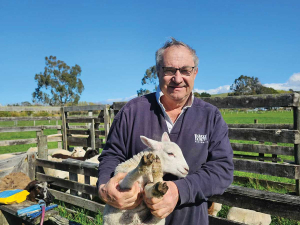
Decades piloting planes has ensured vet and farmer David Hayes is focused on safety. So, after a serious accident while welding on farm, he is sharing his experience so others can learn from it.
Canterbury milk processor, Synlait Milk has confirmed Leon Fung as its chief executive officer.
OPINION: Making it easier to collect rainwater and use it to grow crops and livestock is a no brainer.
As part of its Election 2026 coverage, Rural News asked political parties how they would help pull the arable sector out of the doldrums. Here's what they said:
Farmers are being encouraged to rethink how they manage waste on farm with the launch of ruralwastesorted.co.nz, a new website bringing together practical tips, real farmer experiences and resources.

OPINION: It seems Canterbury processor Synlait is still in the doldrums.
OPINION: Get offside with New Zealand First leader Winston Peters at your own peril.




