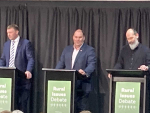
India FTA Unites NZ First, Greens
National’s much-touted free trade deal with India featured in the Rural Issues Debate at Mystery Creek, Hamilton on Wednesday night.




 increase font size
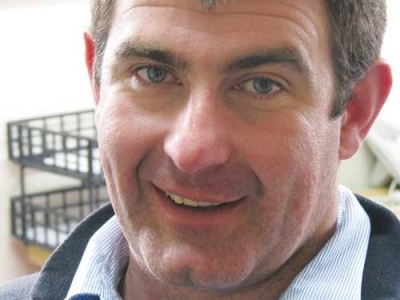 IrrigationNZ chief executive Andrew Curtis.
The Green Party's list of the top 10 dirty rivers in New Zealand is farcical and brings into question their credibility, says IrrigationNZ chief executive Andrew Curtis.
The three rivers listed in irrigated catchments; Ruamahanga, Tukituki and Selwyn, when compared with the water quality of other rivers in these regions shows whilst they each have challenges, they are not the dirtiest.
"The true state of water quality in New Zealand can be gleaned from the Land Air Water Aotearoa website www.lawa.org.nz. This contains the most accurate and up to date picture of actual river water quality in New Zealand.
"The Porirua in Wellington region, Karamu in Hawke's Bay and Heathcote river in Christchurch all have worse water quality issues than the Ruamahanga, Tukituki and Selwyn," says Curtis
"The Greens are being mischievous with their dirtiest rivers stunt. They are trying to create a divide between rural and urban communities which is not good for New Zealand."
There are some huge water quality issues facing all of lowland New Zealand if pristine, swimmable water quality becomes the minimum standard.
"Just as farmers will have to invest in changing farm practices, rates will have to rise significantly in urban areas to pay for rivers to be cleaned-up to a pristine standard," he says.
Despite this cost, Curtis says the primary sector is actively embracing change. Adoption of good management practices, like stock exclusion from waterways, is the first step. "The continued evolution of precision agriculture is the long-term solution if we are to create a resilient and sustainable future for rural New Zealand."
"The goal posts for farmers have changed and there are now environmental limits in place or in the process of being put in place."
National’s much-touted free trade deal with India featured in the Rural Issues Debate at Mystery Creek, Hamilton on Wednesday night.
There's been widespread support from the primary sector for the Government's announcement on changes to freshwater farm plans that come under the Natural Environment Bill, which is now set to replace the existing RMA.
OPINION: Since when did one and one make three? Who didn't smell an elephant-sized rat when our leaders decided to give $60 million to save the cement factory in Northland?
OPINION: Farmers are being put on notice by the Green Party.
OPINION: The Green Party’s rivers and oceans policy may have a new name but nothing else has changed.


Dairy processors are ready to further boost New Zealand’s export earnings but want the incoming government to match their ambition with good policy.
Massey University is best placed to solve the “problems” facing the dairy industry, says vice chancellor, Pierre Venter.
Synlait's longest serving employee – a man who joined the Canterbury-based milk processor even before it began processing milk – is now its newest executive.
A dairy industry leader believes eradicating the common and costly disease, Bovine Viral Diarrhoea (BVD) is within reach.
A farmgate milk price of $10/kgMS this season is firming up as milk powder prices soar and the New Zealand dollar weakens.
Federated Farmers has welcomed new rural policies released by ACT, saying they align closely with its own election priorities.



OPINION: It seems Canterbury processor Synlait is still in the doldrums.
OPINION: Get offside with New Zealand First leader Winston Peters at your own peril.




