DairyBase and MINDA Link Up to Cut Farmer Paperwork
Farmers can spend less time on paperwork, thanks to a new data sharing agreement between DairyNZ’s DairyBase and LIC’s MINDA software.




 increase font size
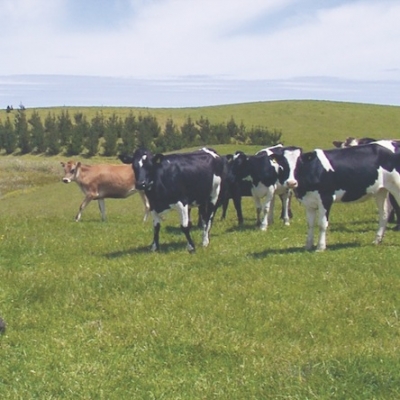 Most heifers underweight at 22 months old.
Five new focus farms will give graziers knowledge and resources to help grow heifers better, and strengthen their relationship with dairy farmer clients.
An LIC study of 105,000 animals showed 73% were 5% underweight at 22 months old. The Heifer Grazing Project focus farms help to address that statistic and seek to improve the national six-week in-calf rate. The project is led by DairyNZ with dairy farmers, graziers, grazing companies, vets, Beef + Lamb and LIC.
DairyNZ’s Sarah Dirks says the grazier’s role cannot be underestimated. “Heifers below target liveweight will have a lower six-week in-calf rate, a higher not in-calf rate and lower milk production.”
She cites a paper published at last year’s Australasian Dairy Science Symposium.
“Heifers that achieved 90% mature liveweight at calving could produce an extra 2-2.5kgMS/kg of liveweight over an average life of five lactations, compared to being behind target.
“So, for a 50kg improvement to achieve target weight, that would translate to 100-125kgMS over five seasons.”
Over two months, at the end of 2013, Dirks met with 100 farmers, graziers, and rural professionals to explore the dairy farmer/grazier relationship. This showed a need for examples of graziers doing well, which led to the focus farms.
“A standout reason farmers gave for heifers not being raised as well as they could was the gap in relationships between parties,” says Dirks.
“Specific answers included not having an agreed contract and having different expectations, like who was responsible for supplying extra feed.”
Dirks says the purpose of the focus farms – in Northland, King Country, North Otago and Manawatu – is two-fold.
“We want to provide farmers growing heifers with better information and allow them to share their experiences with others; until now there has been a knowledge gap.
“The other goal is to strengthen relationships between graziers and dairy farmers. Are expectations being met from both sides, and if not, why not? These focus farms will help us… address some of these questions.”
Tips for farmers
Farmers with well-grown heifers use minimum age and minimum weight targets for weaning calves off milk.
Heifers should be transitioned to an all-grass diet for a couple of weeks or meal should be sent with the stock to prevent reduced growth when relocating heifers to grazing.
Be clear with expectations. Communicate what the expected weights are for the end of the grazing term.
Weighing is the only objective way to assess that heifers are growing well and on target.
Animal health plans should be specific to the farm the heifer is being grazed on. Parasite pressure and mineral deficiencies are unique to each farm.
Farmers can spend less time on paperwork, thanks to a new data sharing agreement between DairyNZ’s DairyBase and LIC’s MINDA software.
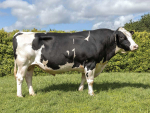
An LIC bull, Tronnoco AR Sadio-ET S3F, bred by Tony and Keri O'Connor of Tronnoco Farming Co Ltd near Timaru, has won the 2026 Mahoe Trophy.
Bovine Viral Diarrhoea (BVD) is estimated to cost New Zealand's dairy and beef industries more than $150 million every year, yet many of the tools needed to control it are already well understood. After more than 25 years in veterinary practice, Andrew Weir, animal health technical specialist at LIC, has seen firsthand the impact BVD can have on herd performance. We asked him about the role of persistently infected (PI) animals and the practical steps farmers can take to reduce their risk.
In the past, a bull could sit comfortably in a breeding team for several years with little change, but today, that’s no longer the case.
Paynes Titus Excelsior ET, an LIC bull bred by Brad Payne and Claire Brodie in the Waikato, has won the JT Thwaites Sire of the Season 2026 Award.



Now in its fourth year, the 2026 Fencing Industry Awards, formed part of the proceedings of the FCANZ Conference, held in Nelson during August.
DairyNZ deputy chair Cameron Henderson has been re-appointed unopposed for another term.
OPINION: The stats speak for themselves.
Farms across the upper North Island are trialling different pasture mixes as part of a research programme that aims to build greater resilience into farming systems.
Election years are always a concerning time for farmers, according to DairyNZ chair Tracy Brown.
The Ballance Farm Environment Awards are coming to the West Coast of the South Island.


OPINION: It seems Canterbury processor Synlait is still in the doldrums.
OPINION: Get offside with New Zealand First leader Winston Peters at your own peril.