BNZ and Pāmu Launch New Native Forest Revenue Model for New Zealand Landowners
Bank of New Zealand (BNZ) and Pāmu (Landcorp Farming Limited) have developed a new way for landowners to earn revenue from existing native forests.




 increase font size
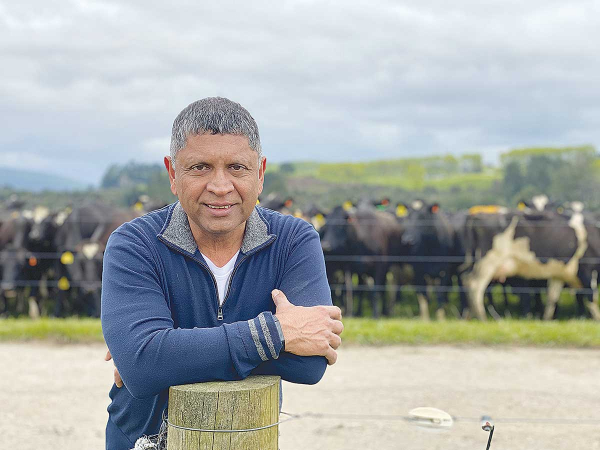 Southern Pastures executive chairman Prem Maan believes farming in New Zealand should be driven by the ambition to become carbon neutral.
Corporate dairy farmer Southern Pastures has signed a three-year $50 million sustainability-linked farm loan with BNZ.
In a New Zealand first, Southern Pastures, which owns 20 farms, and Lewis Road Creamery, will receive financial incentives for meeting new water quality and biodiversity targets and for achieving further reductions in its already low on-farm carbon emissions.
Achievement of the targets will be directly linked to lower loan costs.
“This deal recognises that farming to mitigate climate change and environmental impacts is in our common interest,” says Southern Pastures executive chairman Prem Maan.
“In my view, farming in New Zealand should be driven by the ambition to become carbon neutral.”
Southern Pastures farms produce milk under an independently certified 10 Star Certified Values Program which stipulates strict environmental, climatic, animal and human welfare requirements. Its Waikato farms that supply Fonterra include the largest organic farm in the country.
“We use our organic farm, for example, to learn how to minimise antibiotic use,” says Maan.
“So we now use less antibiotics on all our farms than what is allowed under EU organic regulations.”
BNZ head of natural capital, Dana Muir, says Southern Pastures is a leader in the NZ primary sector with ambitious environmental goals.
It made sense to partner with them to show that capital incentives can deliver financial and environmental benefits.
“Like BNZ, Southern Pastures are driven to make a real difference improving New Zealand’s environment. The environmental targets linked to the loan are ambitious and go beyond compliance minimums – achieving them will require innovative on-farm planning, practices and reporting,” says Muir.
BNZ chief executive Angela Mentis says it has developed the innovative loan structure as part of its Sustainable Finance portfolio to help deliver carbon reductions and sustainable benefits in New Zealand.
She says that BNZ will increasingly seek to use Environmental, Social and Governance (ESG)-linked lending with New Zealand farmers, agribusinesses and other sectors to help meet New Zealand’s climate change obligations.
“Bold ESG initiatives not only help protect the environment and build Natural Capital but also increase the value of our consumer products globally and strengthen brand New Zealand.
“There is great work underway on New Zealand farms, throughout the primary sector and other sectors. We want to partner with businesses who are striving to go above and beyond compliance minimums and show what best practice in environmental management, labour and governance looks like,” she says.
As part of the loan arrangement, AsureQuality is acting as an independent on-farm auditor, visiting the farms on an annual basis to collect data and verify progress against targets. Discounts to interest rates will be applied during the term of the loan provided interim and final targets are met and verified.
AsureQuality’s environmental assurance lead, Simon Love, say it is using its expertise to turn environmental targets into measurable and auditable proof points.
Southern Pastures is a long-standing signatory to the United Nations Principles for Responsible Investment and BNZ is a member of the Climate Leaders Coalition, a signatory to the Principles of Responsible Investment and committed to the United Nations Principles of Responsible Banking and the Collective Commitment to Climate Action.
Bank of New Zealand (BNZ) and Pāmu (Landcorp Farming Limited) have developed a new way for landowners to earn revenue from existing native forests.

Dairy farmers need to be high quality partners to the beef industry, says Prem Maan, the co-founder and executive chairman of the dairy corporate Southern Pastures.
Bank of New Zealand (BNZ)will expand its First Farm support with a new funding boost designed to help more farmers and growers take their next step into farm ownership.
OPINION: NZ First knows its market and feeds it a constant diet of how ‘good’ the good old days were, promising to resurrect policies and icons of a bygone era.
A New Zealand dairy industry leader believes the free trade deal announced with India delivers wins for the sector.


Dairy processors are ready to further boost New Zealand’s export earnings but want the incoming government to match their ambition with good policy.
Massey University is best placed to solve the “problems” facing the dairy industry, says vice chancellor, Pierre Venter.
Synlait's longest serving employee – a man who joined the Canterbury-based milk processor even before it began processing milk – is now its newest executive.
A dairy industry leader believes eradicating the common and costly disease, Bovine Viral Diarrhoea (BVD) is within reach.
A farmgate milk price of $10/kgMS this season is firming up as milk powder prices soar and the New Zealand dollar weakens.
Federated Farmers has welcomed new rural policies released by ACT, saying they align closely with its own election priorities.


OPINION: It seems Canterbury processor Synlait is still in the doldrums.
OPINION: Get offside with New Zealand First leader Winston Peters at your own peril.




