
Four Candidates Confirmed for Fonterra Board Election
Four candidates have been confirmed for two director positions on Fonterra’s board.




 increase font size
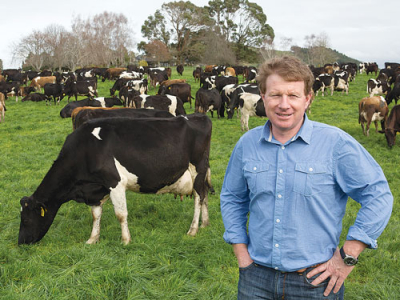 John Wilson.
The late rise in the farmgate milk price means Fonterra is now paying New Zealand farmers more than most of the world’s farmers are receiving, says chairman John Wilson.
They are competing in a global marketplace in food service products and their competition has “a lower value of milk underneath it than ours has,” Wilson told the recent Jersey NZ conference.
“This hasn’t happened ever in our history,” he says.
He was talking about the milk price rise from $6.40/kgMS to $6.75/kgMS over a three month period in accordance with their milk price mechanism.
He says he has no doubt that mechanism has “driven absolute performance within Fonterra but it has created some real hard edges in the way we talk about performance in our earnings business”.
He made these comments in answer to a question about the dividend, saying the milk price situation is “creating some credibility challenges in the unit market which we don’t like at all, so we have to think about the implications of the right internal signalling in the business having some external challenges for us”.
“The specialty ingredients consumer food service business is generally operating well; it is getting its margins squeezed at the moment… and we can see that.
“There is the odd market that sometimes doesn’t perform as well and our home market is one of those this year, but we are getting hit by these product mix changes and underlying cost of goods. We have to think carefully about this, listen to what is important to farmers for flexibility, and think about how we need to evolve.”
Wilson says Fonterra currently sees a 20-year change taking place in onfarm conditions.
“Access to capital and access to land for growth are creating succession challenges for farmers, in particular where so many of us are passionate family farming businesses; so succession becomes a whole lot harder because of the amounts of capital involved.
“Farmers own land, they need cows to produce milk off that land to drive cashflow and so the only asset they have in these challenging times is Fonterra shares. We see that in our exit interviews – the biggest driver of change is the capital requirement onfarm. So we have to find more solutions there.”
Fonterra believes stainless steel will continue being built in New Zealand, driven mostly by regulation changes in China.
“That first change was six or seven years ago when the Chinese government forced change on the dairy industry, looking to condense it from 200-odd companies to apparently nine; I think they are about half way on that journey.”
To be among those nine a company had to have a majority investment in an offshore plant.
“The infant formula regulations have driven vertical integration -- nine recipes per plant -- so you can no longer just blend in a plant somewhere in the world and sell infant formula into China. We think that will drive stainless steel here so we have to find much more flexibility.”
Four candidates have been confirmed for two director positions on Fonterra’s board.
A record farmgate milk price and strong global demand is laying the foundation for continued growth of organic dairy farming in New Zealand.
Waikato milk processor Tatua has again declared a record milk payout to farmer shareholders, leaving other processors in the dust.
Fonterra has unveiled its annual results for the 2026 financial year, posting $27 billion in revenue and close to $20 billion returned to New Zealand farmer owners and unit holders.
Fonterra Co-operative Group has confirmed the independently assessed candidates standing for election to its board in 2026.

High country stations, mixed sheep and beef farms, Māori-owned farms, corporates and family operations are among the nine commercial farms taking part in the Livestock Innovation Farming Transformation programme, known as LIFT.
OPINION: New health and safety guidance unveiled by the Government recently provides farmers greater certainty about what is expected of them when managing risks on farm.
The National Animal Welfare Advisory Committee (NAWAC) is seeking public feedback on proposed changes to the Code of Welfare for Rodeos.
A New Zealand initiative supporting farmers to restore the health of grazing landscapes has received international backing through the Regenerative Fund for Nature, a global collaborative fund supporting regenerative agriculture and the communities that produce natural fibres for the fashion industry.
Combine premium New Zealand products, blend in a family ritual and what do you get? A world-class functional drink.
Entries are now open across eleven regions for the 2027 New Zealand Dairy Industry Awards (NZDIA).

OPINION: It seems Canterbury processor Synlait is still in the doldrums.
OPINION: Get offside with New Zealand First leader Winston Peters at your own peril.




