Monday, 10 October 2016 13:46

New app helps manage mastitis

Written by 
A new app for farmers has been launched by LIC Automation to help those with CellSense in-line sensors to more easily manage mastitis in their herd. A new app for farmers has been launched by LIC Automation to help those with CellSense in-line sensors to more easily manage mastitis in their herd.

A new app for farmers has been launched by LIC Automation to help those with CellSense in-line sensors to more easily manage mastitis in their herd.

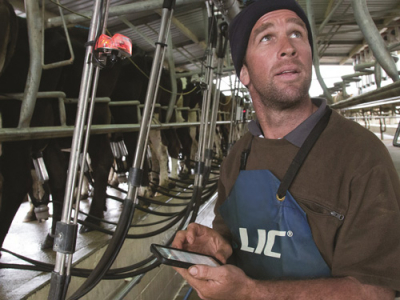
CellSense is an automated in-line sensor providing farmers with a live somatic cell count (SCC) result within two minutes of cupping the cow. The new CellSense Connected app sends the SCC results straight to farmers’ smart devices. Data is presented in an easy-to-use format on the farmers’ devices (phones and tablets), allowing them to assign a SCC result to a cow during milking.

This means farmers can view reports at their convenience and use them to aid dry off decisions. A flashing light system in the milking shed is an optional extra that alerts farmers to which cows in the herd have a high SCC.

Paul Whiston, LIC Automation’s chief executive says it heard from farmers they wanted an affordable solution enabling better mastitis management.

‘Until now, a herd identification system had to be fitted in the shed so the data from the sensors could be stored. CellSense Connected means no herd identification system is needed. It puts the farmer in control of what is and isn’t recorded.”

The app has been designed for farmers who run smaller operations and are looking for a cost-effective way manage mastitis. LIC Automation have found through on-farm trials that farmers are mainly concerned with the cows that have a high SCC level and tend to record only the outliers in their herd.

CellSense Connected integrates to LIC Automation’s Protrack, allowing farmers to schedule drafts from the app. It is suitable for both Herringbone and Rotary sheds and connects to other LIC Automation products.


More like this

BVD Control in Dairy Herds: How to Find & Remove PI Animals

Bovine Viral Diarrhoea (BVD) is estimated to cost New Zealand's dairy and beef industries more than $150 million every year, yet many of the tools needed to control it are already well understood. After more than 25 years in veterinary practice, Andrew Weir, animal health technical specialist at LIC, has seen firsthand the impact BVD can have on herd performance. We asked him about the role of persistently infected (PI) animals and the practical steps farmers can take to reduce their risk.

Featured

Carrfields Marks 50 Years as Rural Health Programme Grows

Celebrating 50 years in the rural landscape of Central Canterbury and beyond, Ashburton-based Carrfields, has been the exemplar for all aspects of modern agriculture via its extensive range of services including supply, growing, agronomic advice and marketing.

Taupiri Farmers Chase Ownership After Awards Success

For Taupiri dairy farmers Logan and Sian Dawson, their involvement in the NZ Dairy Industry Awards has been a key catalyst in the growth of their business - the experience helping shape how they approach the farm ownership pathway they are pursuing today.

Ballance Urges Farmers to Plan Ahead for El Niño

With forecasters advising El Niño conditions will develop through winter and strengthen into spring and summer, Ballance Agri-Nutrients is encouraging farmers and growers to think ahead about nutrient planning and be prepared to work around challenging weather conditions.

National

Machinery & Products

Suzuki Launches Jimny Horizon

Suzuki New Zealand has announced the arrival of the latest version of its Jimny SUV, the Horizon special edition, a…

» Latest Print Issues Online

Milking It

Domestic Focus

OPINION: After hogging the media limelight for telling a NZ Chinese MP to "go back home", Winston Peters has decided…

A No-Brainer

OPINION: With fuel prices soaring, one would have expected most farmers to be reclaiming excise duty on petrol.

» Connect with Dairy News

» eNewsletter

Subscribe to our weekly newsletter