
Crisis talks on Gore district plan
Moves are underway for farmers and Māori in Southland to try and resolve and get clarity over what appears to be a controversial section of the proposed Gore District Plan.




 increase font size
 Dairy Goat Co-operative will see a new chief executive start next week. Meanwhile, co-op chair Campbell Storey will step down from his role in September.
Hamilton-based Dairy Goat Co-operative (DGC) is revamping its leadership in the hope of recovering from its financial doldrums.
A new chief executive starts next week, and the co-op chair Campbell Storey will step down from the role at DGC's annual meeting in September.
Alastair Hulbert, who has a marketing degree from Massey University, starts as CEO on May 20. He replaces David Hemara who left the co-op a month ago. Former chief executive Tony Giles is acting as CEO until Hulbert takes over.
Dairy News understands DGC needs a cash injection to remain viable. There was backlash from farmer shareholders earlier this year after DGC asked suppliers to reduce their milk supply by one-third for the coming season.
In March, Hemara told Dairy News that DGC had advised its shareholder suppliers that it will call for less milk in the 2024/24 season than shareholders would normally expect to supply.
"While the final amount of milk per shareholder is yet to be finalised, we have advised shareholders that we expect that they will be asked to reduce supply to around two-thirds of normal level.
"This reduction is necessary to better balance incoming milk against forecast product sales for 2024/25. This is a continuation of a cap that we have applied for several seasons and reflects changing demand levels in some markets since Covid."
Hemara said that the global supply/demand situation for goat milk has been impacted by four key factors: Declining birth rates internationally, sales channels that have changed during Covid - incuding the Daigou informal sales channel to China, and cost of living pressure in many economies. There has also been a structural change in the China consumer market where over the last four years China consumers have moved strongly to support Chinese domestic brands. This same impact has occurred in the infant formula segment, he added.
"At present, our view is that there is more goat milk than demand globally."
Moves are underway for farmers and Māori in Southland to try and resolve and get clarity over what appears to be a controversial section of the proposed Gore District Plan.
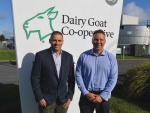
Farmer owners of the Dairy Goat Co-operative (DGC) in Hamilton say they believe in the business’s long-term future.
A new leadership team and a revamped manufacturing strategy is in place to help Hamilton-based Dairy Goat Co-operative navigate challenges in one of its key export markets, China.
There have been leadership changes at the Hamilton-based Dairy Goat Co-operative, which has been struggling financially in recent years.
Dairy sheep and goat farmers are being told to reduce milk supply as processors face a slump in global demand for their products.



Now in its fourth year, the 2026 Fencing Industry Awards, formed part of the proceedings of the FCANZ Conference, held in Nelson during August.
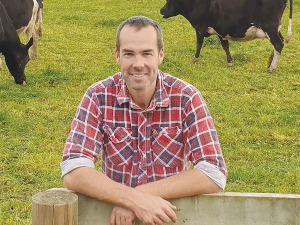
DairyNZ deputy chair Cameron Henderson has been re-appointed unopposed for another term.
OPINION: The stats speak for themselves.
Farms across the upper North Island are trialling different pasture mixes as part of a research programme that aims to build greater resilience into farming systems.
Election years are always a concerning time for farmers, according to DairyNZ chair Tracy Brown.
The Ballance Farm Environment Awards are coming to the West Coast of the South Island.




OPINION: It seems Canterbury processor Synlait is still in the doldrums.
OPINION: Get offside with New Zealand First leader Winston Peters at your own peril.