
Fonterra CFO Andrew Murray Resigns
Fonterra Co-operative Group chief financial officer Andrew Murray has resigned to take up a role outside the dairy giant.




 increase font size
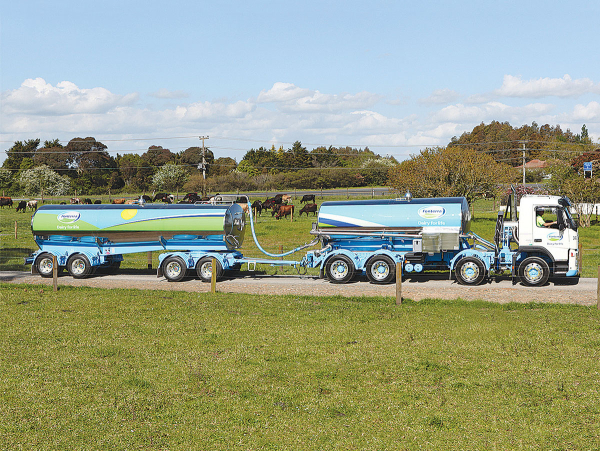 The advance rate is based on a forecast milk price of $6.75/kgMS
Fonterra farmers will receive an advance rate of $5.10/kgMS for milk supplied over the next four months.
The advance rate is based on a forecast milk price of $6.75/kgMS, the mid-point of the co-operative’s milk price range of $6 to $7.50/kgMS for this season. It includes milk supplied from September to December this year: the advance rate is paid the following month.
For milk supplied in January next year and paid in February, the advance rate will rise by 5c to $5.15/kgMS.
Last season, Fonterra farmers received an advance rate of $5.70 for milk supplied between August and December, when the bulk of the season’s milk is produced.
The advance rate is the percentage of the forecast farmgate milk price paid on actual milk volume collected.
Fonterra says the rate is based on the current forecast for the full year, and by paying a percentage of the current forecast, it reduces the risk that future advance payments will need to be decreased, or in extreme cases, returned to Fonterra if they were overpaid based on a higher previous forecast.
Announcing its 2023 financial results today, Fonterra says it recognises the impact the reduced farmgate milk price has on farmers’ businesses.
“We have utilised our strong balance sheet to introduce a new Advance Rate Schedule guideline to assist on-farm cashflow,” says chief executive Miles Hurrell.
Hurrell says its forecast 2023-24 farmgate milk price range reflects reduced demand for whole milk powder from key importing regions.
“We are watching market dynamics closely and there are indications demand for New Zealand milk powders will start to return from early 2024. Demand for other products, including Foodservice and our value-added Ingredients, continues to be robust.
“Our FY24 forecast earnings range for continuing operations is 45-60 cents per share. While the favourable price relativities we’ve experienced across FY23 have reduced from their peaks, we are forecasting improved margins across our Consumer and Foodservice channels for FY24.
“We acknowledge that across the year, farmers will continue to feel the pressure from high input costs and a reduced Farmgate Milk Price. We'll continue to do all that we can to support farmers through this challenging period,” says Hurrell.
Fonterra Co-operative Group chief financial officer Andrew Murray has resigned to take up a role outside the dairy giant.

Four candidates have been confirmed for two director positions on Fonterra’s board.
A record farmgate milk price and strong global demand is laying the foundation for continued growth of organic dairy farming in New Zealand.
Waikato milk processor Tatua has again declared a record milk payout to farmer shareholders, leaving other processors in the dust.
Fonterra has unveiled its annual results for the 2026 financial year, posting $27 billion in revenue and close to $20 billion returned to New Zealand farmer owners and unit holders.



National’s pledge to introduce 19 new national standards shows the party is serious about getting Wellington out of farming, Federated Farmers says.
The National Party’s policies to make it easier to grow fresh vegetables, secure reliable water and energy and simplify farm planning are practical changes that will give growers the confidence to invest, according to Horticulture New Zealand (HortNZ).
Fonterra Co-operative Group chief financial officer Andrew Murray has resigned to take up a role outside the dairy giant.
A major move is about to get underway to improve the quality and viability of dairy beef and cattle in NZ.
Veterinarians say changes to the code of welfare for dairy cattle provides a positive foundation for improved cattle welfare across the country.
Today, 15 October, is the International Day of Rural Women, which recognises rural women’s contribution to farming, communities and the environment.




OPINION: It seems Canterbury processor Synlait is still in the doldrums.
OPINION: Get offside with New Zealand First leader Winston Peters at your own peril.