
Federated Farmers Welcomes ACT’s New Farming Policies
Federated Farmers has welcomed new rural policies released by ACT, saying they align closely with its own election priorities.




 increase font size
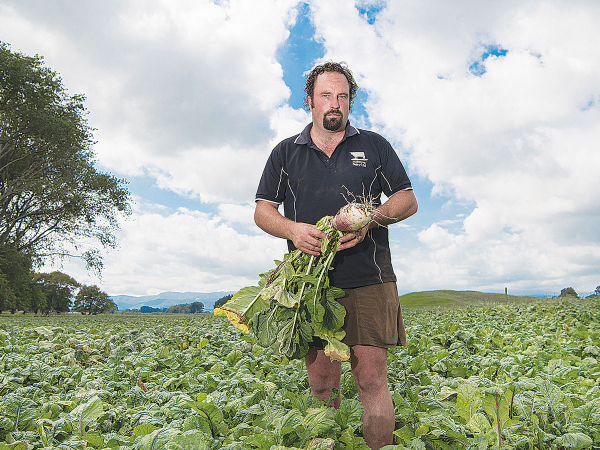 Federated Farmers telecommunications spokesman Richard McIntyre.
Despite its importance to the sector, many farmers and rural customers are still managing with subpar internet and mobile phone service.
That’s according to the recent 2022 Federated Farmer Rural Connectivity Survey.
The survey found that more than half of the approximately 1,200 farmers who responded had reported download speeds at or less than 20 megabytes per second.
Federated Farmers national board member and telecommunications spokesman Richard McIntyre says broadband and mobile are vital to farming businesses.
“With the industry becoming increasingly technologically advanced… that requires good connectivity in order to make it all work,” McIntyre told Dairy News.
“It’s vital that we make those advancements because we’ve got a fair few challenges coming our way in terms of climate change, nutrient management and we need to be more productive and efficient in order to remain profitable and efficient as we meet those challenges.”
He says another issue is that a lack of internet connectivity has been linked to an increased sense of isolation.
“It is an issue around mental wellness, but also it’s a barrier to getting the young people out on the farms, because if they don’t have the connectivity, they don’t have the ability to connect to… various social media and remain connected with their friends and family in the way that they should expect.”
He adds that increasingly good internet connection is required for compliance tools, like farm plans and NAIT.
“The level of auditing, etc., that’s required for the likes of meat processors, milk protein, that’s basically all done digitally these days and so, we will need to run computer programs that download a track map where fertiliser has been placed onto that program so that we can then use it for reporting.”
He says that while government funding to improve rural connectivity has been generous in the past, things have moved on from when funding was announced back in 2014.
“Certainly, more is required in that space from government in terms of funding, but also the providers have a lot of work to do in the rural space.”
McIntyre says that he recognises that for many internet providers the most profitable investment to be made is in urban areas, but those same providers need to invest in rural areas as well.
“We’ve got to make sure that we get a good and reliable standard of quality, both in terms of internet and cellular service.”
He says the infrastructure itself doesn’t seem to be designed to cope with what it is currently used for.
"Previously there was just some phone calls with a little bit of data for checking your emails… whereas now you have heaps of people streaming Netflix, etc. but using the same towers so they need to be upgraded.
“Something’s got to change in that respect because that’s how we do business these days, because there is an expectation that we need to be contactable during business hours and that’s just not the case for many people, when it really should.”
He says the level of service can differ between providers and areas so it’s important to find out if customers can get better service with a different provider.
“I’d really encourage everyone to have a look around, see if someone else can offer you a better service or a better deal.”
Federated Farmers has welcomed new rural policies released by ACT, saying they align closely with its own election priorities.

Federated Farmers is backing Feilding High School’s call to keep Agriculture and Horticultural Science as a standalone subject in Year 11.
National’s pledge to introduce 19 new national standards shows the party is serious about getting Wellington out of farming, Federated Farmers says.
Mobile phone coverage and reliability are deteriorating in rural areas, and farming families are bearing the cost, according to a Federated Farmers survey.
The Minister for Rural Communities, Mark Patterson, says there's a massive infrastructure deficit in rural areas.


Federated Farmers has welcomed new rural policies released by ACT, saying they align closely with its own election priorities.

Rural Contractors NZ says proposed changes to land transport rules for agricultural vehicles are a welcome response by the Government to out of date regulations which have seen members hit with huge fines.
Alliance is calling for final applications for its 2027 Graduate Programme, with applications closing on Sunday 25 October.
Decades piloting planes has ensured vet and farmer David Hayes is focused on safety. So, after a serious accident while welding on farm, he is sharing his experience so others can learn from it.
Canterbury milk processor, Synlait Milk has confirmed Leon Fung as its chief executive officer.
OPINION: Making it easier to collect rainwater and use it to grow crops and livestock is a no brainer.




OPINION: It seems Canterbury processor Synlait is still in the doldrums.
OPINION: Get offside with New Zealand First leader Winston Peters at your own peril.




