
Rural NZ Welcomes $8.5m Government Health Package
Rural New Zealand is welcoming the Government’s recent package of rural healthcare initiatives.




 increase font size
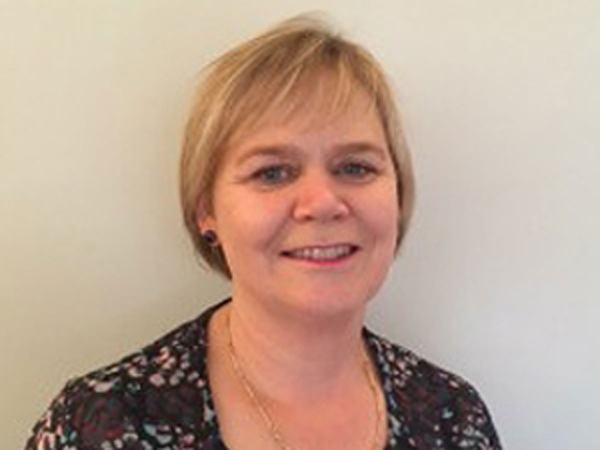 Gabrielle O'Brien.
Rural Women New Zealand’s new chief executive says the organisation is focusing on its connection with rural communities.
Gabrielle O’Brien started in the role earlier this month, coming from a role as the national branch manager and operations lead at the New Zealand Law Society.
She also worked as chief executive of Birth Right New Zealand, a social services charity focused on single parent families.
She says the experience is relevant in terms of understanding how to work with members, make sure their voices are heard and represent what matters to them.
“I think one of our [RWNZ’s] main roles is supporting rural communities, another is strengthening and a third is connecting,” O’Brien told Dairy News.
“We have a role in terms of making sure that the voice of rural women and their families and their communities are heard.”
She says that RWNZ aims to ensure that it is providing connectivity in rural communities.
O’Brien says one of the things that appealed to her about the organisation itself was its goal of providing opportunities for women.
She says this is done through RWNZ’s own structure but also through its activator programmes run in conjunction with the Ministry for Primary Industries.
“When we talk about issues that are facing rural women, they’re probably issues that are facing rural communities generally.”
Among the issues the organisation is particularly looking to are digital equity.
“We often see, for example, technology as a solution, sometimes people forget that there’s large pockets of our country where people don’t have reliable internet so you can’t rely on that as the one means of communicating.”
She adds that the government, in particular, needs to put a rural lens on some of the issues it looks at. “That impact analysis at both the rural level and also in terms of gender is really important.”
Rural New Zealand is welcoming the Government’s recent package of rural healthcare initiatives.

Deputy Prime Minister and ACT Party leader David Seymour says advocacy group Rural Women New Zealand (RWNZ) has submitted against a controversial bill without consulting its members.
Women up and down the country are the glue that hold rural communities together, giving so much to so many, says the inaugural Rural Woman of the year award winner Kate Acland.
Rural Women New Zealand has announced the winners of the 2026 NZI Rural Women Business Awards.
Rural Women New Zealand this month submitted on the Draft Mental Health and a Wellbeing Strategy 2026-2036, because a person's postcode should not determine the quality of their mental health support.


Farmers are being encouraged to rethink how they manage waste on farm with the launch of ruralwastesorted.co.nz, a new website bringing together practical tips, real farmer experiences and resources.

New Zealand Winegrowers (NZW) is celebrating the India-New Zealand Free Trade Agreement (FTA) coming into force today, bringing New Zealand wine improved access to one of the world’s fastest-growing economies.
New Zealand’s red meat sector has welcomed the India-New Zealand Free Trade Agreement taking effect, which removes India’s 33% tariff on New Zealand sheepmeat.
More than 95 per cent of New Zealand’s forestry and wood exports to India can now enter tariff free as the New Zealand-India Free Trade Agreement comes into force today.
Federated Farmers is backing Feilding High School’s call to keep Agriculture and Horticultural Science as a standalone subject in Year 11.
Food and fibre exports have returned a billion- dollar bonus to the country.




OPINION: It seems Canterbury processor Synlait is still in the doldrums.
OPINION: Get offside with New Zealand First leader Winston Peters at your own peril.




