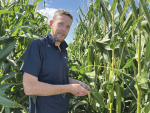
Fall Armyworm in NZ Maize: Four Years of Research
Four years since it was first detected in New Zealand, researchers and growers now know much more about management of maize pest fall armyworm (FAW).




 increase font size
 Is seaweed an answer to healthier cows?
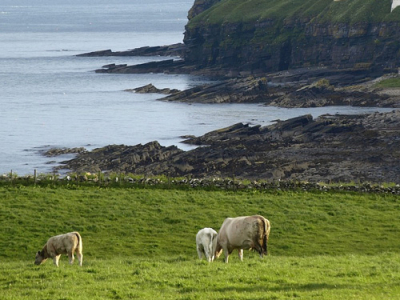
About 11 years ago Canadian farmer Joe Dorgan noticed that his cattle in a paddock by the sea were more productive than his other cows.
Dorgan’s cattle were found to be eating storm-tossed seaweed.
Canadian researchers Rob Kinley and Alan Fredeen have since discovered that seaweed not only helped improve the cows’ health and growth, but also reduced their methane production by about 20%.
This led Kinley, who by now had moved to Australian research organisation CSIRO, to team up with other CSIRO scientists and marine algae specialists at James Cook University to test a range of seaweeds.
They have now tested 20 seaweed species and found that they reduce methane production in test-tube samples from cow stomachs by anything from zero to 50%.
However, when the researchers tested a particular type of seaweed collected from Queensland’s coastal waters, they thought their instruments were broken and ran the tests again.
It turned out that Asparagopsis taxiformis reduces methane production by at least 99% in the lab. And unlike other seaweeds, where the effect diminishes at low doses, this species works at doses of less than 2%.
Asparagopsis produces a compound called bromoform, which prevents methane production by reacting with vitamin B12 at the last step. This disrupts the enzymes used by gut microbes that produce methane gas as waste during digestion.
Cows and sheep produce methane, a greenhouse gas 28 times more powerful than carbon dioxide. Despite misconceptions, most cow methane comes from burps (90%) rather than farts (10%).
CSIRO and James Cook University, with funding from Meat and Livestock Australia, are now experimenting further to examine how feeding seaweed to cattle affects production.
Four years since it was first detected in New Zealand, researchers and growers now know much more about management of maize pest fall armyworm (FAW).
Generative AI in the workplace, trials in the field, and industry-relevant research took centre stage at this year’s Grape Days events in Central Otago, Hawke’s Bay and Marlborough.
A new company set up to cultivate and supply seaweed for animal methane mitigation studies believes it could be a game changer for the dairy industry.
Scientists from the Ministry for Primary Industries (MPI) are part of an international team working to develop a low-cost diagnostic tool that could significantly improve food crop production in developing countries.
A company growing and processing seaweed with known methane-busting properties at a facility in Bluff is expanding internationally but New Zealand cattle farmers won't be getting the product anytime soon.


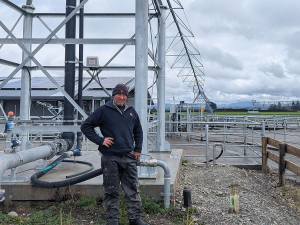
Converting a longstanding cropping farm to dairy was the only way to ensure the land stayed in the family long term, says new dairy farmer Rod May.

As the election heats up, Organics Aotearoa New Zealand (OANZ) has launched its election scorecard designed to help voters wanting to support policies that grow organic and New Zealand's organic sector.
A 'tsunami' of milk from key exporting countries is winding down and this may be good news for New Zealand dairy farmers.
Will the good times last? That's one of the key issues to come out of the latest Federated Farmers confidence survey.
Outgoing Fonterra Co-operative Council chair John Stevenson says that it has been a privilege to represent the co-op's farmer shareholders.
Have a plan in place for your cows and staff.



OPINION: It seems Canterbury processor Synlait is still in the doldrums.
OPINION: Get offside with New Zealand First leader Winston Peters at your own peril.




