Farms to generate solar power
A start-up solar energy business says recent developments in the energy sector make it a sound investment.




 increase font size
 Solagri provides a ‘solar as a service’ option tailored to New Zealand dairy farms.
Canterbury-based solar panel provider Solagri Energy recently received a $10m boost from investment bank New Zealand Green Investment Finance (NZGIF).
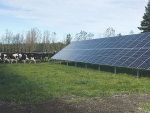
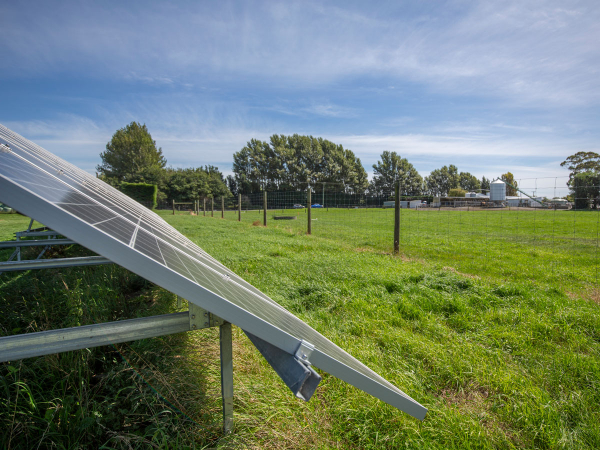
Solagri provides a ‘solar as a service’ option tailored to New Zealand dairy farms.
The company’s arrays are normally ground mounted on a quarter hectare close to the dairy shed, providing the farm with low-cost electricity with longterm energy price security.
The $10m debt finance facility is expected to fund approximately 120 solar arrays over the course of the next three years. Those arrays are expected to help avoid 36,100 tonnes of CO₂ emissions over the life of the assets.
Solagri chief executive Peter Saunders says the investment comes at a time when farmers are looking at different ways to cut costs and save money.
He says his company’s Power Purchase Agreement (PPA) offering gives farmers price stability without increasing debt, thus enabling them to focus on their investment in their core business.
“We currently have eight systems at differing stages of consenting and construction and a lot of new work coming down the pipeline. We’re looking forward to expanding that rapidly in the next few years thanks to this facility from NZGIF,” Saunders says.
“Solar energy makes a lot of sense for farmers but there hasn’t been a realistic renewable energy option for them until now.
“Our PPA-driven model allows farmers to have their cake and eat it too,” he says.
The Solagri solar arrays have no upfront capital cost attached to them and provide reduced energy costs over time, in addition to helping with the annual Sustainability Audit. Saunders says this means farmers can then invest in other projects like herd monitoring and automation systems.
“It’s a bit of a no-brainer.”
NZGIF chief investment officer Jason Patrick says the bank’s purpose is to accelerate investment in the decarbonisation of New Zealand.
“As a green investment bank, we are a commercial investor and generate returns on our investments that will be recycled into new investments over time,” Patrick told Dairy News.
“By providing Solagri with financing for more solar installs on dairy farms, we see this investment as a positive step towards the decarbonisation of New Zealand.
“Given the importance of the farm sector in New Zealand, we are particularly pleased to support this in initiative,” he says.
Patrick says there are many opportunities for the bank to invest in the transition to more renewable energy resources to move New Zealand closer to net zero carbon emissions.
“This investment does not preclude us from making investments with other solar developers. In fact, we currently provide debt facilities for solarZero’s residential, commercial and school solar programmes and we are actively engaging other operators in this sector.”
A start-up solar energy business says recent developments in the energy sector make it a sound investment.
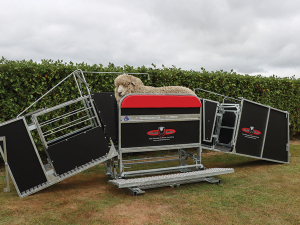
Oamaru-based livestock handling specialist Te Pari has bought Combi Clamp, the New Zealand manufacturer of Combi Clamp manual sheep handlers.
Agriculture Minister Todd McClay has admitted that a scheme bringing workers from Pacific nations to work on orchards has become too hard to navigate but says changes are coming.
A new app designed in New Zealand aims to help sheep, beef and deer farmers capture, analyse and use body condition score data more effectively.
Canterbury farmer Andy Macfarlane has been appointed to the board of AgriZeroNZ, the public-private partnership designed to accelerate the development and deployment of emissions reduction tools for New Zealand farmers.
For over 50 years Mel Ewers has been supporting the apple sector navigate through compliance and quality assurance issues.
The apple sector is enjoying a bumper harvest season.



OPINION: City and regional councils have been put on notice - stop using extreme climate forecasting scenarios that can drive…
OPINION: The Green Party’s rivers and oceans policy may have a new name but nothing else has changed.