Early Calf Nutrition Linked To Better Growth And Future Milk Production
Giving calves the best possible start to life has been shown to boost growth and resilience.




 increase font size

Young stock are an important asset to a farm, providing it with a future of high quality herd replacements – but only after careful management and rearing to ensure they achieve set targets throughout their development.
And with the majority of animals now spending their first two years of life away from the farm with a grazier, many farmers will have experienced disappointment or heard the horror stories about when they return, says McNeil, veterinarian and reproduction solutions manager for LIC.
McNeil says recent LIC research has identified heifer rearing as a significant contributor to the decline in the national herd's reproductive performance and six-week in calf rate, with 73% per cent of stock below their liveweight breeding value based targets by more than 5% at 22 months of age.
"This practice of rearing away from the farm can sometimes result in an 'out of sight - out of mind' culture, which is dangerous territory for any farm because the rearing of these animals in that first two years is crucial to their reproduction and production performance throughout life.
"By rearing young stock to their full potential, farmers will see improvements in their six-week in calf rate which is essential for improving farm profitability," McNeil says.
To make the monitoring and management of young stock easier, the cooperative has developed a new tool which will soon allow farmers to keep a closer eye on these important animals – called MINDA Weights.
The new tool will soon join Milk and Land & Feed on the new web-based MINDA system, and present farmers with their animals weight information in a simple way that makes it easier to track performance and identify any that require special attention or treatment.
"MINDA Weights presents young stock weight information exactly how a farmer would want to see it - in a practical format that is easy to understand and utilise for important management decisions such as preferential feeding or treatment.
"Its web-based platform also means they can share access with other farm staff, their vet, and their grazier, so everyone can monitor the animals growth."
MINDA Weights also incorporates new and more accurate liveweight targets based on liveweight breeding values that are set to each animal's genetic make up and the farm's dates for planned start of mating and calving.
This takes the guesswork out of looking at weight data, with all the calculations done by MINDA, Greg said.
"It provides farmers with targets that are specific to each of their animals and mobs, and by pegging the targets to the farm's planned starts for heifer mating and calving, the true impact of liveweights can be assessed.
"These events always occur at set times in seasonal herds and targets must be achieved by those dates, whether they are born early or late.
"MINDA will provide the farmer with more accurate information to assist them in ensuring all heifers reach puberty and meet their targets in time, and are ready and able to perform at their peak, right from the start.
"Then we'll start to see improved heifer rearing that will ultimately contribute to improvements in the six-week in-calf rate," McNeil says.
Incorporation of genetic makeup in the targets also recognises the growing diversity in the national dairy herd.
"The rise of KiwiCross, the increasing size of Jerseys and strain differences within the Holstein-Friesian breed all result in variation to the expected mature liveweights of animals within those breeds," McNeil says.
Currently undergoing customer testing, the new MINDA Weights will be available free to MINDApro customers, from MINDA Home next month.
Its web-based platform means farmers can access their young stock weights information anywhere, anytime and from any device with an internet connection.
Giving calves the best possible start to life has been shown to boost growth and resilience.
The first weeks of a calf's life quietly shape the future of the entire herd.
In calf rearing, the smallest details often have the biggest impact. While feed and genetics remain critical, bedding is increasingly recognised as a key driver of calf health, growth, and overall performance.
For decades, probiotics in calf rearing have been treated as a reactive tool – something to reach for when illness strikes. That thinking, according to Matt Collier of Probiotic Revolution, is leaving significant money on the table.
When a cow goes down after calving, it is easy to blame the calving itself. Milk fever, calving stress, poor weather, bad luck. Yet many down cows are not caused by one dramatic event. They are the end result of poorly transitioned cows entering calving under nutritional pressure.
New Zealand dairy farmers are set to be the first in the world to receive access to a new digital physical milk pricing tool that enables them to fix the price for their physical milk.
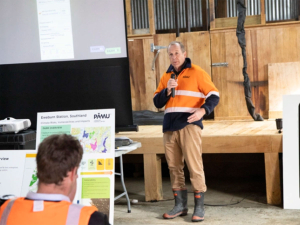
State farmer Pāmu is opening its farm gates this summer in an effort to give the rural sector the opportunity to see how large-scale, multi-system farming is delivering productivity and profitability across New Zealand.
A five-year study has found that the cost of reducing emissions without technology may be significant and unsustainable for Northland dairy farmers.
DairyNZ says Waikato farmers need certainty on Plan Change 1, but they say that certainty must be matched with practical, workable rules and a clear transition that doesn't get ahead of the new resource management system currently under review.
While the Government has moved quickly to make commercial hauliers' lot easier during the current fuel crisis, they appear to be stuck in the creep box when it comes to the agricultural industry.
Waikato farmers have been told that the Government’s new planning system legislation and the region’s Plan Change 1 (PC1) “won’t mesh together very well”.

OPINION: No one messes around with Winston Peters, more so in a general election year.
OPINION: Staying on Federated Farmers, this week's annual general meeting in Auckland is shaping up to be an interesting one.