Better days ahead for Synlait farmers
Synlait farmer suppliers are relieved to see the troubled milk processor on the road to recovery.




 increase font size
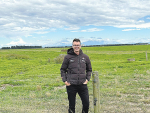
 John Penno, managing director and chief executive at Synlait.
Synlait Milk has dual listed on the Australian Securities Exchange (ASX) and started trading on Friday.
“Interest in Synlait from Australian investors has grown in the past few years – 72% of our institutional shareholding is based in Australia,” says John Penno, managing director and chief executive.
“Being dual listed on the NZX and ASX increases access for institutional investors in Australia, and opens up the company to Australian retail investors too.”
Synlait expects this dual listing will provide increased liquidity, as well as a broader and diversified shareholder base.
“We’ve launched our next growth phase - a three year, $300 million capital expansion programme - and will continue to pursue profitable opportunities to make more from milk. I’m pleased NZX and ASX investors both have the opportunity to be a part of our journey.”
Synlait’s growth was recently underpinned by the successful $98 million pro-rata rights issue, which closed in October 2016.
Synlait has listed on ASX as a foreign exempt issuer under a compliance listing, which will not see any capital raised as a part of the process.
In the financial year ending July 31, 2016 (FY16), Synlait reported a record net profit after tax (NPAT) of $34.4 million ($10.6 million in FY15).
Located in New Zealand’s South Island, Synlait employs more than 430 staff and their Dunsandel site in Canterbury received 658 million litres of milk in FY16.
Synlait farmer suppliers are relieved to see the troubled milk processor on the road to recovery.

A complaint by Synlait founder John Penno over the listed milk processor’s recapitalisation plan has been dismissed by regulators.
A complaint filed by a founder and minority shareholder threatens to derail Synlait’s special shareholders meeting scheduled for September 18.
Troubled milk processor Synlait’s co-founder John Penno has stepped down from the board.
Canterbury milk processor Synlait Milk will get a new chairman next month.


Farmgate lamb prices are down by 8%, beef cattle by 4.5% and farm expenditure up by 4.2%.
Kiwifruit growers are watchful but remain optimistic as concerns around the potential effects of the El Niño weather pattern this season.
Almond hulls sourced from Australian orchards may have the potential to help New Zealand cows reduce emissions, boost milk yield and lower input costs.
Striking a balance between meeting the needs of industry to speed up approval time for products but on the other hand ensuring that risks are properly assessed.
Surprised, humbled and quite thrilled. That’s the reaction of James Allen, one of the founding partners and now chief executive of AgFirst, on being made a life member of the Institute of Rural Professionals.




OPINION: It seems Canterbury processor Synlait is still in the doldrums.
OPINION: Get offside with New Zealand First leader Winston Peters at your own peril.