Fonterra FY26 Results: $9.69 Milk Price, $3.4bn Profit
Fonterra has unveiled its annual results for the 2026 financial year, posting $27 billion in revenue and close to $20 billion returned to New Zealand farmer owners and unit holders.




 increase font size
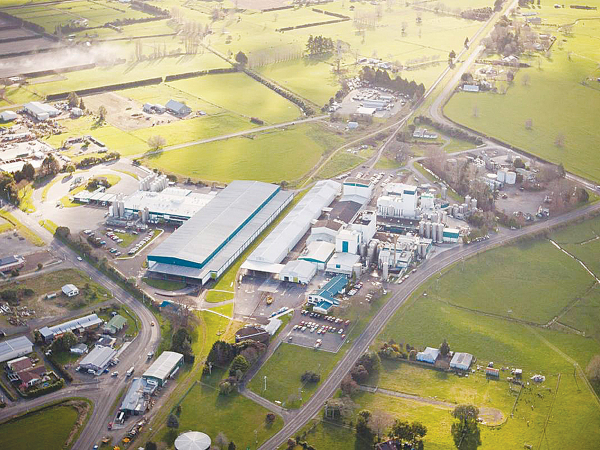 Fonterra will convert coal boilers at its Hautapu site to wood pellets as part of its decarbonisation work.
Fonterra says it will convert coal boilers at its Hautapu site to wood pellets as part of its decarbonisation work.
The co-operative says it will also install a heat pump at its Palmerston North milk processing site that supplies the local market.
Both projects have received support from the Government Investment in Decarbonising Industry (GIDI) Process Heat Contestable Fund.
Fonterra chief operating officer Fraser Whineray says the co-operative is commercially focused on reducing emissions.
"There are a number of solutions we're using to decarbonise our operations and these two projects are a good example of different technologies available."
Once complete in early 2024 the Hautapu site will reduce out carbon emissions by a forecast 15,785 tonnes per annum - the equivalent of taking about 6,500 cars off New Zealand's roads.
The heat pump at the Palmerston North site will convert wasted heat from the refrigeration system into a heat source. This will reduce the amount of natural gas needed for process heat. The site will also generate additional heat via a solar thermal plant.
"This GIDI co-funding will help the co-operative progress two emission reduction projects ahead of time. It will help us continue to make progress towards our target of reducing emissions by 30% across all our manufacturing operations by 2030 (from a 2018 baseline), on the way to net zero by 2050, and transitin out of coal by 2037," says Whineray.
Fonterra is receiving up to $2.5 million in co-funding to complete the work at Hautapu and $425,000 for the Palmerston North site project.
These projects are just two of many underway to decarbonise the Fonterra business, such as the Waitoa and Stirling sites that are in the process of installing wood biomass boilers to transition out of coal.
The Stirling wood biomass boiler will fire up for the first time today, marking the next step on the site's transition to be totally reliant on renewable energy for its process heat.
Changing to this boiler will reduce the annual carbon emissions by 18,500 tonnes - the equivalent of taking approximately 7,700 cars off New Zealand's roads.
The new Waitoa wood biomass boiler, due to be operational in November 2023, will reduce the site's annual carbon emissions by approximately 48,000 tonnes, the equivalent of taking approximately 20,000 cars off New Zealand's roads.
Fonterra has unveiled its annual results for the 2026 financial year, posting $27 billion in revenue and close to $20 billion returned to New Zealand farmer owners and unit holders.
Fonterra Co-operative Group has confirmed the independently assessed candidates standing for election to its board in 2026.
Fonterra has revised its Farmgate Milk Price forecast for the 2026/27 season, lifting the midpoint and narrowing the range on the back of improving global dairy commodity prices.
Outgoing Fonterra Co-operative Council chair John Stevenson says that it has been a privilege to represent the co-op's farmer shareholders.
OPINION: It seems Canterbury processor Synlait is still in the doldrums.



LIC shareholders have elected a new North Island representative to the co-operative's Board, along with five representatives to its Shareholder Reference Group (SRG), following the company's Annual Meeting held in Invercargill.
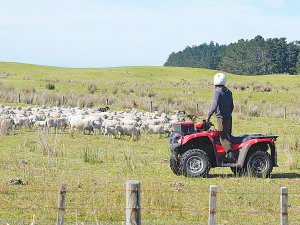
Farmers across parts of Southland and South Otago are continuing to deal with difficult conditions after a prolonged run of wet weather, with pressure building around feed supply, stock management, pasture damage, farm infrastructure and everyday workloads.
Federated Farmers says it welcomes Labour's commitment to reviewing the Sharemilking Agreements Act, calling on other major parties to do the same.
For Canterbury dairy farmers Sian Meijer and Rick Wobben, wearable technology has become one of their most valuable on-farm tools - helping manage 1850 cows across an expansive, high-performing dairy operation while improving efficiency, mating outcomes and day-to-day decision making.
Fonterra has unveiled its annual results for the 2026 financial year, posting $27 billion in revenue and close to $20 billion returned to New Zealand farmer owners and unit holders.
The first major update to the Dairy Cattle Code of Welfare in more than a decade has been released, marking what DairyNZ describes as an important step in ensuring animal welfare standards continue to evolve alongside scientific evidence and on-farm realities.


OPINION: It seems Canterbury processor Synlait is still in the doldrums.
OPINION: Get offside with New Zealand First leader Winston Peters at your own peril.