Kuhn Group Sales Dip 9% in 2025 but Orders Signal Recovery
Kuhn Group recorded net sales of NZ$2.27 billion in 2025, finishing around 9% lower than in 2024.




 increase font size
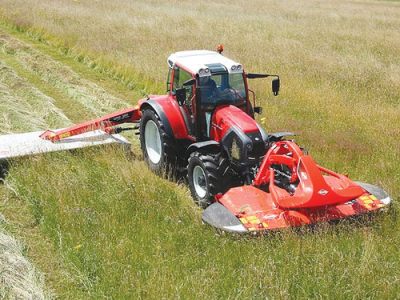 Kuhn is celebrating 190 years.
The acclaimed machinery maker Kuhn, known especially for its cultivation and grassland gear, is celebrating 190 years since Joseph Kuhn opened a forge in Alsace, France in 1828.
Today the business employs 5000 people, sells in 100 countries and generates Euro 1 billion turnover.
It’s a world away from the company that first made weigh scales then, with the opening of the Paris-Strasbourg train line, opened a new factory in Saverne where Joseph was joined by his brothers to begin making farm machinery.
By the start of the 20th century the factory was making several dozen machines each week despite the political uncertainties that saw the region become German in 1871, then French again in 1918.
WW2 saw a decade of growth end and financial insecurity compel the company to join with the Swiss Bucher-Guyer company for survival.
Noted during its 1928 centenary was the manufacture of 1000 threshing machines per year, and in 1970 its delivery of its 1,000,000th machine.
Over time it bought many farm machinery makers: the French plough maker Huard in 1987, and the mixer wagon and straw processing specialist Audureau in 1993. In 1996 it expanded its range with seed drills and sprayers when Nodet joined the business, and in 2002 it added the American mixer wagon and manure spreader maker Knight Manufacturing.
In 2005 the business bought the precision drill maker Metasa of Brazil, then the French sprayer maker Blanchard in 2008. Also that year the company expanded into balers, wrappers, drum mowers and maize harvesters with the purchase of the Kverneland Group’s Geldrop factory in Holland.
In 2011, Kuhn Group took a minority shareholding in the German company Rauch, best-known for pneumatic seed drills and fertiliser spreaders, and bought the American Krause Corporation, a maker of broadacre tillage equipment.
Its most recent purchase was the Brazilian self-propelled sprayer maker Montanna in 2014.
Kuhn Group recorded net sales of NZ$2.27 billion in 2025, finishing around 9% lower than in 2024.

ZED, the dedicated wholesale division of CB Norwood Distributors, and the importer and distributor for Kuhn in New Zealand, has announced investment in local expertise and stock availability for customers in 2026.
Kuhn has announced an expansion of its range of disc mowers, distributed by Norwood in New Zealand, with the addition of two new vertically folding rear mounted models, the GMD 3515 and GMD 4015.
With most forage harvester manufacturers offering machines touching 1000hp, the logistics puzzle has always been ‘dropping” grass and pulling into a swath big enough to feed the “beast”.
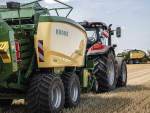
French company KUHN has won a EIMA Technical Innovation Award for its Baler Automation Technology.


Federated Farmers has welcomed new rural policies released by ACT, saying they align closely with its own election priorities.

Rural Contractors NZ says proposed changes to land transport rules for agricultural vehicles are a welcome response by the Government to out of date regulations which have seen members hit with huge fines.
Alliance is calling for final applications for its 2027 Graduate Programme, with applications closing on Sunday 25 October.
Decades piloting planes has ensured vet and farmer David Hayes is focused on safety. So, after a serious accident while welding on farm, he is sharing his experience so others can learn from it.
Canterbury milk processor, Synlait Milk has confirmed Leon Fung as its chief executive officer.
OPINION: Making it easier to collect rainwater and use it to grow crops and livestock is a no brainer.


OPINION: It seems Canterbury processor Synlait is still in the doldrums.
OPINION: Get offside with New Zealand First leader Winston Peters at your own peril.




