Friday, 01 July 2022 11:55

Lending weight to milking cluster helps beat mastitis

Written by  Mark Daniel
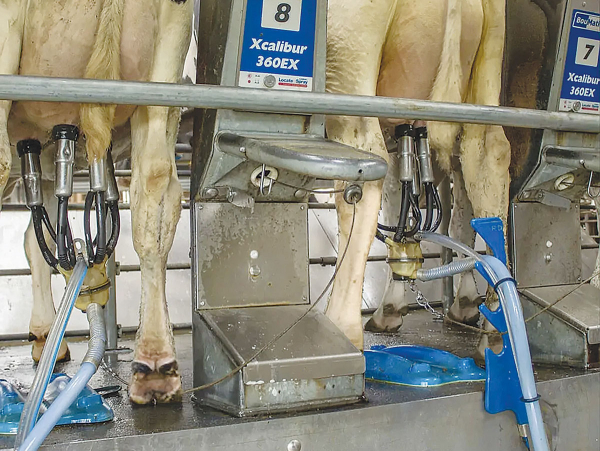
Manufactured from highdensity polyurethane, the support eliminates any weight bias between the front and rear quarters. Manufactured from highdensity polyurethane, the support eliminates any weight bias between the front and rear quarters.

Operating in conjunction with automatic cluster removal (ACR) and gently supporting the cluster, Lactalign is a relatively simple retrofitted device designed to counter the often-costly impact of uneven weight and vacuum distribution of a traditional milking cluster.

The product was developed after herd management software, used at Metcalfe Farms in North Yorkshire UK, revealed twice as many mastitis cases were affecting front, compared to the rear quarters, despite the herd having very low cases overall.

Manufactured from high-density polyurethane, the support eliminates any weight bias between the front and rear quarters, a problem that may go undetected, but can be the underlying cause of many of the increased mastitis incidences in the forequarters.

The support takes the form of an individual pivot at each milking point, trialled initially from 2019, on Metcalfe Farms 72-point rotary parlour. Once the cluster is attached, the milk and pulsator tubes are dropped into one of three slots in the support, largely driven by the shape of the animal’s udder.

The ACR cord is placed in the same or a lower slot, so that when milking is completed and the ACR activates, the retracting cord causes the pivot to move back to its rest position.

Since fitting Lactalign, the farm has seen a 59% reduction in liner slip, a 47% reduction in kick-offs, a 65% reduction in re-attachments and importantly, a 50% reduction in mastitis cases affecting the front quarters.

Designed and manufactured by a local agricultural engineering company, the patented supports typically cost about $300 each, meaning that they would typically pay for themselves in around four months, factoring the loss of milk and the time needed to get back to the typical pre-infection yield. Lactalign can be fitted to rotary, rapid exit and herringbone configurations.


More like this

New CLAAS Swath Turner Fixes Twin-Rotor's Blind Spot

Twin rotor swathers have become the ‘go-to’ for forming swaths to feed hungry harvesters and balers, however, the design layout often means that crop located between the two rotors is not picked up, turned over or incorporated into the swath formed for subsequent harvesting.

Motueka Farm Machinery Sold as Sturgeons Retire After 44 Years

Close to the Abel Tasman and Kahurangi National Parks, Motueka is known for apples, pear and kiwifruit orchards, alongside specialised crops such as hops. Indeed, that specialisation, saw the area being the New Zealand centre of the tobacco growing, until the early 1980s.

Can-Am Unveils 2027 SSV, ATV Range With New Defender HD10

Can-Am has introduced its 2027 range of side-by-side vehicles (SSV) and all-terrain vehicles (ATV), including the industry leading Defender, the Maverick R and the hugely capable Outlander ATV, incorporating a host of advancements designed to deliver an exceptional riding experience.

QuadSense Mastitis Screening Sees 50% NZ Sales Growth

Animal health company Bovonic is gearing up for its next stage of growth after increasing New Zealand sales of QuadSense by more than 50% in the last 12 months, including a record quarter for the business this year.

Featured

Southland Farmers Face Wet Weather Toll, Support Available

Farmers across parts of Southland and South Otago are continuing to deal with difficult conditions after a prolonged run of wet weather, with pressure building around feed supply, stock management, pasture damage, farm infrastructure and everyday workloads.

How Wearable Tech Powers This 1,850-Cow Dairy Farm

For Canterbury dairy farmers Sian Meijer and Rick Wobben, wearable technology has become one of their most valuable on-farm tools - helping manage 1850 cows across an expansive, high-performing dairy operation while improving efficiency, mating outcomes and day-to-day decision making.

New Dairy Welfare Code Released, Takes Effect 2027

The first major update to the Dairy Cattle Code of Welfare in more than a decade has been released, marking what DairyNZ describes as an important step in ensuring animal welfare standards continue to evolve alongside scientific evidence and on-farm realities.

National

Machinery & Products

» Latest Print Issues Online

Milking It

» Connect with Dairy News

» eNewsletter

Subscribe to our weekly newsletter