Treating water collected from roofs, streams, springs, bores often falls into property owners’ too-hard basket, the excuse sometimes being that drinking the stuff builds immunities to local nasties.
The health risks of not cleaning a storage tank should not be underestimated. There’s all the sediment from ash, dust, sprays, chemicals, animal and bird droppings, vegetation and dead rodents that forms a layer at the tank bottom. The result is harmful bacteria leading to headaches, tummy cramps and bugs and fatigue.
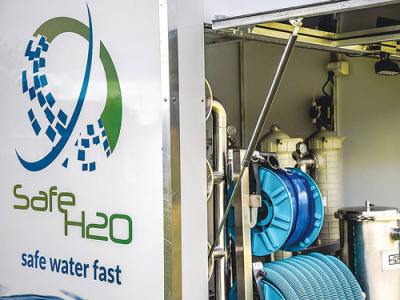
So a development by Safe H2O – a mobile nano-filtration unit built on a purpose-designed trailer – ought to be welcomed by many.
It can remove sediment from the tank contents by means of an external vacuum system that pulls untreated water through the unit then sends clean water back to the tank.
It removes all particles greater than 0.001 micron, removing bacteria, insecticide dust, iron, lead, pollens and viruses. Water is said to be left oxygenated and pure -- no bad smells or taints and unlikely to cause serious illness.
In operation, contaminated water is first pre-cleaned using conventional 25 micron filters before it passes to the Nano filter system with capacity of 20,000L per hour. An integral dosing system can eliminate pathogens and oxidants which cause discoloration by including 1ppm of food-grade hydrogen peroxide, able to remove contaminants such as E-coli, norovirus, giardia and protozoa cysts.
The unit, built with Forsi Innovations, Matamata, sits on a double axle trailer with a 9kVa generator, pumps, 60m hoses, four Nano filters and a programmable logic controller which monitors the unit and measures pressure, flow, filter use and pH.
Civil defence authorities are said to be keen for a look.
www.safeh2o.co.nz