
Environment Southland Urges Vigilance After New Old Man's Beard Infestation Found Near Dipton
Environment Southland is calling on residents to be vigilant and check their properties after a new Old Man's Beard site was discovered near Dipton.




 increase font size
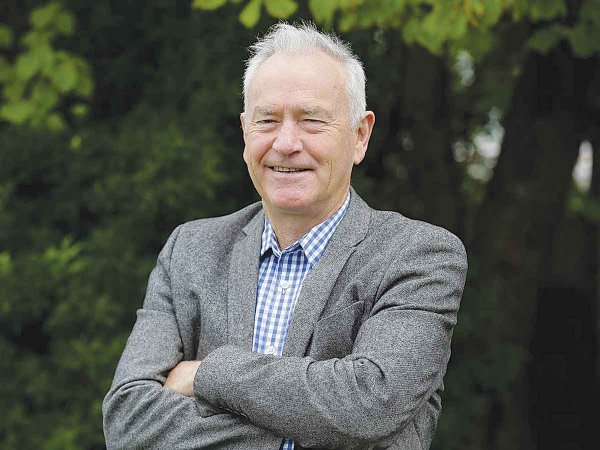 Rob Phillips.
Environment Southland expects “clear improvements” this year on winter grazing practices in the region.
Environment Southland chief executive Rob Phillips said last year’s winter grazing practice left a lot to be desired.
“It was a problem across Southland and I am hoping to see clear improvements this year off the back of a concerted effort with industry organisations to get all farmers up to speed with good practice.”
His comments came as the regional council began its winter grazing aerial compliance inspections. The first flight was conducted last week.
Last winter, Environment Southland undertook three aerial inspections resulting in 68 follow up site visits, letters of concern to a further 88 property owners, six infringements and two prosecution cases. A number of others were referred to Environment Southland’s land sustainability team for advice and support on winter grazing.
It says the situation compelled both the council chairman Nicol Horrell and Phillips to issue statements last winter highlighting the poor practice.
As part of the council’s effort to turn the situation around it initiated hui last year to bring industry organisations together – DairyNZ, Beef + Lamb New Zealand, Federated Farmers, MfE and MPI – to formulate a plan to tackle the problem. They have since provided a range of support to farmers.
“It’s really good to see the industry stepping up with farmers helping farmers,” says Phillips.
“Now more than ever, in these post Covid-19 times of economic recovery, we need our primary sector to be the best it can be if Southland is to continue to thrive, and that includes environmentally.”
Phillips says the council had worked hard to help farmers lift their winter grazing performance. It initiated hui, provided advice through its land sustainability team, made informational material available, and following Covid-19, worked in conjunction with industry on a solution to streamline access to modify consent conditions for farmers struggling with excess stock due to a slow down at processing plants.
“There’s been a sustained, region-wide effort to help farmers improve their wintering practice and I’m looking forward to seeing the results in terms of improvement,” says Phillips.
Last week’s flight was a preliminary one to provide in initial estimation on wintering practice in Southland. Further compliance flights will be undertaken later in late July/August.
Environment Southland is calling on residents to be vigilant and check their properties after a new Old Man's Beard site was discovered near Dipton.

Southland farmers staring down a May deadline to submit freshwater farm plans under current regional plan rules have been given an 18-month reprieve by the Government.
Southland farmers are being encouraged to get ahead of the winter grazing season by attending a practical field day in Pukerau next week.
Environment Southland is welcoming this week’s decision by the Environmental Protection Authority (EPA) to approve the release of Blaptea elguetai, a leaf‑feeding beetle that will help control the highly invasive Chilean flame creeper.
Environment Southland is inviting feedback on two bylaws that play a critical role in safeguarding the region's waterways and ensuring the safety of the local community.


Federated Farmers says it welcomes Labour's commitment to reviewing the Sharemilking Agreements Act, calling on other major parties to do the same.
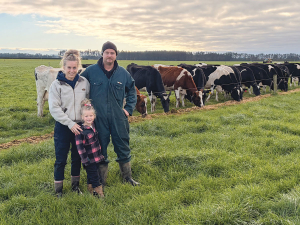
For Canterbury dairy farmers Sian Meijer and Rick Wobben, wearable technology has become one of their most valuable on-farm tools - helping manage 1850 cows across an expansive, high-performing dairy operation while improving efficiency, mating outcomes and day-to-day decision making.
Fonterra has unveiled its annual results for the 2026 financial year, posting $27 billion in revenue and close to $20 billion returned to New Zealand farmer owners and unit holders.
The first major update to the Dairy Cattle Code of Welfare in more than a decade has been released, marking what DairyNZ describes as an important step in ensuring animal welfare standards continue to evolve alongside scientific evidence and on-farm realities.
Ravensdown shareholders have elected Jane Montgomery and Kate Acland to the Ravensdown Board for three-year terms, following a closely contested director election.
Federated Farmers says new legislation replacing the Resource Management Act will cut red tape, unlock investment and help grow New Zealand's export-led economy, after the Planning Bill and Natural Environment Bill passed their third reading in Parliament yesterday.



OPINION: It seems Canterbury processor Synlait is still in the doldrums.
OPINION: Get offside with New Zealand First leader Winston Peters at your own peril.




