Mineral Balance: The hidden key to dairy goat health & production
Most dairy goat farmers focus on getting energy, protein, and fibre right, and fair enough – feed drives milk.




 increase font size
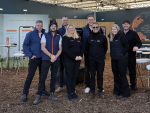
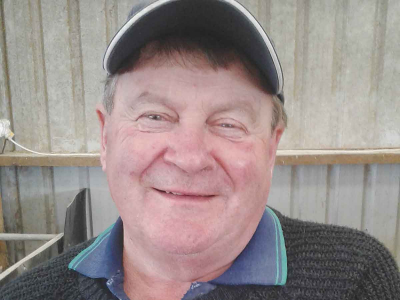 Dairy goat farmer Kerry Avery is leading the rollout of training.
New dairy goat industry training being launched in Waikato is upskilling workers and ensuring consistent standards.
The practical training involves the Dairy Goat Cooperative (DGC) and Primary ITO.
The course and a review of previous training were enabled by Caprine Innovations NZ (CAPRINZ) -- a five-year $29.65 million partnership of Ministry for Primary Industries (MPI) and DGC, launched in August 2018.
DGC chief executive David Hemara says training has always been available for dairy goat industry workers, but it was largely modelled on the bovine dairy industry.
“Given the growth of the dairy goat industry, we worked – and continue to work -- with Primary ITO to review available resources,” he said.
“We customised where needed and introduced new courses to provide the skills needed for New Zealand to retain its position as a leading producer of dairy goat milk.
“Two training courses have been customised to better suit goat farms, providing skills which are easily and consistently applied on farm.
“Targeted, timely training is key for ensuring goats are healthy and able to produce quality milk. Highly skilled staff play a vital role, continuing to improve animal welfare, environment, consistency and use of technology on dairy goat farms.”
Hemara says DGC last year, with Primary ITO, reviewed the existing Milk Quality and Food Safety (Stage One) course and then began work on the inaugural Livestock Husbandry – Dairy Goat (Level 3) course now being trialled with 16 students from DGC farms in Waikato.
A dairy goat farmer and DGC shareholder, Kerry Averill, helped to review current training and is leading the rollout of the husbandry course.
“I have always had a particular interest in training to ensure consistency across the industry,” Averill said.
“As an ex dairy farmer converting to dairy goats 15 years ago I was aware that most of the training elements available to people working in the industry were based on bovine and needed to be tweaked to the dairy goat industry.
“The new course is being trialled with DGC suppliers but will eventually be rolled out across the industry, available through Primary ITO.
“Current students range from newbies through to people who have worked in the industry for more than eight years but who say even if they learn one new thing it will be an asset they can apply back on farm.”
Averill says delivery of course elements is timed to match what’s happening on farm.
“For example, kidding is underway now, so students have been provided with the specific knowledge and skills they need to confidently take care of does and kids on farm.
“Training is balanced between classroom and on farm so students get a chance to practically apply the skills they’ve just learned.
“This training is designed to provide a consistent standard which will attract and retain people and give our international markets confidence in the quality standards which apply to NZ’s dairy goat industry,” Averill said.
Primary ITO chief executive Linda Sissons says the joint work of DGC with Primary ITO people was critical, as capability development is a priority across the industry.
“It’s great that the dairy goat industry is so passionate about training as this will clearly advance consistency in milk quality and animal health,” she said.
Most dairy goat farmers focus on getting energy, protein, and fibre right, and fair enough – feed drives milk.
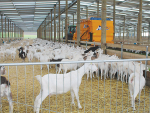
Part of your preventative healthcare needs to focus on the safety of the physical environment, according to a dairy goat farming website.
Last month's inaugural New Zealand Cashmere Conference saw the opening of a new fibre processing facility.
New Zealand’s fledgling dairy goat industry is in turmoil.
Shelter is one of the first considerations when contemplating the purchase of a doe, according to the New Zealand Dairy Goat Breeders Association.
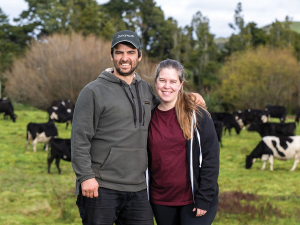
Signing up to a benchmarking tool is not about competition, but about improving collectively, says Ximena Puig and Alvaro Luzardo who are 50-50 sharemilkers at a 164-hectare (effective) dairy farm in Eketāhuna in the Lower North Island.
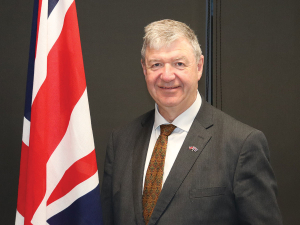
A leading British farming politician says he's impressed with the positive attitude of New Zealand farmers that he met during his recent trip here.
OPINION: With 10,500 dairy farms, New Zealand continues to punch above its weight around the world.
The Southern Dairy Hub (SDH), which runs a demonstration farm for South Island farmers, has a new general manager.
Esther Guy-Meakin has been announced as the new chief executive of the New Zealand Meat Board (NZMB).
According to a progress report on the Aotearoa Horticulture Action Plan (AHAP), New Zealand's horticulture sector is making real progress on the big issues facing growers.

OPINION: The Irish dairy sector is facing a new dilemma - maintaining year-round fresh milk supplies.
OPINION: Could beef cows play an increasingly important role in improving profitability and resilience on hill country farms?