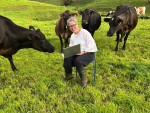
International Day of Rural Women: Two DairyNZ Farmers’ Stories
Today, 15 October, is the International Day of Rural Women, which recognises rural women’s contribution to farming, communities and the environment.




 increase font size
 Virginia Serra, DairyNZ
Selwyn and Hinds dairy farmers are taking steps to reduce farm nitrogen loss, according to a recent DairyNZ survey.
“The survey shows Selwyn and Hinds farmers are working hard to reduce their footprint,” says DairyNZ solutions and development lead advisor, Virginia Serra.
“Taking steps now to reduce nitrogen losses will help improve water quality over time. We know it isn’t easy, but farmers are on the journey and support is available from DairyNZ, dairy companies and rural professionals.”
Survey participants reported:
81% percent of farmers have improved irrigation systems or management.
More than 50% have changed fertiliser use and improved effluent management.
Some farmers have changed stocking rate, are using the grazing herb plantain which reduces nitrogen loss, or have made other changes to benefit the environment.
DairyNZ has been working with Selwyn and Hinds farmers for three years in a project to help farmers reduce nitrogen loss, while optimising profit and resilience.
The project, Meeting a Sustainable Future, is trialling options with 40 partner farms and shares the knowledge with local farmers through field days and events. The work is designed to help farmers meet Environment Canterbury and government rules, says Serra.
Under Environment Canterbury rules, Selwyn dairy farmers must reduce nitrogen losses by 30% by 2022, compared to their baseline figure from 2009- 2013. A farm’s baseline is its average annual nitrogen loss over those four years.
In Hinds, farmers have to reduce nitrogen losses by 15% by 2025, 25 percent by 2030 and 36% by 2035.
In July, a new nationwide nitrogen cap took effect, capping synthetic nitrogen fertiliser applied to pasture at 190kg N/ha/ year. Farmers throughout the country are working hard to achieve this.
Project Details
Today, 15 October, is the International Day of Rural Women, which recognises rural women’s contribution to farming, communities and the environment.
The first major update to the Dairy Cattle Code of Welfare in more than a decade has been released, marking what DairyNZ describes as an important step in ensuring animal welfare standards continue to evolve alongside scientific evidence and on-farm realities.
Have a plan in place for your cows and staff.
DairyNZ deputy chair Cameron Henderson has been re-appointed unopposed for another term.
OPINION: The stats speak for themselves.


Farmers are being encouraged to rethink how they manage waste on farm with the launch of ruralwastesorted.co.nz, a new website bringing together practical tips, real farmer experiences and resources.

New Zealand Winegrowers (NZW) is celebrating the India-New Zealand Free Trade Agreement (FTA) coming into force today, bringing New Zealand wine improved access to one of the world’s fastest-growing economies.
New Zealand’s red meat sector has welcomed the India-New Zealand Free Trade Agreement taking effect, which removes India’s 33% tariff on New Zealand sheepmeat.
More than 95 per cent of New Zealand’s forestry and wood exports to India can now enter tariff free as the New Zealand-India Free Trade Agreement comes into force today.
Federated Farmers is backing Feilding High School’s call to keep Agriculture and Horticultural Science as a standalone subject in Year 11.
Food and fibre exports have returned a billion- dollar bonus to the country.



OPINION: It seems Canterbury processor Synlait is still in the doldrums.
OPINION: Get offside with New Zealand First leader Winston Peters at your own peril.




