How to Improve Milking Efficiency in Swing-Over Herringbone Sheds
The swing-over herringbone is the most common dairy type in New Zealand, used on 69% of dairy farms. Simple changes save seconds per cow, and that quickly adds up.




 increase font size

AN AUSTRALIAN farming couple have been investigating ways to achieve faster milking without the need to outlay for a major extension to their shed.
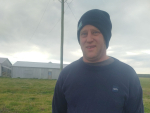
Rob Marshall and his fiancée, Jenni, are currently milking 256 cows, mainly Holstein Friesians with a few crosses, at Lardner, near Warragul, in west Gippsland.
Marshall grew up on a dairy farm in nearby Drouin South and came to this property in 1980 from milking at Yannathan. The farm covers 67ha and in the last 12 months they have been leasing a further 60ha.
They milk on a 32 double-up herringbone shed with cluster removers that were fitted four years ago. As Rob says, “the reason that we were looking for faster milking was that the old clusters we were milking with were relatively lucky to do 80-90 cows an hour.”
After investigating the options, and discussions with the team at Westfalia Warragul they tried two WestfaliaSurge IQ clusters for two months in March/April last year on a ‘try or send back’ scheme. Rob says that he was so impressed with them that they fitted out the whole shed at the end of June.
“We now do 120 to 130 cows an hour, with cleaner milking”, explained Marshall. “Previously the clusters tended to leave milk in some quarters – you could tell by looking at them. The IQs are taking the milk out of all the quarters and that is alleviating the risk of mastitis.
“We still have to work on that for another season, but it has certainly improved our cell count. We’ve been able to maintain premium milk with Gippy Milk.”
The WestfaliaSurge IQ Cluster from GEA Farm Technologies is designed to move milk from each quarter with a minimum of turbulence, for faster milk out. In addition it has four separate guide chambers to prevent teat-to-teat cross contamination.
The IQ Cluster has a new vacuum control design to keep contaminants out of the milk line. A small stainless steel ball located in each guide chamber of the bowl blocks the flow of air when the cups are not attached to the teats, so most unwanted material is not sucked into the milk line. Plus if the cups are kicked off during milking the vacuum automatically shuts off to prevent contaminants entering the milk supply.
The couple share the milking and have a milking assistant who comes in five days a week. They plan to build up to 320 cows during next year and up to 400 the following season.
“We’ll need to upgrade to 20 units a side for that”, Marshall said. “We’ve been renovating the shed in stages. We fitted the new IQ clusters then about six weeks later we upgraded to a WestfaliaSurge variable speed vacuum pump and new jetters.
“We reduced the vacuum gradually – in steps. It’s a much quieter shed now, with no squawking from the clusters.”
The flexible area of the short milk tube on the IQ liner has been almost doubled to improve the ability of the cluster to hang properly under virtually any udder size or shape. That better alignment helps to optimise milk flow and reduce liner slips and squawks.
The measures Marshall has taken recently have removed the urgency to extend the shed. “The way prices are – and money is tight – this has been a very economical way to upgrade our efficiency in order to increase the herd size.
“We are not heavy feeders; we give the cows 3kg per day of wheat in the bail and we work on profit per hectare rather than high production. For our last milking fat is 4.41% and protein 3.21%.”
They make their own hay and silage and were undergoing pasture renovation at the time of our visit at the end of February. “We make mainly silage, very little hay here, because of the local climate. As the herd increases we may go to pit silage and a contractor.”
This email address is being protected from spambots. You need JavaScript enabled to view it.
The swing-over herringbone is the most common dairy type in New Zealand, used on 69% of dairy farms. Simple changes save seconds per cow, and that quickly adds up.
This season's dry conditions have made one thing clear: not having enough feed on hand can bring your season to an early close.
Waikato Milking Systems’ latest innovation, ErgoPOD is now commercially available within New Zealand and Australia.
"Ask me in about three weeks’ time."
DairyNZ's Kirsty Verhoek ‘walks the talk’, balancing her interests in animal welfare, agricultural science and innovative dairy farming.
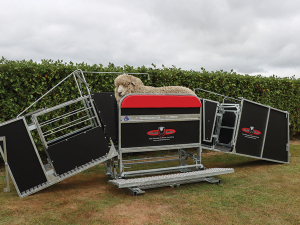
Oamaru-based livestock handling specialist Te Pari has bought Combi Clamp, the New Zealand manufacturer of Combi Clamp manual sheep handlers.
Agriculture Minister Todd McClay has admitted that a scheme bringing workers from Pacific nations to work on orchards has become too hard to navigate but says changes are coming.
A new app designed in New Zealand aims to help sheep, beef and deer farmers capture, analyse and use body condition score data more effectively.
Canterbury farmer Andy Macfarlane has been appointed to the board of AgriZeroNZ, the public-private partnership designed to accelerate the development and deployment of emissions reduction tools for New Zealand farmers.
For over 50 years Mel Ewers has been supporting the apple sector navigate through compliance and quality assurance issues.
The apple sector is enjoying a bumper harvest season.

OPINION: City and regional councils have been put on notice - stop using extreme climate forecasting scenarios that can drive…
OPINION: The Green Party’s rivers and oceans policy may have a new name but nothing else has changed.