Autumn rains mean pasture covers are looking pretty good in many regions.
Many farmers plan to milk on until late May to take advantage of the good feed levels and to generate winter cashflow.
While this makes economic sense in many cases, it is critical that getting more production out of this season is not done at the expense of cow condition. I have heard of some horrific stories of extremely high empty rates which occurred as a result of low cow condition at calving. In most cases farmers milked too long last autumn and/or substantially reduced their supplementary feed inputs.
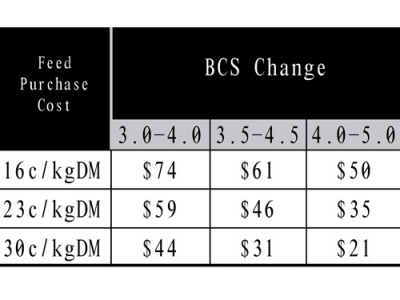
Cow body condition score at calving is one of the most critical things to get right in farming. Cows that calve too light produce less milk, take longer to cycle and have more animal health issues than cows which meet the condition score targets, which are condition score 5.0 for mixed age cows and 5.5 for heifers and first calvers. Even at low payouts, it is well worth meeting condition score targets even if you need to purchase additional feed (Table 1).
There are some fundamentals to achieving cow condition score targets at calving. These include drying off cows early enough so they have time to replenish body condition score, and managing feeding types and levels during the dry period.
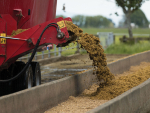
The energy in maize silage is used 50% more efficiently than the energy in autumn pasture for body condition score gain. This means you need around 220kgDM of urea boosted or autumn-saved pasture, but only 180kgDM of maize silage to put one condition score on a 450kg F x J cow.
If you are feeding high rates of maize silage during the dry period, always ensure silage quality is high and avoid feeding spoiled or mouldy silage to cows especially if they are in-calf.
In my many years with Pioneer, I have seen very few poor quality maize silage stacks. The few I have seen have been as a result of a poor covering or sealing job, as a result of rodents making holes in the cover or very poor feed-out management. Check your stacks regularly and when you are feeding out make sure you keep the stack face firm.
The use of an aerobic stability inoculant (like Pioneer® brand 11C33) can greatly reduce heating and the subsequent energy losses at feed-out time.
For more information on maize silage feeding rates and mineral inclusions during the dry period, talk to your local Pioneer representative on 0800 PIONEER (746 633).
• Ian Williams is a Pioneer forage specialist. Contact This email address is being protected from spambots. You need JavaScript enabled to view it.
*Assumes 85% utilisation and 5 c/kgDM feed-out cost. Assumes a milksolids increase of 18, 16 and 12.5 kg/cow for increasing from 3.0 - 4.0, 3.5 – 4.5 and 4.0 – 5.0 respectively. See http://www.dairynz.co.nz/animal/herd-management/body-condition-scoring/bcs-strategies