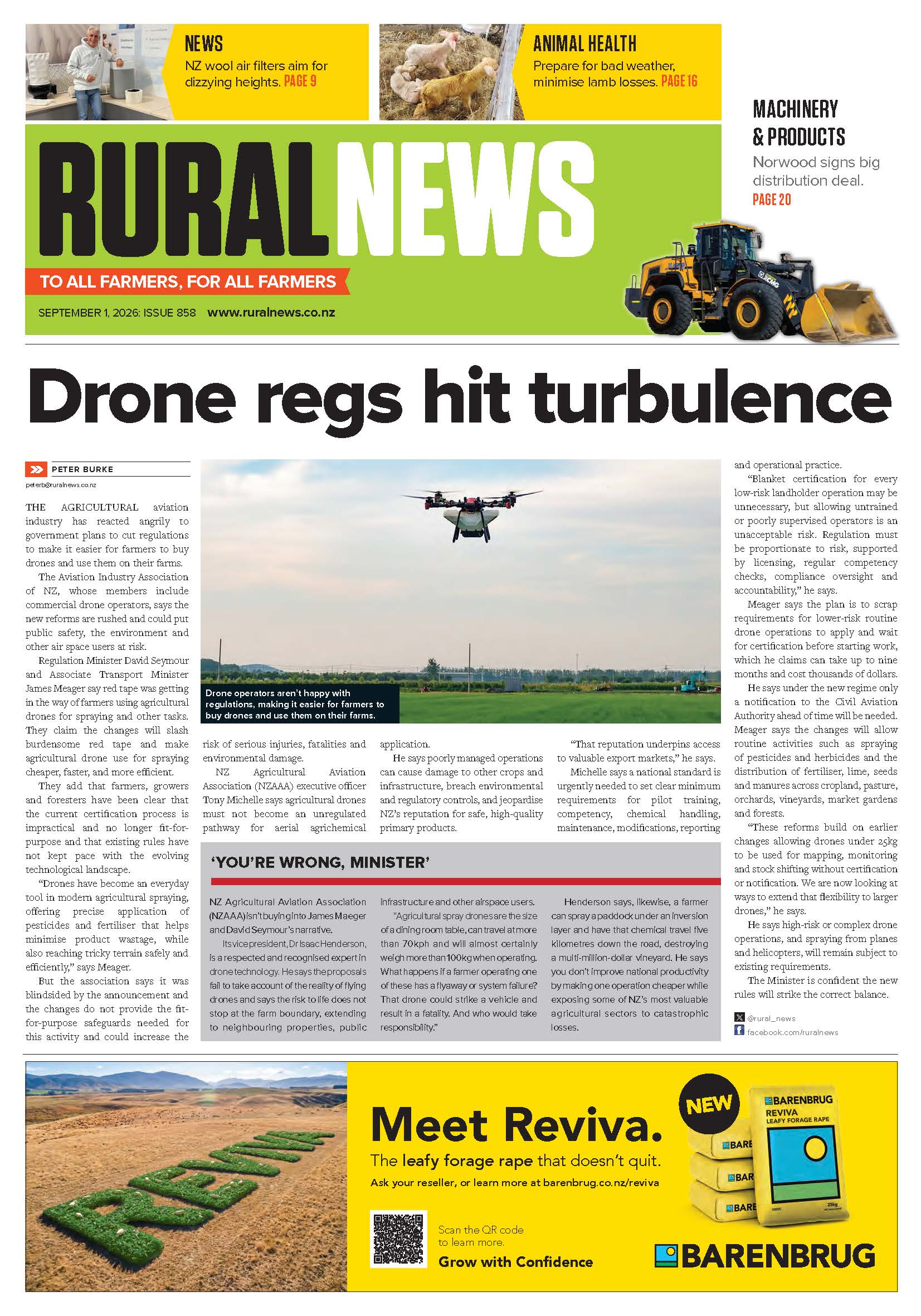
Fall Armyworm in NZ Maize: Four Years of Research
Four years since it was first detected in New Zealand, researchers and growers now know much more about management of maize pest fall armyworm (FAW).




 increase font size
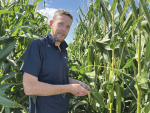
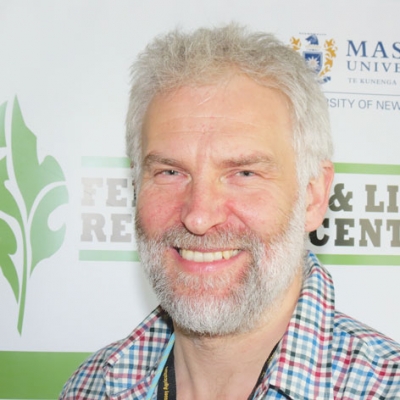 Phil Jordan
Irish dairy farmers are responding positively to a research programme designed to measure nitrogen and phosphorous leaching on their farms.
Professor Phil Jordan, a specialist in catchment science who recently visited New Zealand, is running a scheme measuring N and P loss on Irish farms nationwide to ensure farmers stick to European Union environment rules. The EU sets the basic regulations and then each country overlays these with its own special requirements.
The research, by the Irish agricultural research organisation Teagasc, covers a range of different catchments.
“There are two catchments in Country Wexford – one arable and one grassland – the latter on an impermeable soil type. There is a catchment in Country Cork which is a permeable soil type – that’s the main dairy catchment. Others are in County Louth, County Mayo and one near Drumlin with unique soils. Each catchment is about 10km2.”
Professor Jordan says the regulations are working, as shown by results on a dairy farm in County Cork, monitored for five years. Its high phosphorous index has fallen in that time.
Financial incentives or disincentives apply to farmers, depending on their compliance. For example, farmers who fail to meet their targets could lose their ‘single farm payment’ subsidy.
“So if a farmer has a high P test in his soil above a certain concentration then he is not allowed, under the regulations, to apply a chemical fertiliser. So he can actually incur a soil deficit on those soils because he is only allowed to use his own organic nutrients. So what we are seeing is a decrease in the soil nutrient test in those high P fields down towards an optimum and it’s the optimum that’s required in the regulations. The intensive farmer is required to farm at an optimum P concentration. It’s a big and complex continuum of soils right down to the streams system and we think that’s going to take a bit longer for the phosphorous changes to emerge.”
Jordan says while the regulations are designed to improve water quality, there is also a provision in them that it should not have a negative financial impact on the farmer. He has seen a slight increase in stock numbers which he hints means farmers are managing their environmental footprint successfully. But as in New Zealand the new regulations require farmers to do a lot more data collection to meet the requirements.
Department of Agriculture inspectors visit farms in the catchments and look how the farm is being managed, e.g. slurry holding tanks are noted and soil tests done.
Jordan prefers a ‘top-down bottom-up’ approach to measuring environmental standards.
Four years since it was first detected in New Zealand, researchers and growers now know much more about management of maize pest fall armyworm (FAW).
Generative AI in the workplace, trials in the field, and industry-relevant research took centre stage at this year’s Grape Days events in Central Otago, Hawke’s Bay and Marlborough.
Ireland and NZ have concluded a deal to extend a joint research programme on climate change.
Ireland's Minister of state for Agriculture says it’s hard to explain to Irish farmers the size and scale of NZ farms.
The Irish Minister of State for Rural Communities says his country and New Zealand face very similar challenges on a range of issues related to agriculture, including climate change, biodiversity and rural depopulation.



Now in its fourth year, the 2026 Fencing Industry Awards, formed part of the proceedings of the FCANZ Conference, held in Nelson during August.
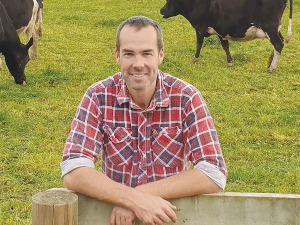
DairyNZ deputy chair Cameron Henderson has been re-appointed unopposed for another term.
OPINION: The stats speak for themselves.
Farms across the upper North Island are trialling different pasture mixes as part of a research programme that aims to build greater resilience into farming systems.
Election years are always a concerning time for farmers, according to DairyNZ chair Tracy Brown.
The Ballance Farm Environment Awards are coming to the West Coast of the South Island.




OPINION: It seems Canterbury processor Synlait is still in the doldrums.
OPINION: Get offside with New Zealand First leader Winston Peters at your own peril.