
Boosting Crop Production by Spreading Effluent
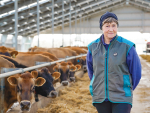
Tararua district farmer Jamie Harris milks around 400 cows using a split calving system on his farm, Crossdale Dairies.




 increase font size
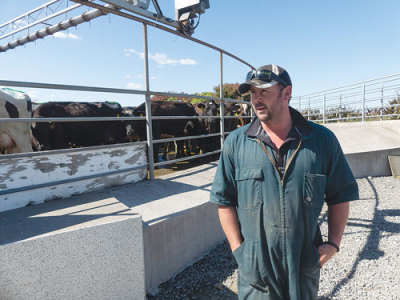 Grantlea farm manager James Emmett.
Effluent managed well is a nutrient and a benefit to your farming practice, says Pye Group’s Michelle Pye.
The recent appointee to the Fonterra sustainability advisory panel says companies are finding as they change their sustainability practices it brings economic and environmental advantages.
Most of the dairy farms in the South Canterbury-based Pye Group run two-pond effluent systems with one settling pond and one aeration. Pye says Canterbury leads the way in such systems because it has had to, with the number of dairy conversions in the region.
James Emmett, who runs the Pye Group’s Grantlea Dairy No 1 farm, explains that all effluent from the shed goes into a settling pond. From there it flows to a second pond by way of a slightly upwards-sloping pipe to minimise the amount of solids flowing through.
The second pond has a constantly running electric aerator which is moved every couple of days. When the soil moisture is right the water from that pond is fed back to the pasture, he says.
Pye says every farm in the group has an effluent management plan, so that staff all know what the consents say, when they can put on effluent and when they can’t, what to do when a pump breaks down and how often they need to check the irrigators.
A computer program monitors everything, even down to sending an annual reminder to check the backflow preventers that keep clean water and effluent water separate in the system.
Emmett says he would love to have variable rate irrigators to apply the effluent, ensuring it only goes where you want it, and away from laneways, waterways and structures.
That would be his wish list “gold standard”, he says. “We do the best we can with the tools we’ve got.”
Eyeing the forecast, Emmett explains that every drain in the dairy shed leads into the effluent ponds so they must be managed to ensure they do not get so full that they are forced to pump out at the wrong time.
“We don’t want to be forced to apply effluent in wet weather because that’s when you get leaching and nutrient loss. We’ve just had rain. We’ve got a break in the weather and then Saturday we’ll have more rain. So tomorrow’s going to be my day when I target my drier paddocks and apply my effluent to them.”
Meanwhile, the solids ponds are also cleaned of sludge every two years, and that too is applied to the pastures, and is also part of each farm’s nutrient budget.
Pye says the group likes to do things itself so has bought its own effluent slurry spreader.
Emmett says it needs to be measured and monitored so they know exactly what is going back on the pasture.
“The best time is probably when you’re looking to re-seed or re-pasture so you can keep stock off it. Simple things like that -- good old-fashioned farming practice, use your head, use your gut, do what’s right.”
Tararua district farmer Jamie Harris milks around 400 cows using a split calving system on his farm, Crossdale Dairies.
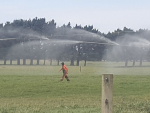
Water management is an integral component of sustainable farming practices, according to Watermetrics.
Two farmers and two farming companies were recently convicted and fined a total of $108,000 for environmental offending.
Canterbury farmer Michelle Pye has been elected to Fonterra’s board for a three-year term.
A Taupiri farming company has been convicted and fined $52,500 in the Hamilton District Court for the unlawful discharge of dairy effluent into the environment.


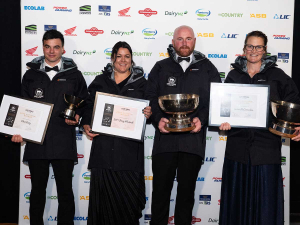
Entries opened on Monday, 5 October 2026 for the 2027 New Zealand Dairy Industry Awards (NZDIA), which organisers describe as the nation's biggest celebration of excellence in the dairy sector.
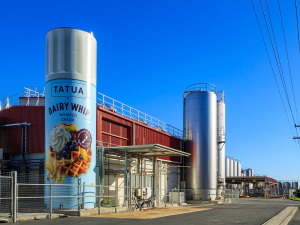
Waikato milk processor Tatua has again declared a record milk payout to farmer shareholders, leaving other processors in the dust.
A Labour-led Government won’t be bringing back the controversial freshwater rules of 2020.
National’s much-touted free trade deal with India featured in the Rural Issues Debate at Mystery Creek, Hamilton on Wednesday night.
New Zealand's 2026-27 freshwater fishing season has opened, with anglers encouraged to head to rivers and lakes over the coming days as conditions look favourable across much of the country.
Central Otago District Council (CODC) has voted against a plan to spread treated sewage sludge from Cromwell and Alexandra on farmland near Lauder, a decision Federated Farmers says reflects strong opposition from rural residents.


OPINION: It seems Canterbury processor Synlait is still in the doldrums.
OPINION: Get offside with New Zealand First leader Winston Peters at your own peril.




