
Boosting Crop Production by Spreading Effluent
Tararua district farmer Jamie Harris milks around 400 cows using a split calving system on his farm, Crossdale Dairies.




 increase font size

FARMERS AROUND the country are making great strides improving the quality of their dairy effluent ponds as they balance the demands of farms and growth. Now the message this summer is, empty your storage ponds when you can.
The response is positive to DairyNZ's message to keep effluent storage ponds low in the lead-up to autumn; many farmers have effluent pond management as part of their daily and weekly farm routines. Concerted effort by DairyNZ, farmers, and other partner organisations has raised awareness of the importance of well maintained and constructed ponds – to the profitability of the farm and the sustainability of the environment.
Theresa Wilson, DairyNZ's development project manager for effluent, says their promotion work is successful; increasingly farmers are seeing a well-designed and managed effluent system as an investment in their farm.
"We know dairy farmers see effluent management systems as important to their whole farming system. When the system is correctly designed and operated it will comply with all the right regional council requirements and the whole system will work more efficiently. If there's any doubt what is needed DairyNZ has advisors and resources online to help get it right."
DairyNZ advises farmers the next step is to ensure effluent storage ponds are kept low and the effluent removed regularly when conditions allow. A well managed pond reduces the risk of running out of storage and saves money on fertiliser.
"Even the best effluent ponds won't cope if they are full and sustain wet-weather hits when autumn arrives. The best way to ensure your pond can cope is to empty it regularly and make sure it's well maintained," says Wilson. "Farmers are familiar with their farms, with the systems in place and with the equipment, but things can get busy and it can be easy to put off irrigating and emptying the pond. You never know when suddenly you won't have the time to do it."
The easiest way to stay on top of pond levels is to keep an eye on the conditions. By getting to know what the weather is doing as far ahead as possible with current forecasting, and knowing the level of your storage pond, you can avoid being caught out with a flooded pond when a storm blows in.
Wilson says farmers need to be mindful of weather conditions and their effect on effluent management. "Farmers are good at anticipating weather conditions. But the impact of weather on effluent storage is not always top of mind."
DairyNZ environmental specialist Logan Bowler, who advises farmers in the lower North Island and Hawke's Bay, says sudden storms can be a big hit. "Sudden rain fronts can put a real strain on effluent storage ponds. You must be prepared for adverse events, but there are times when even a moderate rain can appear suddenly and push a normally compliant farm system to the limits; if a pond is full, a sudden 50mm rainfall can spell action stations.
"I tell farmers, sharemilkers, and farm staff 'you need to irrigate when conditions allow from midsummer through to early autumn'. Then, when the wet weather starts, there is as much free storage as possible in the pond to help people cope. A full pond means you have no storage. We all know regular irrigation gets the 'green gold' into the fields and helps grass and crop growth."
Farmers have made good progress meeting effluent management requirements. Nationally the rate of serious non-compliance fell to 11% last season but DairyNZ says though it's clear the bar is high, any non-compliance is unacceptable.
"We don't want farmers caught out because their ponds were full," Wilson says. "Irrigating onto a wet paddock with the threat of rain overhead in the last days of milking before drying off is not great nutrient management either.
"The best advice is use your opportunities and keep the pond as low as possible. We want our farmers to help themselves by getting ponds ready; we don't want good farmers caught out. The best advice is keep it low."
Tararua district farmer Jamie Harris milks around 400 cows using a split calving system on his farm, Crossdale Dairies.
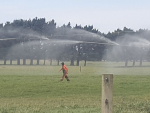
Water management is an integral component of sustainable farming practices, according to Watermetrics.
Two farmers and two farming companies were recently convicted and fined a total of $108,000 for environmental offending.
A Taupiri farming company has been convicted and fined $52,500 in the Hamilton District Court for the unlawful discharge of dairy effluent into the environment.
Founded in Germany as recently as 1977, today, the Fliegl Group employs more than 1100 workers, offering an expansive range of transport solutions, from their base in Bavaria.



Entries opened on Monday, 5 October 2026 for the 2027 New Zealand Dairy Industry Awards (NZDIA), which organisers describe as the nation's biggest celebration of excellence in the dairy sector.
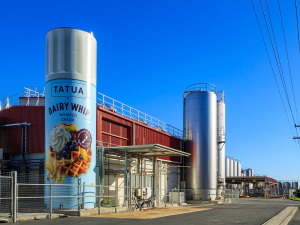
Waikato milk processor Tatua has again declared a record milk payout to farmer shareholders, leaving other processors in the dust.
A Labour-led Government won’t be bringing back the controversial freshwater rules of 2020.
National’s much-touted free trade deal with India featured in the Rural Issues Debate at Mystery Creek, Hamilton on Wednesday night.
New Zealand's 2026-27 freshwater fishing season has opened, with anglers encouraged to head to rivers and lakes over the coming days as conditions look favourable across much of the country.
Central Otago District Council (CODC) has voted against a plan to spread treated sewage sludge from Cromwell and Alexandra on farmland near Lauder, a decision Federated Farmers says reflects strong opposition from rural residents.


OPINION: It seems Canterbury processor Synlait is still in the doldrums.
OPINION: Get offside with New Zealand First leader Winston Peters at your own peril.




