
Dead in the water
OPINION: In a victory for common sense over virtue signalling, David Parker's National Policy Statement (NPS) work on freshwater is now dead in the water.




 increase font size
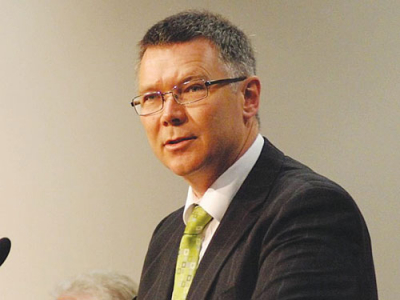 David Parker.
Trade Minister David Parker this month opened the APEC Business Advisory Council meeting in Auckland with a speech about the new Government’s approach to trade. Here are excerpts.
The government intends to maintain this country as an open, outward-looking trading nation with public support for liberal settings, not just in trade but also the liberal societal settings we’ve maintained for many decades.
Our trade record includes forming the single-market Closer Economic relations (CER) with Australia and negotiating a ground-breaking trade agreement with China -- their first with a western nation. That was negotiated by the previous Labour Government and it has been good for both countries.
However, it is no secret that we have also moved to push back on some aspects of the soon-to-be signed CPTPP – notably the ISDS provisions.
In that regard the Prime Minister has acknowledged that the deal to be signed in Chile in March is better than the original TPP in respect of ISDS clauses but from our perspective is not perfect.
There is no doubt that fair free trade and economic growth have benefited many. Millions of people have been pulled out of crippling poverty in the Asia Pacific region because of the work of APEC and other organisations.
For the first time in history, New Zealand’s two-way trade with APEC exceeded $100 billion in the year to last September.
I hold the ministerial portfolios for the environment, trade and export growth, economic development and associate finance, and my aim is to bring together these strands so that we have an integrated view of growth, trade, sustainability and shared prosperity. I and the government believe we need that to create a fairer and more inclusive New Zealand.
That is how we approach trade.
Yes, we will strive for a progressive and inclusive trade agenda through high quality, ambitious FTAs and trade relationships.
But that means we will not only tackle those issues I have touched on but also trade issues relating to SMEs, women’s economic empowerment, the economic wellbeing of indigenous peoples and regional economic development.
We are trying to show that the benefits of trade are touching all parts of society.
The NZ government’s vision is one of shared prosperity for all; an economy that serves the people, where everyone participates in the economy one way or another and everyone has a stake in it.
Through that we will restore support for trade, and I believe we have been succeeding in our short time in government.
That also helps preserve public support for our outward-looking democracy, which in a virtuous turn of the circle will lift support for trade and for the other liberal settings we wish to maintain.
There are challenges to those in other parts of the world that we are keen to avoid.
There are questions about how our regional and multilateral economic organisations can evolve to address these current and future challenges.
But it’s important that we not hide from these hard conversations, whether they are with our own communities or with other economies.
OPINION: In a victory for common sense over virtue signalling, David Parker's National Policy Statement (NPS) work on freshwater is now dead in the water.
OPINION: When we finally get a government (no agreement had been finalised at time of writing), the first thing the new administration needs to review is all the regional and district plans that are being rolled out across the country to comply with the new National Policy Statement (NPS).
OPINION: Environment Minister David Parker, likely in the final weeks of the job, remains hell-bent on burning bridges with farmers.
New national standards will give local councils more power to decide where new commercial forests – including carbon forests – are located, to reduce the impacts on communities and the environment, says Environment Minister David Parker.
Environment Minister David Parker has labelled members of rural ginger group Groundswell NZ as “dinosaurs”.


OPINION: There could hardly be a more appropriate theme for a conference than the one chosen by the red meat sector - Navigating Volatility.
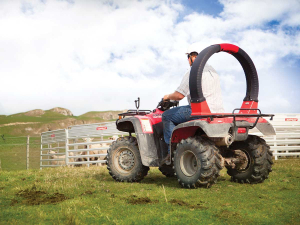
When Northland leather worker Vernon Suckling started making horse saddles 50 years ago, quad bikes and side-by-side vehicles were unheard of.
Alliance Group has confirmed that eligible farmer-shareholders who supply and continue to back the business will receive up to $20 million later this year, following the strategic investment partnership with Dawn Meats.
With a general election under five weeks away, Rural News is asking major political parties about their policies and positions on key issues facing the primary sector. We will run their responses to each question over the next four weeks. The ACT Party and the Greens didn't respond in time.
The red meat sector is in great heart.
Entries opened on Monday, 5 October 2026 for the 2027 New Zealand Dairy Industry Awards (NZDIA), which organisers describe as the nation's biggest celebration of excellence in the dairy sector.
OPINION: It seems Canterbury processor Synlait is still in the doldrums.
OPINION: Get offside with New Zealand First leader Winston Peters at your own peril.




