What Would Synlait Be Worth to Fonterra or a2 Milk?
Speculation of a possible joint move by Fonterra and a2 Milk to buy Synlait raises a much bigger strategic question, says agribusiness expert Dr Nic Lees.




 increase font size
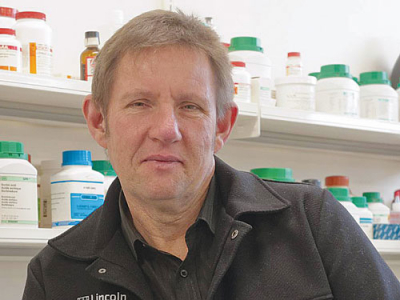 Jon Hickford.
Examining the primary sector policies of Labour, and thus our new Government, there are a few things on my wish list, some cautionary notes and some plaudits to hand out.
I am keen to see a clearer overarching strategy as the last few years of neo-liberal free-market approaches have left us a bit directionless in agriculture and horticulture, especially where a high degree of post-farmgate processing is required (e.g. meat, wool and dairy).
The establishment of a primary industry council and chief agricultural advisor may help improve priority and direction setting, but I am wary of the creation of another layer of bureaucracy and/or increasing barriers for those industries that can, and do, set about helping themselves.
I hope the primary industry council and chief agricultural advisor will work industry by industry to find and consolidate leadership that is already within that industry, so working from the ‘ground up’ to improve the value of those industries.
It is excellent that a ‘pathway to success’ initiative is being proposed. Progress has already been made in this with GrowingNZ, the Primary Industry Capability Alliance (PICA) and the Soil Makes Sense programme from Lincoln University.
However, the challenge is to further the reach of these programmes into the urban community. There are three reasons for this: so that we do not further enhance the urban/rural divide; so that urban consumers better understand how and why food production and agricultural practices are used [i.e. removing the mystique and misunderstanding] and because too few young people are coming from the rural sector to sustain, let alone grow, the sector.
The emphasis cannot be agribusiness alone, because practical skills and agricultural and horticultural science are critically important too.
I am also pleased to see the Primary Growth Partnership going under the spotlight. At its cynical worst it was simply a ‘corporate welfare’ scheme and I don’t think that it added a lot of value onfarm.
Re-emphasis on, and growth of, the Sustainable Farming Fund is desirable as it better achieves sustainable social, environmental and economic benefits for the farming community. It is a success story already.
If we are going to create an independent food safety authority, as is proposed, I would want its brief to either broaden from a simple focus on contaminant, chemical and microbiological safety issues, to either directly include an emphasis on nutritional value (e.g. high sugar foods) or, indirectly, that the authority is strongly mandated to align with the medical fraternity and dieticians to ensure that food is the best we can make it in nutritional value.
I see that given the emphasis globally on the intensification of agriculture and typically in highly subsidised/close to market systems, New Zealand needs to better differentiate its philosophy and direction in agriculture and food production. We need low-intensity, high value production systems that maintain the highest health, welfare, carbon footprint and consumer acceptance standards. We can be different from everyone else.
• Jon Hickford is a professor in the Faculty of Agriculture and Life Sciences, Lincoln University
Speculation of a possible joint move by Fonterra and a2 Milk to buy Synlait raises a much bigger strategic question, says agribusiness expert Dr Nic Lees.

Lynnette Hudson's 30-year obsession with Pinot Noir was sparked working vintage in Burgundy, seeing how subtle changes in terroir were expressed in the glass. It was, she says, "an elightening moment in every way".
A four year trial has reaffirmed that mixing plantain into dairy pastures can help reduce nitrogen losses to freshwater while maintaining milk production and profitability, say researchers.
Twenty five secondary school students from around New Zealand recently completed a three day residential programme designed to explore career opportunities across the food and fibre production supply chain.
A Lincoln University student is set to become the first person to contest both the Young Viticulturist and the Young Winemaker national titles in one year.


Pāmu has released its FY26 Integrated Annual Report, reporting a Net Operating Profit of $113 million, more than double the $49 million recorded in FY25.

Meat Industry Association data, released alongside the Red Meat Sector conference in Wellington, shows export value climbing across the US, China, UK and Canada.
Applications are set to open for the 2027 Zanda McDonald Award, a trans-Tasman award recognised for identifying and fast-tracking talented young leaders in agriculture and agribusiness.
The Royal New Zealand College of General Practitioners (the College) and Hauora Taiwhenua Rural Health Network are calling for investment in a proposed new training pathway for rural GPs, warning that many rural practices are struggling to recruit while a large share of the existing workforce nears retirement.
Federated Farmers has called on Central Otago District Council (CODC) to drop or vote down a plan to truck sludge from Alexandra and Cromwell to farmland near Lauder, warning it would compound an "outrageous" situation created by a separate council's decision weeks earlier.
Synlait has swung to second-half profit as operations stabilise, but the dairy processor still posted a $75.4m annual loss.
OPINION: It seems Canterbury processor Synlait is still in the doldrums.
OPINION: Get offside with New Zealand First leader Winston Peters at your own peril.




